





You don't want your resin piece to yellow, cloud or become dull when exposed to sunlight, especially after investing lots of time and materials into the project! Therefore, it is particularly crucial to select the highest quality UV-resistant epoxy resin for jewelry, artwork, furniture, wood projects, decorative objects and any other application that is exposed to sunlight.
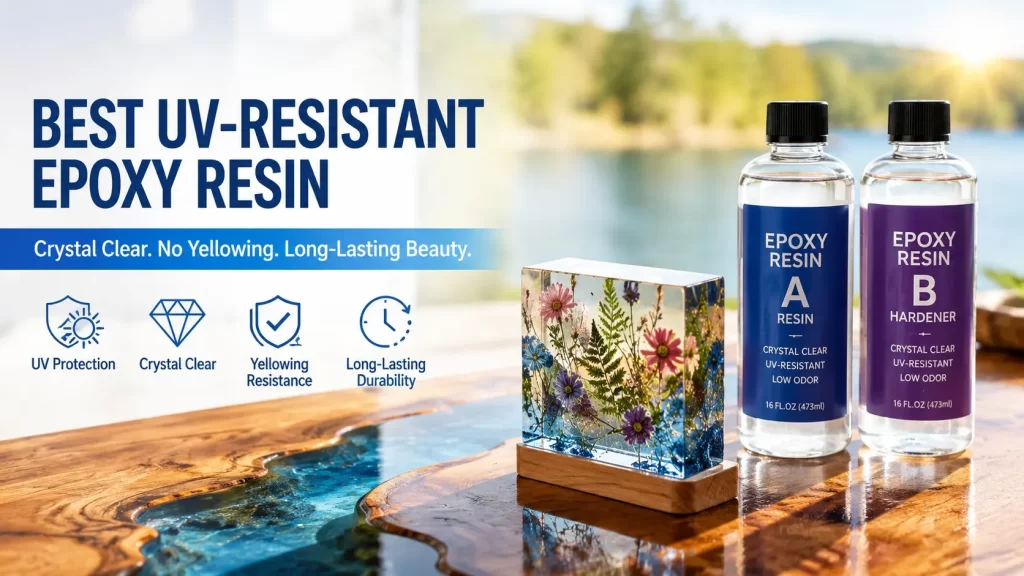
There is a difference in the amount of UV protection that clear epoxy resins offer. Over time, standard epoxy can yellow or turn cloudy when it is exposed to UV rays, but specially formulated UV-resistant epoxy includes stabilizers and a specially-designed resin chemistry that helps to minimize yellowing and cloudiness.
We will discuss in this guide the causes of epoxy resin yellowing, the operating mechanisms of the UV resistant products, the features to check for with these products, and how to get the maximum life out of your finished products.
What Causes Epoxy Resin to Turn Yellow?
Exposure to ultraviolet radiation and oxygen causes natural changes of the epoxy resin. UV energy can cause polymer degradation and reaction processes that result in visible discoloration over time. Presence of oxidation may also play a role in the development of compounds which can cause a previously clear resin to turn yellow or amber.
It's a slow process, but if you are exposed to direct sunlight for a longer period of time, the difference will be more obvious.
There are a number of factors that may impact on yellowing:
- UV intensity and exposure time
- Resin chemistry
- Quality and concentration of UV stabilizers
- Oxygen exposure
- Curing conditions
- Project thickness
- Pigments and additives
- Outdoor temperature fluctuations
This means that simply choosing a resin labeled "clear" does not necessarily mean it is designed for long-term UV exposure.
What Is UV-Resistant Epoxy Resin?
UV-resistant epoxy resin is an epoxy resin system that is designed to resist degradation that is caused by exposure to ultraviolet radiation. The manufacturers can add UV absorbers, light stabilizers and other materials to a proper resin to enhance the resistance to discoloration and surface degradation.
UV absorbers act to minimise the amount of damaging UV energy that reaches sensitive parts of the polymer structure. The hindered amine light stabilizers (HALS) function differently by being capable of controlling free-radical reactions that are caused by light-induced degradation.
The formulation must be well-balanced. The more stabilizer added the better the product is not always true. Too much or incompatible additives may impact clarity, cure and/or performance.
Hence, using professionally formulated epoxy that will withstand UV is a better option than trying to do so on their own.
What Makes the Best UV-Resistant Epoxy Resin?
When comparing products, take into account more than just the words "UV resistant" on the label. If the formulation is good it should have clarity, durability, easy application and discolouration resistance.
1. Excellent Initial Clarity
The ideal UV resistant epoxy will begin with a clean clear look. When preserving natural wood grain, dried flowers, art work, photos or decorative items, it's very important to have high clarity.
The resin used in the product will be clear and will not become cloudy or tinted after the product is completed.
2. Long-Term Yellowing Resistance
Ultimately, with UV resistance, it's a question of how things will perform over time. Resin that seems clear right after curing, but turned into a noticeable yellow after only some exposure to light might not be suitable for your application.
Seek manufacturers that can supply data on UV stabilisation, yellowing resistance and suggested applications.
It should also be noted that UV resistant does not equate to no-yellowing. No amount of quality epoxy is ever going to change when hit by intense and prolonged sunlight. Direct UV exposure can have a dramatic effect on the lifespan of a completed project, which can be prolonged by reducing their exposure.
3. Good Mechanical Durability
UV resistance is just one component of furniture, tabletops, decorative items and functional surfaces.
The resin should also have appropriate:
- Hardness
- Impact resistance
- Adhesion
- Scratch resistance
- Water resistance
- Surface gloss
Each product will be different depending on the application, so be sure to always refer to the manufacturer's technical specification for the product before choosing a resin.
4. Suitable Curing Characteristics
A good, long-lasting finish will only result from consistent curing. Strictly observe the manufacturer's mixing ratio, temperature range, working time and curing schedule.
Even if the resin is highly UV resistant, soft areas, cloudiness, tackiness or uneven curing can occur if measurement is not taken correctly or the resin is not mixed properly.
UV Resin vs. UV-Resistant Epoxy Resin
The two terms are easily mistaken, but are actually two different products.
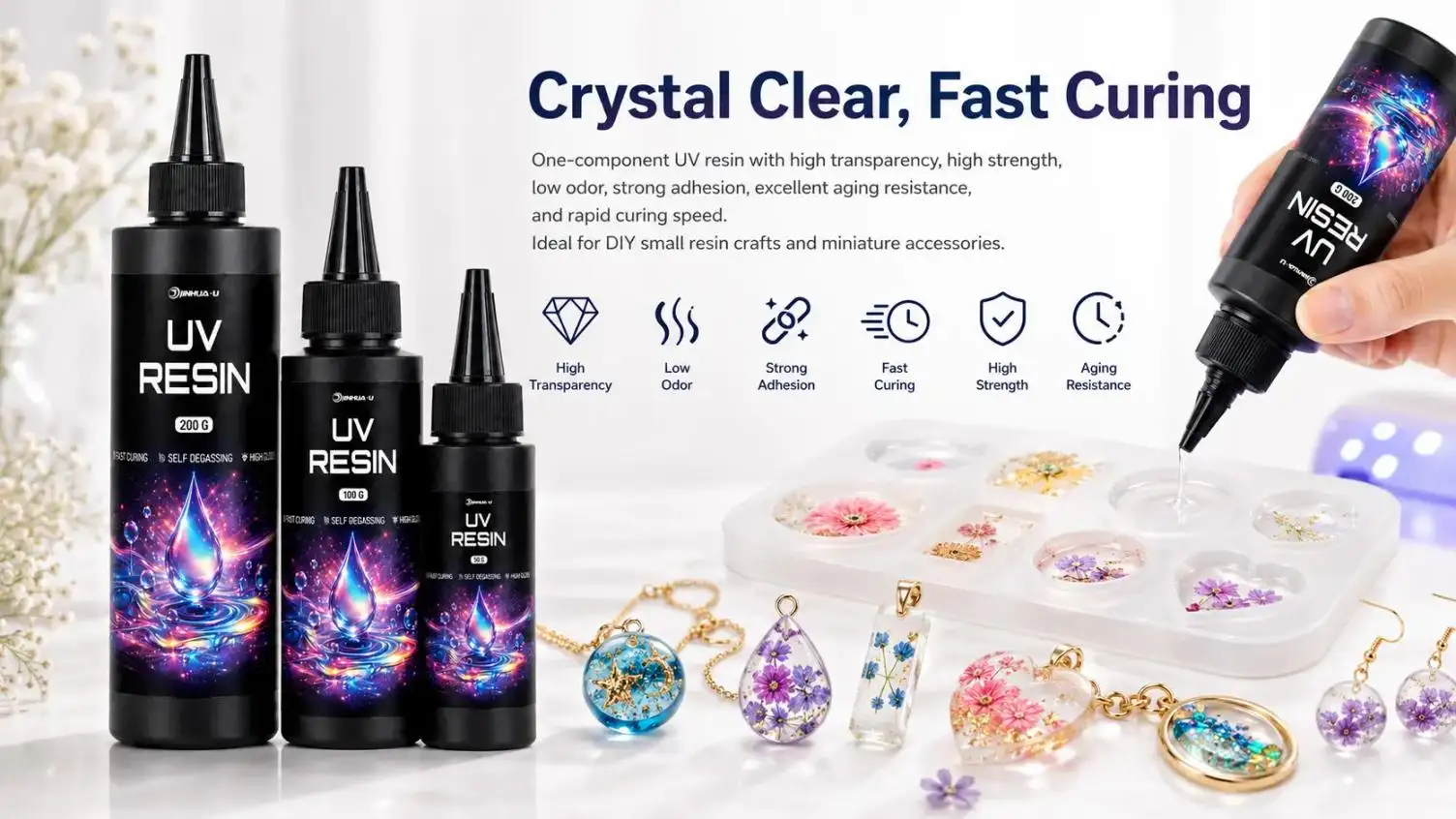
Generally speaking, UV resin is a single component resin which is cured by ultraviolet light. It is often employed for small crafts, jewellery, embellishments and thin layers.
UV resistant epoxy resin, on the other hand, is a type of epoxy formulation that is resistant to degradation from UV rays. Usually a two component resin/hardener system, it may be appropriate for larger projects based on its specifications.
In simple terms:
| Feature | UV Resin | UV-Resistant Epoxy |
|---|---|---|
| Curing method | UV light | Resin + hardener |
| Typical applications | Small crafts and jewelry | Art, wood, furniture, coatings |
| Large-volume projects | Usually limited | Often more suitable |
| UV protection | Product dependent | Specifically formulated for UV resistance |
| Working time | Usually short | Usually longer |
| Thickness | Generally thin layers | Varies by formulation |
Choosing between them depends on your project size, required thickness, curing method, and durability requirements.
Best Applications for UV-Resistant Epoxy
UV-resistant epoxy can be valuable wherever long-term clarity is important.
Resin Art
Artists often use clear epoxy to create paintings, ocean scenes, geodes, abstract art, and decorative panels. UV resistance can help preserve the original appearance when artwork is displayed in bright environments.
Jewelry
Clear resin is widely used for pendants, earrings, bracelets, charms, and other decorative jewelry. UV-resistant formulations can help maintain the appearance of transparent pieces and embedded decorations.
Wood Projects
River tables, serving boards, decorative wood pieces, and furniture can benefit from clear epoxy that showcases natural grain while providing a glossy protective surface.
However, outdoor wood projects require additional consideration because sunlight, rain, humidity, and temperature changes can all affect the coating. Outdoor applications may require a dedicated exterior or marine-grade system rather than a resin intended primarily for indoor use.
Home Décor
Coasters, trays, clocks, artwork, decorative panels, and other household products can benefit from a clear finish that maintains its appearance under indoor lighting and occasional sunlight.
How to Maximize UV Resistance
Even the best UV-resistant epoxy benefits from proper application and maintenance.
Mix Carefully
Measure the resin and hardener according to the manufacturer's specified ratio. Mix thoroughly while scraping the sides and bottom of the container.
Incomplete mixing can produce weak or sticky areas.
Cure Under Recommended Conditions
Temperature and humidity can affect curing. Work within the manufacturer's recommended environmental range and allow the resin to fully cure before exposing it to significant sunlight.
Limit Direct Sunlight
UV-resistant epoxy slows yellowing, but reducing exposure is still one of the simplest ways to extend its lifespan.
For indoor artwork or furniture, consider placing finished pieces away from intense direct sunlight or using UV-filtering window films.
Use UV-Stable Pigments
The resin itself is not always the only material affected by UV radiation. Certain dyes and pigments can fade over time.
If color retention is important, choose pigments specifically designed for resin applications and verify compatibility with your epoxy system.
Consider a UV-Blocking Topcoat
For demanding outdoor applications, an appropriate UV-resistant clear topcoat may provide an additional layer of protection. The coating must be compatible with both the epoxy and the intended environment.
Common Mistakes When Choosing UV-Resistant Epoxy
One of the most common mistakes is assuming that every crystal-clear epoxy is automatically UV resistant. Clear appearance at the time of purchase does not guarantee long-term resistance to sunlight.
Another mistake is confusing UV curing with UV resistance. A resin that cures under a UV lamp is not necessarily designed to resist UV exposure after curing.
You should also avoid adding UV additives to an epoxy system without understanding the formulation. UV stabilizers need to be compatible with the resin chemistry and used at appropriate concentrations. Poorly balanced additives can potentially affect clarity and curing.
Frequently Asked Questions
Is UV-resistant epoxy completely non-yellowing?
No. UV-resistant epoxy is designed to slow down yellowing and degradation, not eliminate them permanently. Long-term direct sunlight can eventually affect most epoxy systems.
Is UV resin better than epoxy resin?
There is no clear winner or loser here. UV resin is great for smaller, less thick projects that require fast curing times, whereas two-part epoxy can be used for larger or thicker projects. The selection of the most suitable depends on the project.
Can UV-resistant epoxy be used outdoors?
Depending on the formulation, some UV resistant epoxies can be used outdoors. UV, moisture, temperature and mechanical wear are all challenges for outdoor projects. Refer to the manufacturer's recommendations when using outside.
How can I prevent epoxy resin from yellowing?
Use a professionally formulated UV resistant epoxy, cure proper, limit exposure to direct sunlight, use compatible UV stable pigments, and look into an appropriate UV protective top coat for more challenging applications.
Final Thoughts
When it comes to picking the best epoxy resin that's resistant to the sun, it's not just about the clarity of the product. The right formula is one that offers the highest level of transparency, UV balance, fast curing and durability required for a specific application.
UV resistant epoxy can be used to help maintain clarity and minimize the light exposure effects in resin art, jewelry, woodworking, furniture, and home decor. But it cannot be said that any epoxy is absolutely sunproof. Good preparation, curing, placement and maintenance are still critical.
When comparing products, consider the resin's formulation, technical specification, recommended applications, curing conditions and exposure conditions. The right product coupled with the proper technique can help extend the shiny and attractive appearance of your resin projects for much longer.