



Updated 1 month ago
China UV Resin Supplier for High-Gloss Jewelry Coating Applications

hqt
A reliable jewelry coating UV resin supplier should provide more than a variety of colors. The resin should have gloss retention, complete the UV curing process fully, have lower shrinkage, have a strong bond, have a low odor, and produce colors consistently batch after batch.
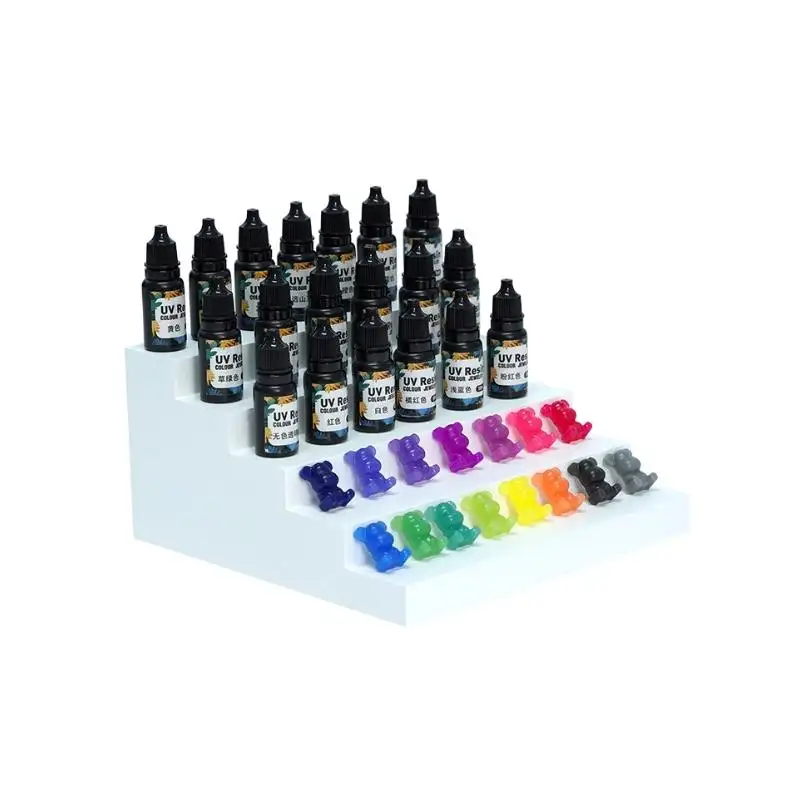
For colored jewelry applications, pre-mixed UV resins can help eliminate the mess of pigment handling, reduce the time needed for preparation, and improve consistency for a wide variety of popular jewelry. Because of this, prospective customers are encouraged to evaluate the resin's performance as well as the supplier's technical abilities prior to placing a large, or privately labeled, order.
Why Jewelry Coating Requires a Specialized UV Resin
Though jewelry pieces can be quite small, they often put demanding requirements on coating surfaces. Thin coatings need to adhere to sharp edges and detailed moldings without peeling and should fully cure with no visible shrinkage or tackiness.
The most common challenges in coating jewelry include:
•Variations in gloss across differently shaped or sized surfaces
•Dark or heavily pigmented colors that do not fully cure
•Air bubbles that become trapped in the resin during mixing
•Color inconsistency between operators and batches
•Poor adhesion to many different materials
•Resin cure scratching and coating damage during handling
•Coating discoloration and fading over time
•Formulated UV resins and complete resin supply solutions should address all of these concerns.
Why UV Resin Works Well for Small Jewelry Parts
Single-Component Processing
Single-component UV resin requires no preparation and is therefore ideal for small coating and precise positioning applications.
Key processing advantages include:
•No mixing-ratio calculation
•Fewer preparation steps
•Reduced material waste
•Easier spot application
•More control before UV exposure
•Faster transition from shaping to finishing
Compared with two-component casting systems, UV resin is particularly suitable for thin coatings and small molds where speed and placement accuracy matter.
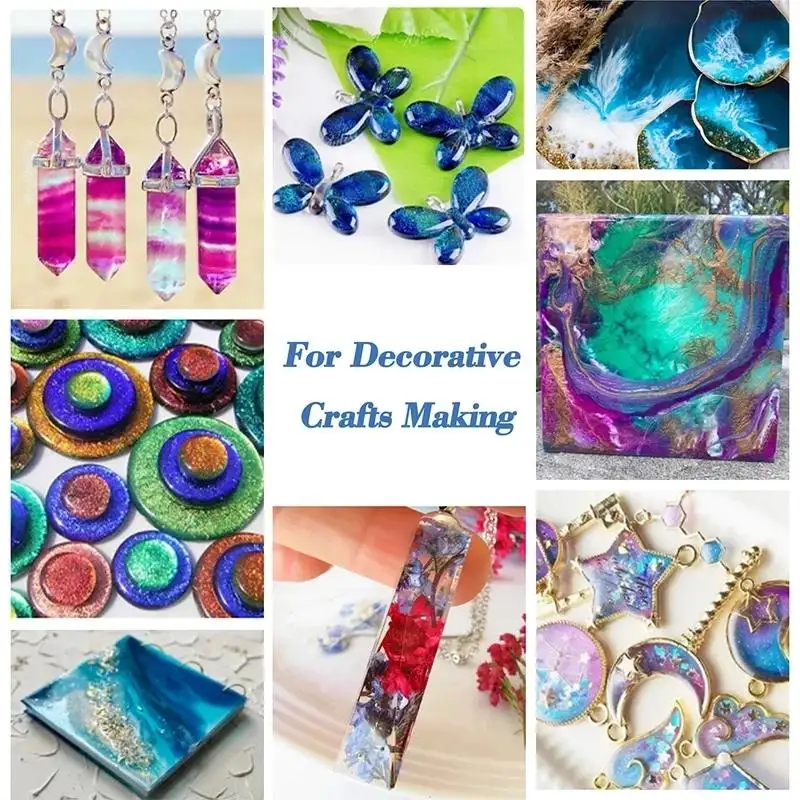
Fast UV or LED Curing
Fast curing is one of the main reasons buyers choose UV resin for jewelry. Under suitable light and recommended application conditions, colored UV resin may cure within a short cycle.
However, curing speed is affected by several variables:
| Curing Variable | Possible Effect |
| Lamp wavelength | Must match the resin's photoinitiator system |
| Lamp power | Low output may leave the surface tacky |
| Exposure distance | Excessive distance reduces delivered UV energy |
| Resin thickness | Thick layers require more energy or layered curing |
| Color depth | Dark pigments may restrict light penetration |
| Mold transparency | Opaque molds limit curing from below |
| Exposure direction | Complex parts may require curing from multiple angles |
A responsible UV Resin Supplier should state the conditions used to determine curing time instead of presenting one universal figure.
What Creatives a High-Gloss Jewelry Finish?
Due to the many factors on which high gloss relies, including formulation and application, it is difficult to describe as a single, visual property.
These factors affect the end quality of a coating:
•Flow and leveling of resin
•Control of surface tension
•Coating thickness
•Bubble release
•Shrinkage
•Cleanliness of substrate
•Quality of mold surface
•Complete surface polymerization
If there is insufficient leveling, there may be orange peel or brush marks. If a coating is cured improperly, there may be substrate edges or undercured corners. There may be dust stuck to a sticky surface. Too much shrinkage may expose substrate edges.
Common Problems in Jewelry Coating
| Problem | Typical Cause | Result |
| Surface Tackiness | Lack of enough UV ozone, excessive thickness, pigment blocking | Dust stickiness |
| Bubbles | Fast pouring, manual mixing, air and moisture trapped | Pinholes and lack of even gloss |
| Cloudy Finish | Surface contamination or incomplete curing | Color dullness |
| Color Variation | Inconsistent pigment dosage or settling | Shade differences |
| Edge Pullback | Surface tension or shrinkage | Exposed thin edges |
| Weak Adhesion | Oil, dust, smooth substrate, incompatible material | Peeling, delamination |
| Yellowing | Limited aging resistance, long UV exposure | Change in colors of light shades |
For assurance of successful turnouts with a client's specific UV resin system (lamp, substrates, coating thickness, and production method), an experienced supplier will recommend a test.
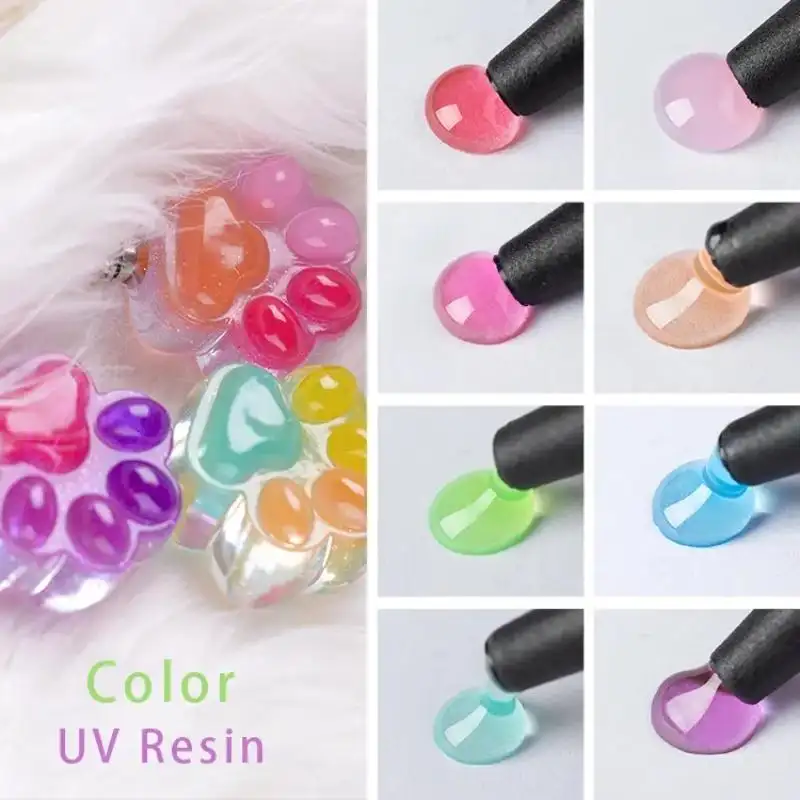
Pre-Colored UV Resin vs. Manual Pigment Mixing
Expect improved process consistency for jewelry kits and multi-color craft collections with pre-colored res
| Evaluation Point | Pre-Colored UV Resin | Manual Pigment Mixing |
| Preparation | Ready to apply | Requires weighing and blending |
| Color Repeatability | Easier to standardize | Depends on operator accuracy |
| Bubble Risk | Less mixing-related air | Stirring may introduce bubbles |
| Curing Compatibility | Pigment is formulated into the system | Added colorants may slow curing |
| Production Speed | Suitable for rapid detail work | Longer preparation time |
| Small-Batch Use | Convenient for multiple colors | More materials and tools required |
Pre-colored resin still requires validation. Dark, metallic, opaque, or highly pigmented shades may need thinner layers or longer exposure than transparent colors.
Key Performance Data Buyers Should Review
Surface Gloss and Clarity
A buyer should examine more than one finished sample. Tests should cover:
•Flat surface coating
•Curved jewelry pieces
•Narrow edges
•Small silicone molds
•Light and dark colors
•Thin and layered applications
The cured surface should be checked for haze, craters, pinholes, streaks, and gloss variation.
Hardness and Practical Durability
Shore D hardness indicates the resistance of a relatively rigid cured material to indentation. A higher value may support better resistance to light surface marking, but hardness alone does not prove impact resistance, flexibility, or long-term adhesion.
JINHUA's colored UV resin is specified at Shore D ≥86 under the stated test conditions. Finished products should still be tested according to their substrate, shape, coating thickness, and intended use.
Adhesion
Jewelry coating resin may be applied to:
•Metal bezels and findings
•Glass decorations
•Plastic accessories
•Wooden craft parts
•Previously cured resin
•Molded decorative components
Adhesion can change significantly depending on surface contamination, roughness, coatings, and pretreatment. A reliable China UV Resin Supplier should encourage substrate-specific testing.
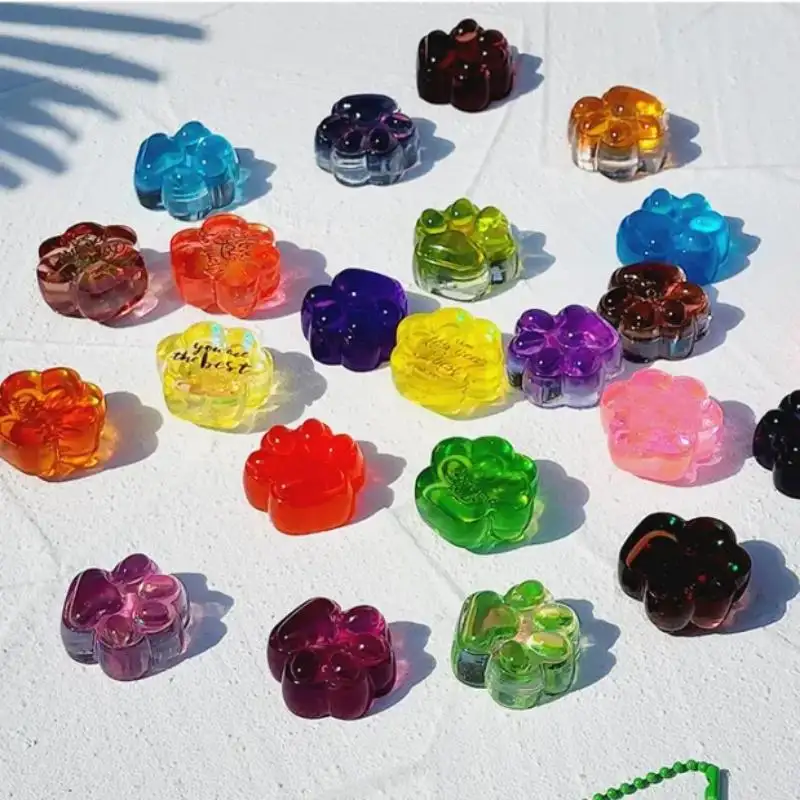
Odor and Handling
Low-odor resin can improve the working experience during detailed craft production. It does not mean the resin is odor-free or that safety precautions are unnecessary.
Users should:
•Maintain adequate ventilation
•Avoid skin contact with uncured resin
•Wear suitable gloves
•Follow the SDS
•Protect resin from uncontrolled sunlight
•Keep uncured material away from children
How JINHUA Addresses Colored Jewelry Resin Challenges
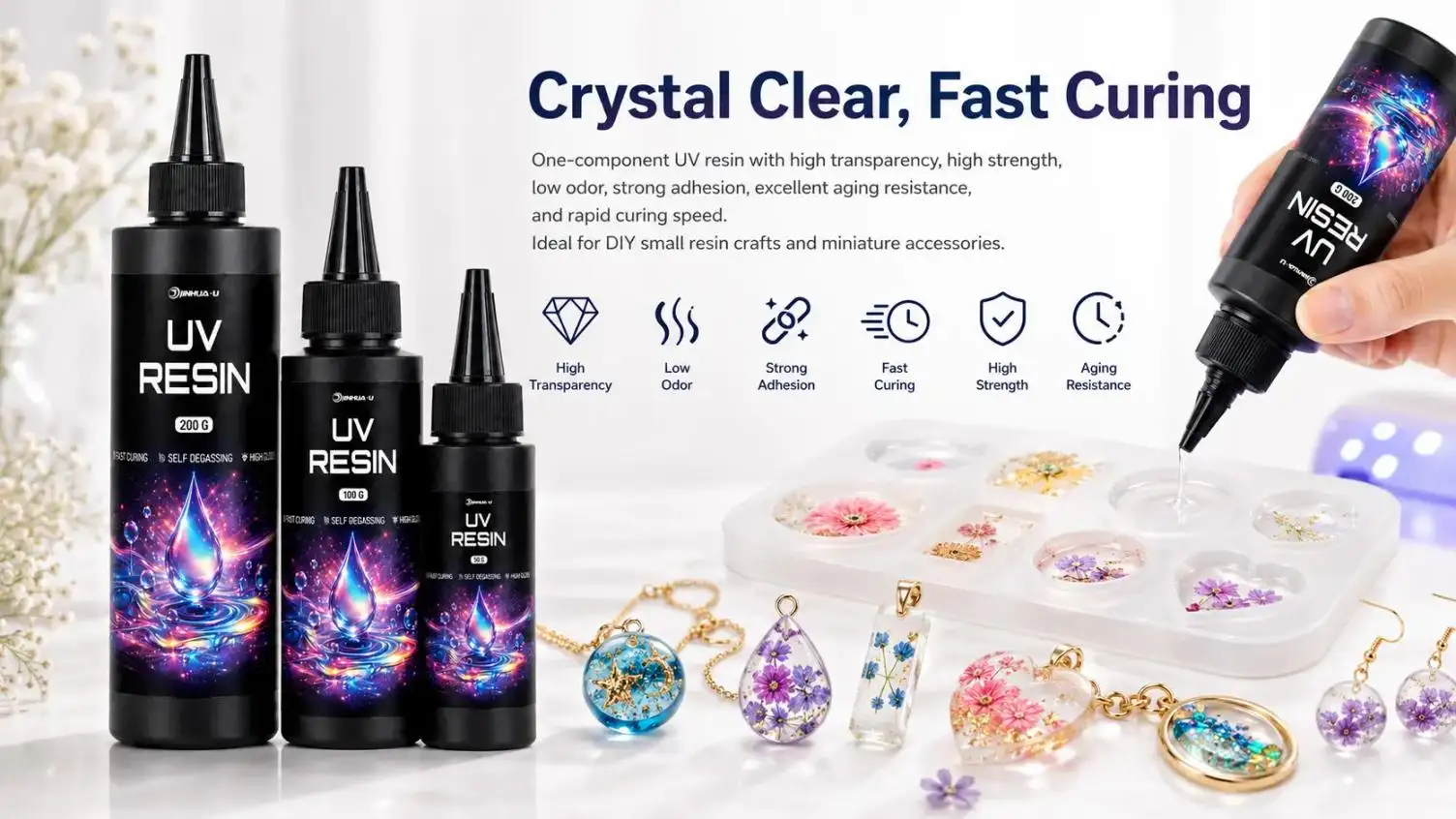
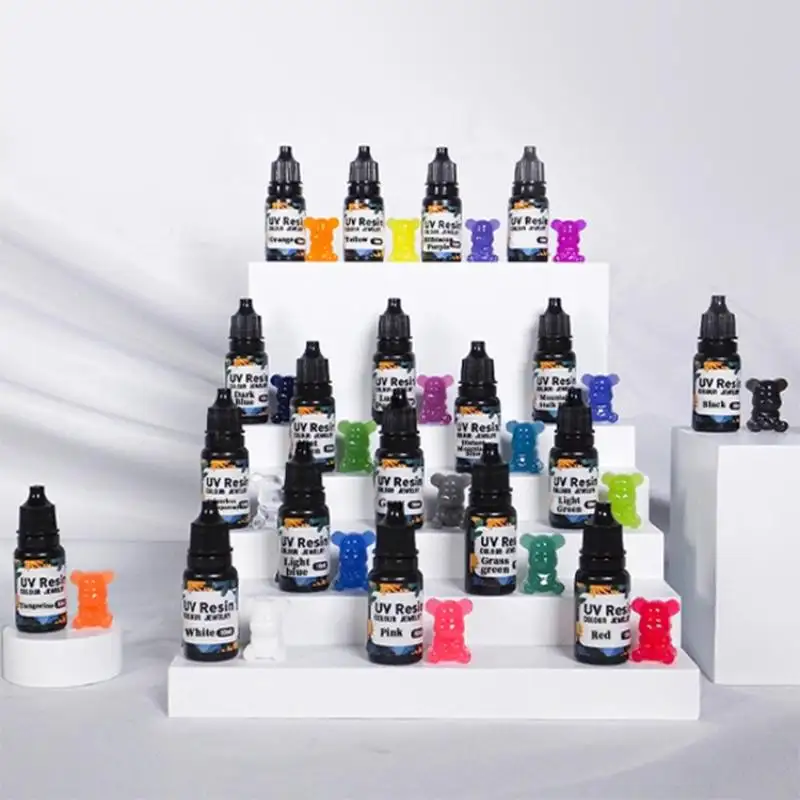
JINHUA supplies a 20-color UV resin kit developed for jewelry coating, pendants, charms, small accessories, decorative layers, and miniature craft pieces.
Twenty Pre-Mixed Colors
The colors are supplied pre-mixed, eliminating the need for separate pigment blending. This helps reduce preparation time, operator-related color differences, and bubbles introduced during manual stirring.
60–120 Second Curing
Under suitable UV light and recommended conditions, the stated curing time is 60–120 seconds. The fast-curing formulation supports thin coatings, layered decoration, quick positioning, and small mold filling.
Actual results remain dependent on lamp power, exposure distance, resin thickness, and color depth.
High Gloss, Adhesion, and Hardness
The formulation is designed to support:
•Clean, high-gloss surfaces
•Strong adhesion to small decorative parts
•Reduced mixing-related bubbles
•Bright, pre-formulated colors
•A cured hardness of Shore D ≥86
•Low-odor handling for detail work
•Aging resistance for decorative applications
Final compatibility should be confirmed using the buyer's own substrates and equipment.
Closing Words
When looking for a supplier for jewelry applications, you need to consider a range of factors. These include gloss, curing speed, adhesion, hardness, color consistency, and the level of technical support offered. Pre-colored resins can simplify the production process, but the buyer needs to verify colors under their actual lamps, substrates and coating conditions.
JINHUA provides a UV Resin Kit with 20 colors to jewelry brands, craft distributors, and private label customers. This kit has an easy application method as well as a quick cure time and a clean, glossy finish. The kit also has strong adhesion and consistent color. Additionally, users can evaluate the kit's performance in various applications by making a request for a sample or specs. This kit allows manufacturers to move to bulk production.
FAQs
Q1. What type of colored UV resin does JINHUA supply?
JINHUA delivers a single component precolored UV resin kit containing 20 colors. The resin is meant for coating jewelry, pendant, charms, key chains, small molds, decorative layers, and other small craft projects.
Q2. How long does it take for JINHUA colored UV resin to cure?
When UV or LED light is used under the right application conditions, it takes approximately 60-120 seconds for the resin to completely cure. Cure time may vary depending on the lamp power, distance, and resin thickness; the wavelengths of the lamp; and the color of the resin used.
Q3. Does the JINHUA UV resin kit require any pigment mixing?
No, JINHUA coloured UV resins require no pigment mixing. Great effort has been made to reduce pigment measuring and blending for the end user. This leads to more uniformity in color in successive batches, and also reduces time taken for preparation in overall processing.
Q4. Is JINHUA UV resin suitable for high gloss jewelry coating?
Yes, it is. The resins are developed to provide high gloss to small decorative parts. The final gloss is also a function of the coating thickness, substrate and application cleanliness, bubbles, and the complete cure of the coating.
Q5. What is the hardness of JINHUA colored UV resin?
The cured colored UV resin formulations of JINHUA are specified to have a Shore D hardness of ≥86 under the stated test conditions. While this indicates adequate hardness to the surface, per the end user's application, the hardness, flexibility, and impact of the resin should be tested.