



Updated 1 month ago
Silicone Rubber Factory OEM Guide: Custom Hardness, Color, Cure Time and Packaging

hqt

OEM mold-making silicone is not a standard product placed in a personalized container. A reputable Silicone Rubber Factory must manage formulation and process performance, the usability of the packaging, and batch consistency.
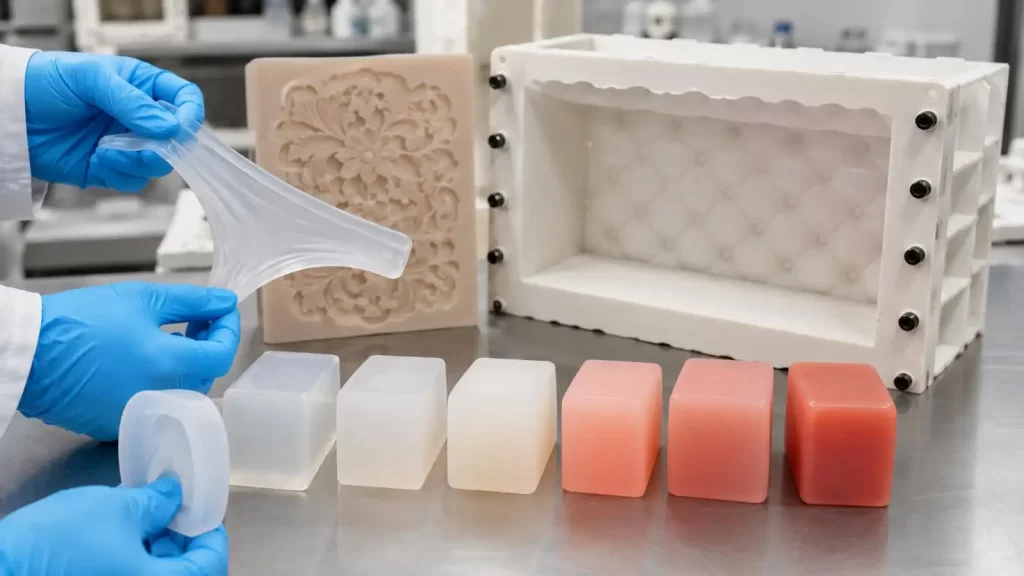
Combination properties in silicone rubber include hardness, viscosity, working time, cure time, and tear resistance. Changes in any of these properties can affect several of the others. Therefore, RTV-2 silicone rubber formulation buyers must specify the mold geometry, master batch, casting compound, cure and use temperature, and the form in which it is supplied.
What Can a Silicone Rubber Factory Customize?
A complete OEM program may cover both material performance and commercial presentation.
| OEM Parameter | Typical Customization | Technical Importance |
| Hardness | 0–30 Shore A or a defined grade | Controls flexibility, support and demolding |
| Color | Translucent, white or custom color | Affects inspection, identification and branding |
| Viscosity | Low-flow or higher structural viscosity | Influences detail penetration and leakage control |
| Working Time | Shorter or extended processing window | Determines available mixing and pouring time |
| Cure Time | Room-temperature cure or adjusted speed | Affects production scheduling |
| Mixing Ratio | Two-component systems such as 1:1 | Influences measuring accuracy and ease of use |
| Packaging | Bottles, kits, pails or private label formats | Supports retail, distribution and industrial use |
| Documentation | TDS, SDS/MSDS and applicable test reports | Supports technical review and importing |
A reputable Silicone Rubber Manufacturer should recognize the interrelationship of these characteristics. For instance, the buyer may be interested in low viscosity to assist in better reproduction of details, but the cured mold must have tear resistance and provide dimensional stability.
Proper Shore A Hardness Selection
Shore A hardness compares the softness and hardness of elastomers. In silicone, lower hardness generally means more flexibility and greater sag, and greater hardness means more shape retention.
The correct grade depends on:
•Mold size and wall thickness
•Number and depth of undercuts
•Fragility of the master model
•Required dimensional stability
•Casting material and temperature
•Expected mold service life
•Manual or automated demolding
General Hardness Selection Guide
| Shore A Range | Performance Characteristics | Typical Mold Applications |
| 0–5 | Extremely soft and highly flexible | Fragile models, very fine textures and special flexible molds |
| 5–15 | Soft, elastic and easy to turn back | Resin jewelry, wax pieces and detailed sculptures |
| 15–20 | Balanced flexibility and support | General crafts, ornaments and medium-sized molds |
| 20–30 | Firmer with improved shape retention | Larger molds, regular shapes and supported castings |
Softer silicone is not automatically better for detailed molds. A very soft mold may deform under the weight of the casting material. Conversely, a grade that is too firm may be difficult to remove from deep undercuts.
An experienced Silicone Rubber Factory should therefore evaluate hardness together with tensile recovery, tear resistance, mold thickness and supporting-shell requirements.
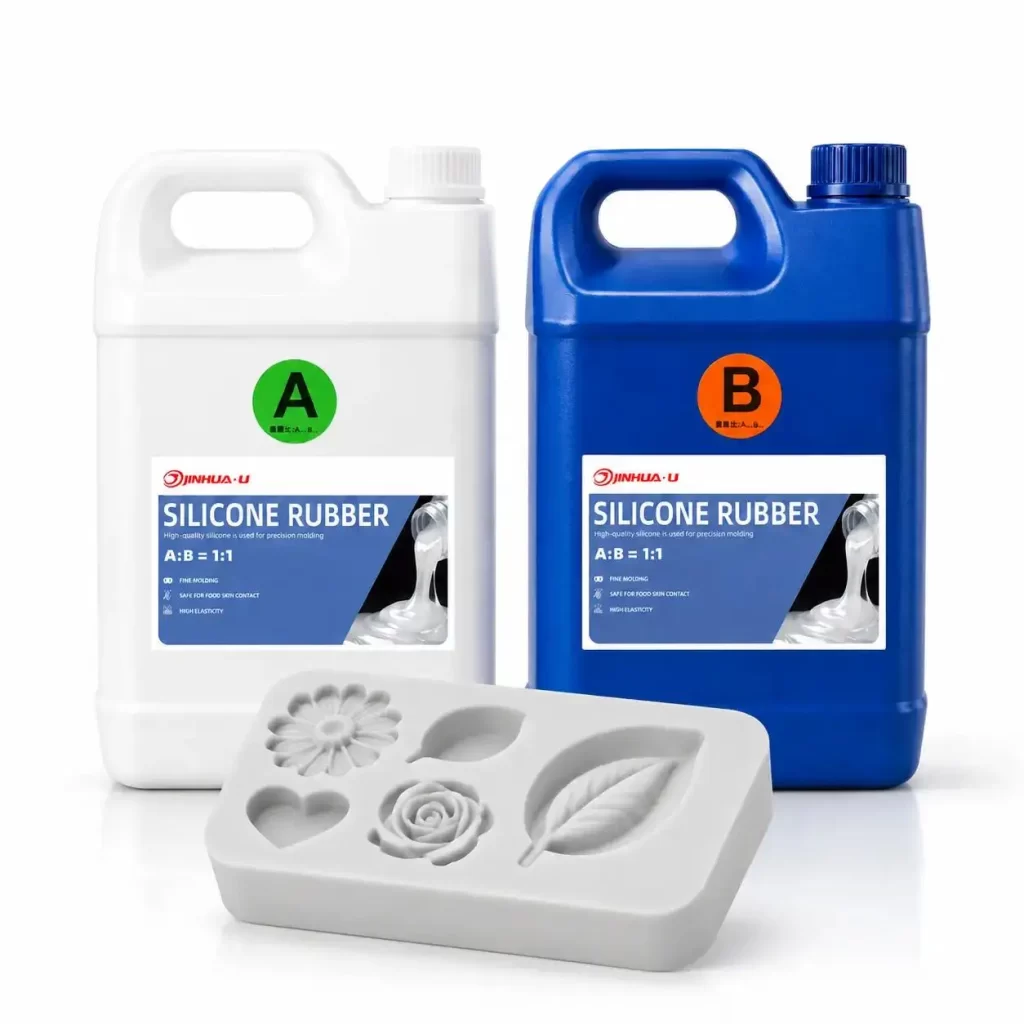
Custom Color and Translucency
Color customization is often associated with branding, but it also has a practical function during mixing and mold production.
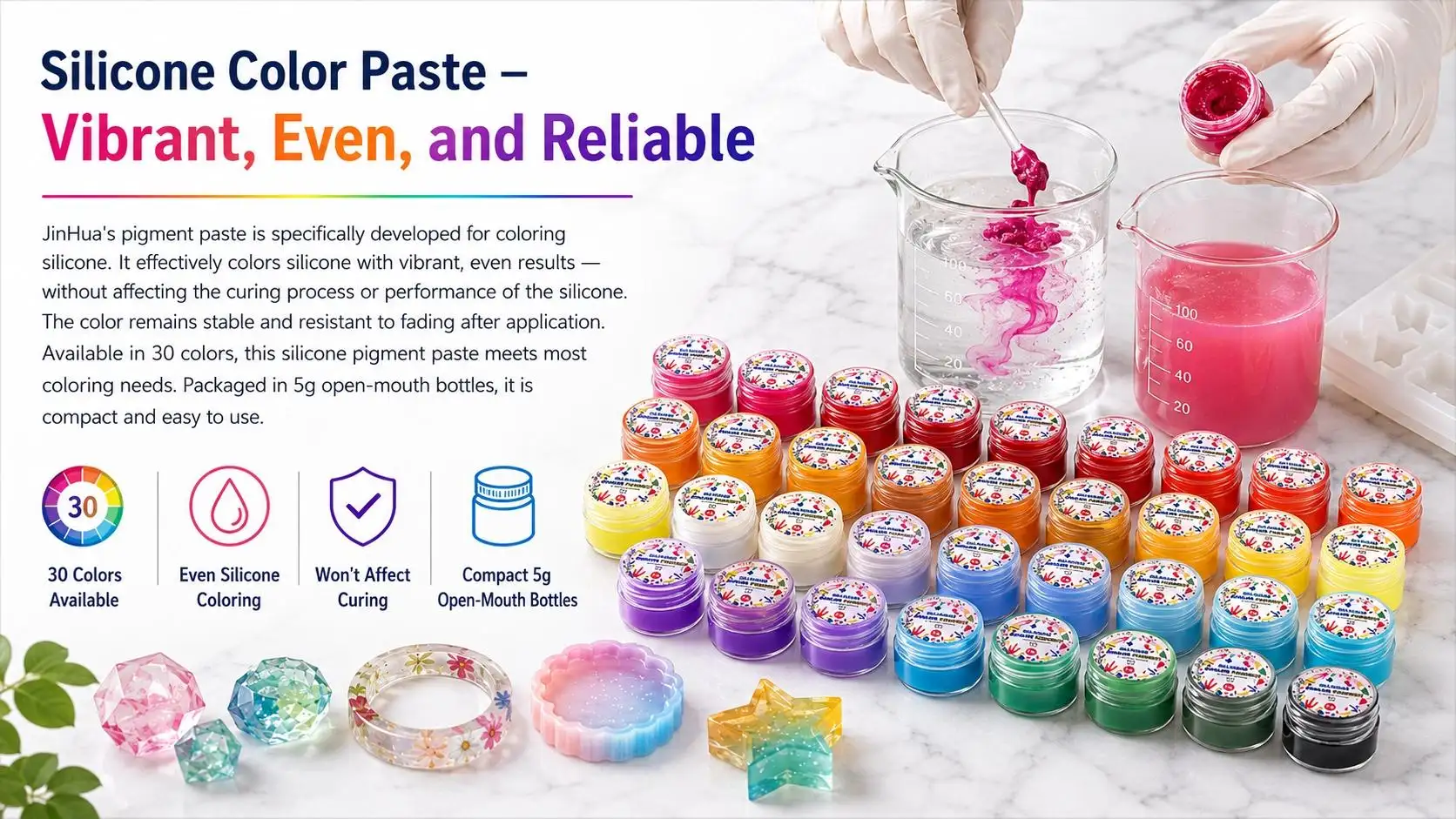
Translucent silicones allow operators to see entrapped air, contamination, and unmixed regions. It also helps in mixing uniformity when Part A and Part B components are colored. For private label silicone and retail product differentiation, white or branded colors may be preferred.
Prior to finalizing a custom color, buyers must decide on:
•Translucent or opaque or solid colors, and what color combination for A and B components
•Pantone or brand colors
•Whether the silicone will be for retail, workshop or industrial use
•Labeling instructions for component differentiation
Additives which affect color and surface may cause curing issues, therefore a small batch cure test is warranted by the silicone rubber factory to check if an unapproved additive is used.
Why Faster Curing Is Not Always Better
A fast-curing formulation may improve production speed, but it can also reduce the time available for:
•Thorough A/B mixing
•Pouring large mold volumes
•Filling narrow lines and shallow textures
•Releasing entrapped air
•Correcting the mold position
Large or highly detailed molds generally need a longer working window. Small craft molds may place more emphasis on faster demolding.
Temperature also matters. Cold workshop conditions may extend curing, while controlled heat may accelerate the reaction. A Silicone Rubber Factory should evaluate cure speed under defined conditions rather than promising a universal “fast cure” result.
Packaging for Retail and Industrial Markets
Packaging should match the user's measuring method, purchase volume and sales channel.
| Customer | Common Packaging | Main Requirements |
| DIY and e-commerce brands | Small A/B kits | Easy measurement and clear instructions |
| Craft material distributors | Multiple retail sizes | Branding, barcodes and shelf presentation |
| Mold-making studios | Medium bottles or pails | Cost efficiency and storage convenience |
| Industrial users | Large pails or drums | Sealing, handling and batch traceability |
| Private label brands | Custom bottles, labels and cartons | Market language and brand consistency |
Private label silicone packaging may include:
•Part A and Part B container sizes
•Net weight or volume
•Tamper-resistant seals
•Batch and production information
•Barcodes and multilingual labels
•Mixing and safety instructions
•Carton quantity and pallet configuration
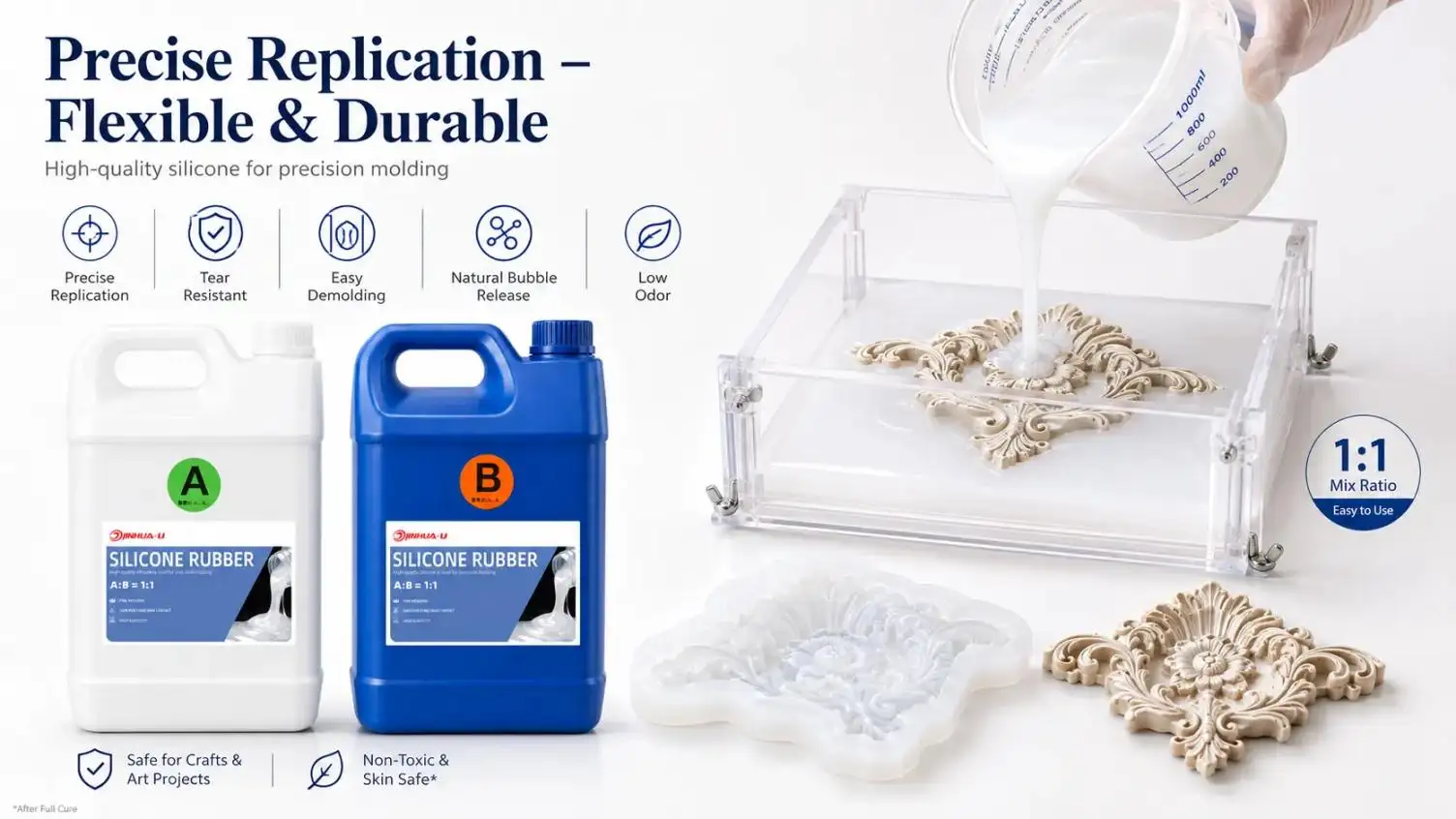
For a 1:1 system, the label must state whether the ratio is measured by weight or volume. The two components should be clearly identified to reduce end-user errors.
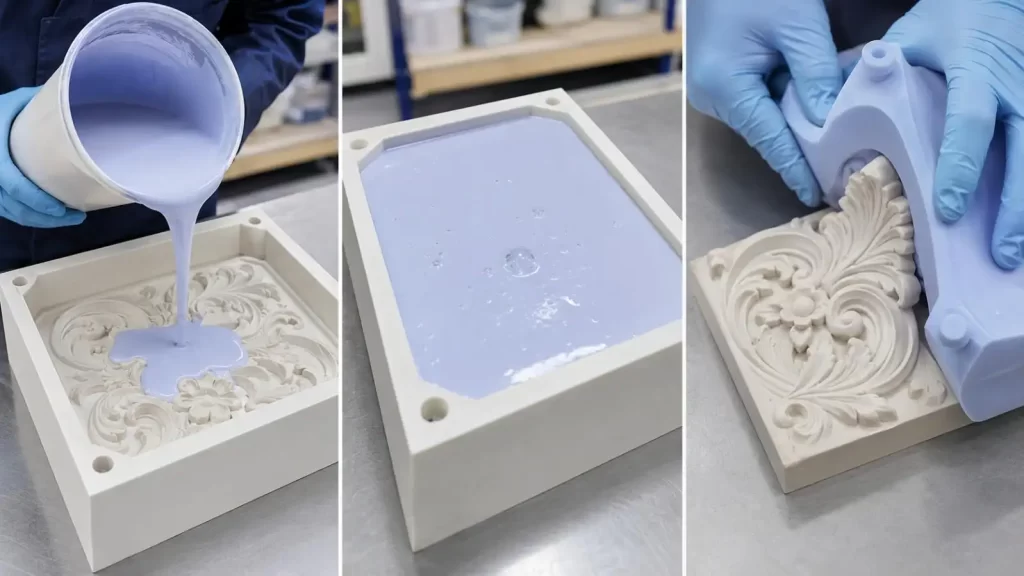
Common Mistakes by OEMs
Buyers can minimize development delays by avoiding the following mistakes.
❌ Selecting Hardness Levels Without Analyzing Mold Geometry
Molds with large open areas can become distorted without proper support, while molds with deep undercuts require a high degree of flexibility.
❌ Approaching Molds with a Desirable Flow and Curing Capacity, but Insufficient Strength
Although molds with low viscosities cure and flow easily, there are still concerns regarding the mold's resistance to tear and repeated distortion.
❌ Specifying Fast Cure Without Defining Working Time
A short cure time may be unsuitable when operators need more time to mix, degas or pour.
❌ Ignoring Casting-Material Compatibility
The buyer should tell the Silicone Rubber Factory whether the mold will be used with:
•Epoxy or polyurethane resin
•Wax
•Gypsum
•Soap
•Cement-based casting materials
•Other reactive compounds
❌ Approving a Sample Without Production Tolerances
Sample approval should include acceptable ranges for hardness, viscosity, color, cure performance, package weight and batch identification.
How JINHUA Addresses These OEM Challenges
JINHUA's 717AB-F is a platinum-cured RTV-2 mold-making silicone designed for detailed craft and casting applications. The series covers a very soft to moderately firm range from 0 to 30 Shore A.
| Technical Item | 717AB-F Reference |
| Product Type | Platinum-cured RTV-2 silicone rubber |
| Hardness Range | 0–30 Shore A |
| Mixing Ratio | 1:1 |
| Standard Color | Translucent |
| Curing Condition | Approximately four hours at room temperature |
| Flow Behavior | Low viscosity, smooth pouring and self-leveling |
| Key Performance | Detail replication, natural bubble release and tear resistance |
| Applications | Resin crafts, wax parts, ornaments, gypsum and detailed molds |
The low-viscosity formulation helps the liquid reach fine lines, shallow textures and small surface patterns before curing. Its natural bubble-release behavior helps reduce pinholes, while its flexibility and tear resistance support safer demolding from delicate models.
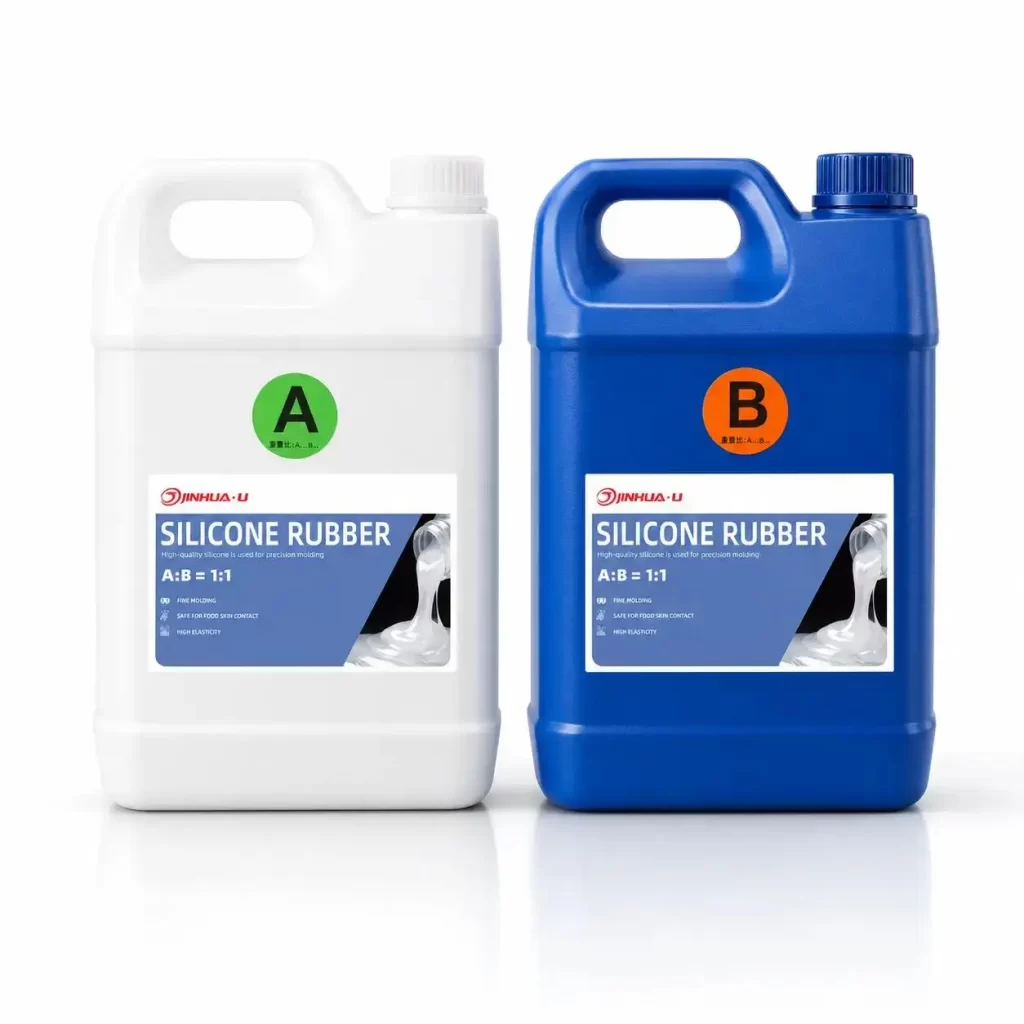
The translucent appearance also allows users to observe mixing quality and trapped air. The 1:1 two-component format is practical for craft suppliers, retail kits and private label programs.
As a Silicone Rubber Factory, JINHUA supports formulation evaluation, sample development, packaging configuration and production scale-up. Its manufacturing resources include:
•More than 17 years of production experience
•A 20,000 m² manufacturing facility
•Eight automated production lines
•An R&D team of more than 20 members
•Batch-by-batch quality inspection
•Custom containers, labels and outer cartons
•Technical documentation support for overseas orders
Sample Testing Before Mass Production
OEM silicone should be tested in the actual application rather than approved only by liquid appearance or initial softness.
A practical validation process should include:
•Confirming the master and casting materials
•Testing flow into the finest mold details
•Inspecting bubbles, pinholes and surface quality
•Recording working and curing behavior
•Conducting an actual demolding test
•Evaluating tearing, deformation and recovery
•Confirming packaging and label samples
•Establishing measurable production specifications
The selected Silicone Rubber Factory should convert the approved sample into a controlled mass-production standard.
Closing Words
OEM mold-making silicone requires a balance between hardness, flowability, working time, cure speed, tear resistance and packaging usability. A capable Silicone Rubber Factory should understand the mold and casting process before recommending a formulation.
JINHUA's 717AB-F provides a resin, wax, gypsum, ornament and detailed craft mold base suitable for projects requiring approximately 0 to 30 Shore A hardness platinum mold silicone.
Submit your master materials and casting compounds to JINHUA along with Shore A hardness, desired mold dimensions and packaging preferences. Our tech team will assess the feasibility of using 717AB-F or a customized RTV-2 silicone within your scope of work.
FAQs
Q1. What OEM services does the JINHUA Silicone Rubber Factory provide?
JINHUA provides services for OEM projects with regards to silicone hardness, color, curing, container size and label and outer packaging design. They can provide support services from formulation and sample testing to packaging and mass production.
Q2. What is JINHUA 717AB-F silicone used for?
717AB-F is a platinum-cured RTV-2 silicone rubber which is used for mold-making. It is applicable to resin crafts, wax pieces, gypsum casting and decoration. It can also be used to make small molds that need to reproduce small and exquisite details.
Q3. What hardness options are available for 717AB-F?
The hardness of 717AB-F silicone ranges from 0 to 30 Shore A. The softer grade of this series can be used for delicate models and deep undercuts, and the harder grade can be used for larger molds and provide better support and shape retention.
Q4. Can JINHUA customize the Shore A hardness?
Yes, JINHUA can make a formulation based on this customization for a master model. Sample testing may be done before large-scale production.
Q5. What is the mixing ratio of 717AB-F?
The ratio of 717AB-F is 1 to 1. It is recommended to confirm additional information from JINHUA before confirming whether it is measured by weight or volume.