



Updated 1 month ago
Low-VOC Polyurethane Resin Manufacturer for Global Compliance Requirements

hqt

A low-VOC Polyurethane Resin Manufacturer should provide more than a material described as "low odor." Buyers need measurable VOC data, a stated test method, product-specific SDS and TDS documentation, and a compliance review based on formulation, application, and destination market. The resin must also retain the required hardness, adhesion, working time, curing performance, and chemical resistance.
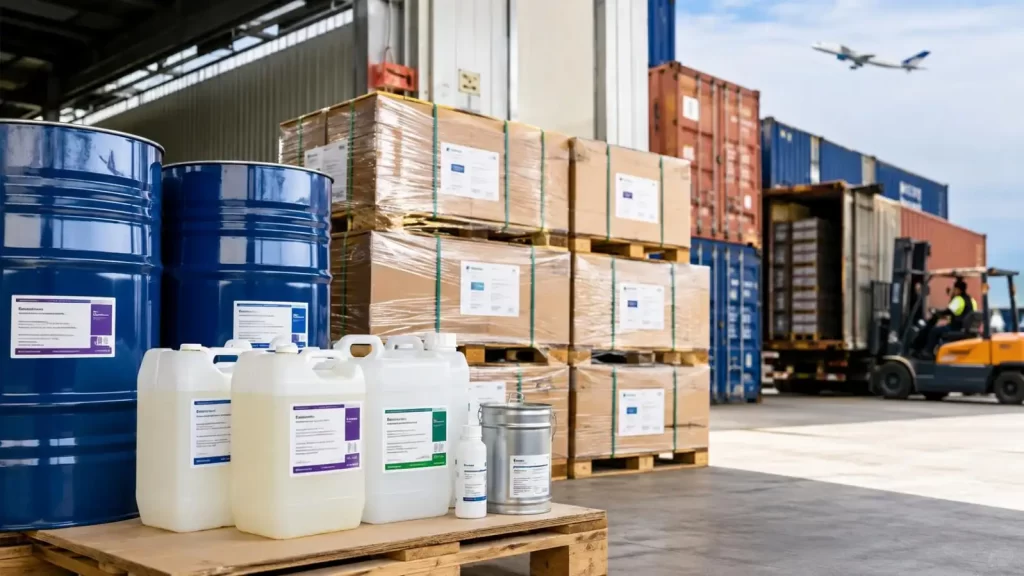
Why Low-VOC PU Resin Is a Procurement Priority
Polyurethane resin is widely used in electronics potting, industrial coatings, adhesives, sealants, flooring, casting parts, decorative products, and automotive components. Purchasing decisions can no longer be based only on price, color, or Shore hardness.
International buyers increasingly evaluate:
• Workplace emissions and ventilation
• Indoor-use requirements
• Regional chemical regulations
• Sustainability policies
• Batch consistency and traceability
• The effect of VOC reduction on performance
Suppliers may use "low VOC," "low odor," "solvent-free," and "environmentally friendly" interchangeably. A professional Polyurethane Resin Manufacturer should define each claim and support it with relevant data.
What Is Low-VOC Polyurethane Resin?
VOC refers to volatile organic compounds that may evaporate from a material under specified conditions. There is no single global VOC limit for every polyurethane formulation. Requirements vary by product category, end use, destination, and test method.
Low VOC Is Not the Same as Low Odor
| Term | Practical Meaning |
| Low VOC | Reduced VOC content measured under a defined method |
| Low odor | Lower perceived smell; not proof of low VOC |
| Solvent-free polyurethane | No conventional solvent intentionally added |
| Waterborne polyurethane | Water is the main dispersion medium |
| High-solids PU | Higher percentage of non-volatile material |
| Low free monomer | Reduced residual unreacted monomer |
A solvent-free system may still contain measurable volatile substances. Free diisocyanate concentration and VOC content are also different parameters.
Before approving low-VOC PU resin, confirm:
• Whether the result is reported in g/L, wt.%, or another unit
• Whether Part A, Part B, or the mixed system was tested
• Whether the result covers liquid VOC content or cured emissions
• Which test standard was used

Why Global Compliance Cannot Be Proven by One Certificate
A REACH or RoHS statement does not make a polyurethane resin universally compliant. Compliance changes with chemical composition, product classification, final use, and destination.
A qualified Polyurethane Resin Manufacturer should assess compliance by formulation, application, and market—not apply one certificate to every PU resin.
Key Compliance Areas
| Market or Application | Main Framework | Buyer Verification |
| EU chemical mixtures | REACH, CLP, SDS | Restrictions, SVHC information, classification, labeling |
| EU diisocyanate use | REACH Annex XVII | Free diisocyanate level, label wording, user training |
| EU electrical equipment | RoHS | Restricted substances in the finished product |
| United States | TSCA | Chemical Inventory status and restrictions |
| US workplaces | OSHA HazCom | Hazard classification, label, 16-section SDS |
| Coatings and adhesives | Local VOC rules | Product category, limit, unit, test method |
| Other markets | Local GHS and inventories | Registration and local-language documents |
For EU industrial and professional use, mixtures containing total diisocyanates at 0.1% by weight or more may trigger labeling and training obligations. RoHS is mainly relevant when polyurethane becomes part of electrical or electronic equipment.
A reliable Polyurethane Resin Manufacturer should ask where the material will be sold, how it will be processed, and what finished product it enters.
Technical Challenges in Low-VOC PU Formulation
Reducing solvents or other volatile components can change:
• Initial viscosity and substrate wetting
• A/B mixing and air release
• Pot life, gel time, and cure speed
• Surface leveling
• Low-temperature cure
• Storage stability
Cure Speed Versus Working Time
A faster cure can shorten production cycles but may also cause:
• Insufficient mixing or dispensing time
• Higher exothermic temperature
• Trapped bubbles in thick castings
• Uneven internal and surface cure
• Poor adhesion caused by limited wetting
Environmental Targets Versus Performance
A low-VOC Polyurethane Resin Manufacturer should still validate:
• Shore hardness, tensile strength, and elongation
• Adhesion, abrasion, and impact resistance
• Chemical and hydrolysis resistance
• Thermal stability and aging performance
The objective is not simply to remove solvent. It is to reduce emissions while preserving the processing window and service performance required by the application.
What Buyers Should Verify
1. VOC Evidence
Request the test method, result, unit, sample condition, tested component, and testing laboratory. Do not accept an unsupported low-VOC label.
2. Product-Specific Documentation
For polyurethane resins, the manufacturers on your shortlist should have the following documents.
a) Technical data sheets
b) Safety data sheets
c) Analysis Certificates
d) VOC Test reports
e) REACH compliance/SVHC statement (if any)
f) RoHS report (if any)
g) Test records of samples
h) Batch traceability Data
3. Processing and Batch Data
During sample evaluation, record the following and indicate your acceptable ranges for future orders; viscosity, pot life, tack-free time, demolding time, time to cure, bubble release, color and hardness.
How JINHUA Addresses Low-VOC and Compliance Challenges
JINHUA develops low-VOC PU systems around the customer's application rather than offering one universal formulation.
Its R&D team of more than 20 members evaluates:
• Viscosity, flow, and bubble release
• Hardness and flexibility
• A/B mixing ratio
• Pot life and cure profile
• Demolding requirements
• Mechanical and chemical resistance
Where technically suitable, JINHUA can assess high-solids, reduced-solvent, or other low-emission formulation routes. Development can move from laboratory samples to pilot production and commercial batches.
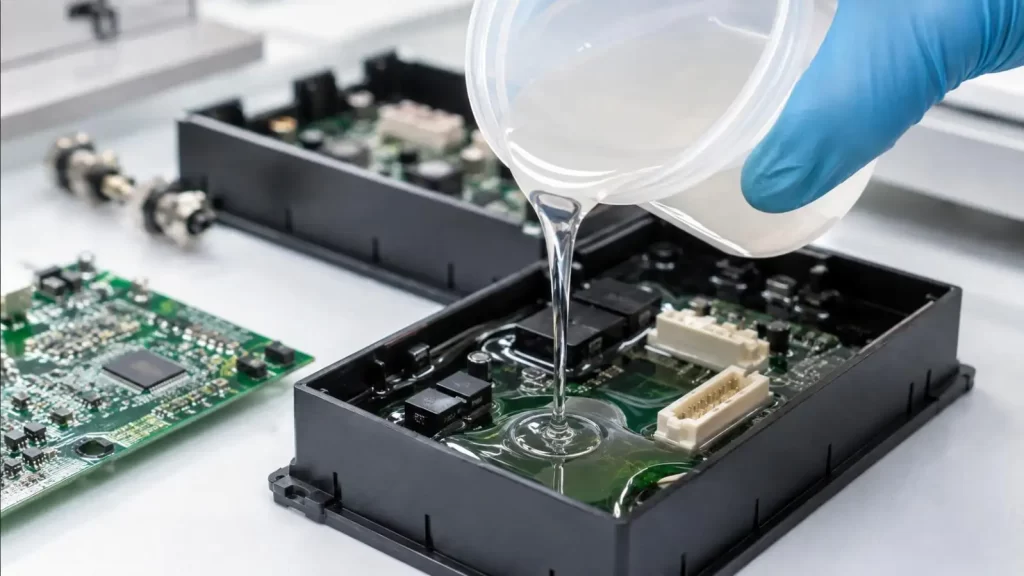
Compliance support is organized around the specific product and market. It may include product-specific TDS and SDS files, REACH or SVHC review, RoHS-related testing for electronic applications, third-party test coordination, and market-specific labeling.
JINHUA's 20,000 m² facility, eight automated production lines, and annual capacity exceeding 10,000 tons support controlled scale-up. Batch inspection may cover appearance, color, viscosity, pot life, cure time, Shore hardness, mechanical properties, and packaging weight.
As an OEM Polyurethane Resin Manufacturer, JINHUA also supports:
• A/B component packaging
• Custom container sizes
• Private label PU resin
• Batch identification
• Export cartons and label adaptation
• Sample-to-production transfer
These controls help reduce the risk that an approved sample performs differently after production scale-up.
Information Buyers Should Provide
| Project Information | Why It Matters |
| Application and substrate | Defines adhesion and mechanical requirements |
| Destination market | Determines the compliance review |
| Target VOC limit and method | Gives "low VOC" a measurable definition |
| Mixing ratio and pot life | Must match dispensing and production speed |
| Cure temperature and hardness | Guides formulation selection |
| Color and transparency | Affects raw-material selection |
| Packaging and annual volume | Supports scale-up and supply planning |
Conclusion
When selecting a Low-VOC Polyurethane Resin Manufacturer, general certificates aren't enough evidence to make the decision. The target market, VOC limit, test method, processing window, and overall performance of the end product must all be determined before approving the formulation.
JINHUA assists in all stages of a PU resin project, from formulation assessment and sample tests to provision of customer-specific information and special packaging, as well as batch production. Buyers need to provide their application details, target VOC, mixing ratio, pot life, cure profile, hardness, target market, and packaging needs for an initial technical review and sample suggestions.
FAQs
Q1. What applications can JINHUA polyurethane resin support?
JINHUA can evaluate PU resin systems for:
• Electronics potting and encapsulation
• Industrial coatings
• Adhesives and sealants
• Casting components
• Decorative products
• Flooring materials
• Mold and model fabrication
• Prototype and production components.
The final formulation will depend on the substrate and processing method, as well as the operating environment and performance requirements.
Q2. Can JINHUA produce low-VOC polyurethane resin?
JINHUA can evaluate polyurethane resins with a focus on low-VOC for specific applications, target VOCs, and required end-use market. Feasibility will require formulation and sampling as a general low-VOC statement will not apply.
Q3. Will JINHUA provide VOC testing?
JINHUA will organize VOC testing based on the selected formulation, customer specification and end-use market, as well as on the applicable testing protocol. Sample development will commence only after the buyer has provided the VOC measurement unit, the testing standard, and the target limit.
Q4. What compliance documents will JINHUA provide?
JINHUA will provide documentation such as a:
• Technical Data Sheet
• Safety Data Sheet
• Certificate of Analysis
• REACH or SVHC statements
• RoHS-related reports
• Batch inspection records
• Third party test reports
Document availability will be confirmed for the particular polyurethane formulation.
Q5. Will JINHUA provide capability to modify the properties of polyurethane resin?
Yes. JINHUA can evaluate the following properties along with the client: viscosity, hardness, flexibility, color, transparency, mixing ratio, pot life, cure, adhesion, chemical resistance, and other application specific properties.