


Updated 3 weeks ago
Custom Resin Color Matching: 2026 Epoxy Flooring Color Trends

JINHUA
A contractor approves a warm beige epoxy sample, but the installed floor develops a yellow undertone. The pigment formula has not changed. The difference may come from the epoxy's inherent color, coating thickness, lighting conditions, or the clear topcoat applied over it.
For flooring manufacturers, this is a recurring problem with Custom Resin Color Matching: matching a reference color in the laboratory does not guarantee the same appearance across a cured commercial floor.
At JINHUA, we study the different aspects of color development, including resin chemistry, and pigment dispersion, in combination with application conditions. Challenges related to formulations of warmer neutrals, metallic finishes and customized commercial palettes are expected in 2026.
1. What 2026 Epoxy Flooring Color Trends Influence Formulations?
According to Sherwin-Williams, colors for 2026 include warm neutrals and earth tones with touches of khaki on floors. In contemporary commercial flooring, including terrazzo, metallic finishes are common. Many designs incorporate the client's custom colors.
From a formulation standpoint, these trend colors include differences in opacity, pigment dispersion and surface appearance requirements.
| 2026 Color Direction | Typical Application | Formulation Challenge | Verification Priority |
| Greige, sand, warm beige | Offices, retail interiors | Yellow undertones, opacity variation | Cured color under different lighting |
| Sage green, terracotta, taupe | Hospitality, commercial interiors | Pigment balance and batch variation | Color coordinates and retained panels |
| Bronze, champagne metallic | Showrooms, decorative flooring | Particle settling and orientation | Large-area application mockup |
| Terrazzo-inspired finishes | Corridors, commercial spaces | Flake distribution and basecoat contrast | Broadcast density and topcoat appearance |
| Corporate brand colors | Retail chains, industrial zoning | Reproducing specified color across batches | Agreed instrumental and visual tolerances |
Warm neutrals are particularly sensitive to small differences in yellow and red components. Two samples may appear similar under daylight but diverge under LED lighting because their spectral reflectance differs.
This effect, known as metamerism, can't be fixed by adjusting pigment concentration.
When customers want multiple, repeated installations, color approval should specify the desired lighting condition.
2. What Colors Work Best for Different Epoxy Flooring Finishes?
The choice of colorant depends on the effect that is desired.
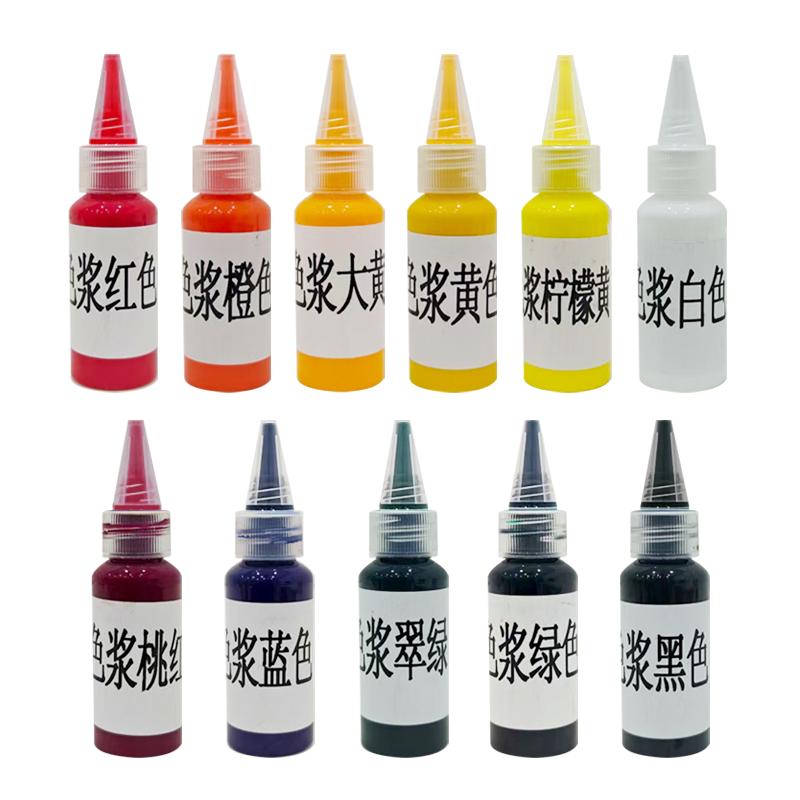
JINHUA provides various coloring agents in the form of resin and pigment pastes, liquid colorants, and pearlescent pigments. The choice of coloring agent and its compatibility with industrial flooring formulations should be assessed prior to use.
Opaque Colors Require Coverage Without Excessive Loading
Pigment pastes can be incorporated in solid color formulations as they absorb and scatter light.
Hiding power depends on the pigment composition and the resin's refractive index and film thickness.
Agglomeration and streaking occurs due to insufficient dispersion. Excessive colorant addition may impact the resin's ability to cross-link.
A thicker coating may hide color variations and give a more even color.
Metallic Finishes are Achieved by Particle Alignment
Particle alignment is determined by resin viscosity, application technique, and the behavior of the resin during the cross-linking process.
A low viscosity resin may give poor leveling and may allow particle migration. A higher viscosity resin may give better leveling, but may adversely affect the overall appearance of the coating.
Consequently, an appreciable amount of patterned metallic flooring may give an unpredictable appearance.
3. Why Can a Matched Color Change During Epoxy Curing?
Changes in the way that light passes through and reflects off a coating during cure of an epoxy hardener mixture can also change the final color. The color of the substrate affects pigment coverage. Thick films of epoxy can also cause secondary color changes. Three failure mechanisms are of interest:
•Resin yellowing: This discoloration is more noticeable with white and lighter pigments.
•Amine blush: Certain amine hardeners, under less than favorable conditions, can react with moisture in the air and/or CO2 to form a haze that interferes with coating adhesion.
•Topcoat interaction: Changes in the apparent color of a pigmented layer can occur with the application of a clear topcoat.
Discoloration of a colored epoxy layer cannot be eliminated with a topcoat, regardless of how stable it may be to UV light.
Do not expect to have an initial color match available for 2026 color palettes. Accelerated light exposure testing may give more confidence.
4. Does Low-VOC Formulations and Surface Finishes Affect Color Matching?
There are similar issues with flooring formulations that contain high solids and low VOCs.
Changing the colorant carrier can alter the finished system's volatile content, viscosity, and compatibility with the curing chemistry. A pigment paste suitable for a solvent-containing formulation is not automatically suitable for a different high-solids resin.

The buyer should verify the colorant's carrier composition and permitted loading range against the complete flooring formulation.
Surface finish creates another complication.
Matte and satin topcoats scatter light differently from high-gloss surfaces. Matting particles, microscopic roughness, and application thickness can make a previously approved color appear lighter or less saturated.
This means a gloss-panel color standard should not automatically serve as the acceptance reference for a satin flooring specification.
The approved sample must reproduce the complete coating build, including the specified primer, pigmented layer, decorative components where applicable, and final topcoat.
5. How does industrial buyers audit custom resin color matching?
Repeating color for OEM flooring brands and distributors depends on managing both the resin formulation and end-use environment.
According to ASTM D2244, there are several procedures for estimating color differences from instrumentally measured color coordinates. The use of CIEDE2000 (ΔE00) is acceptable for cases where very small color differences are to be evaluated.
However, ASTM D2244 doesn't set a universal acceptance tolerance. Therefore, the method of calculation, measurement condition, and the limit of acceptance are agreed upon by both the buyer and supplier.
An adequate approval procedure should involve:
•Reference definition: Supply a color standard, state the required finish and describe the lighting condition.
•Formulation Trial: Reveal the grades of resin and hardener, state the loading of the pigment, give the mixing sequence and other process conditions.
•Cured Panel Comparison: Control the weight of coating, state the conditions of cure and apply topcoat, if required.
•Performance Evaluation: State the condition of the coating after cure, state the adhesion and assess resistance to abrasion.
•Batch Approval: State a color tolerance and repeat the procedure on a representative sample of subsequent batches to ascertain color consistency.
In the case of metallic, textured or flake containing surfaces, instrumentation measurements must be followed by visual assessment.
Before bulk ordering, procurement personnel should review the available technical documentation, batch traceability, and/or any performance claims for a given application. Suppliers should be solicited to confirm these requirements, as assumptions based on pigment specifications may not hold true.
What Can JINHUA Support for Custom Flooring Color Development?
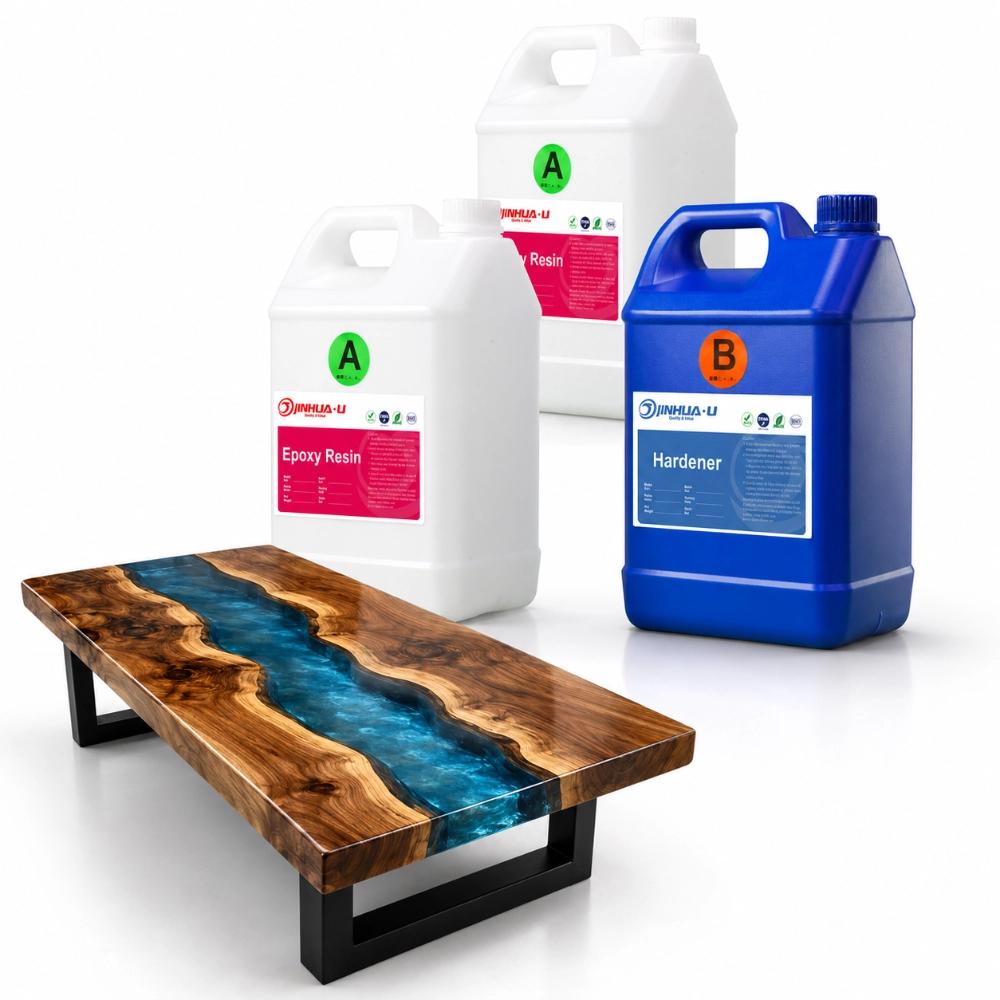
JINHUA has the capabilities, for example, to formulate epoxy flooring systems, epoxy colorants, and pigment pastes, and also to offer pearlescent powders.
Based on the above, JINHUA can discuss custom flooring colors with the client, though suitability for a specific coating build, service environment, and required service durability would require more extensive formulation and testing.
With regard to the 2026 flooring collections, including warm neutrals and/or metallics, and/or custom shades for commercial interiors, client is invited to contact JINHUA for an exploration of material and sample alternatives.
FAQs
Q1. Does JINHUA offer custom resin color matching for epoxy flooring?
Yes. JINHUA offers OEM/ODM customization for epoxy flooring materials, including color matching, formulation adjustments, gloss levels, and packaging options.
Q2. What epoxy flooring colors can JINHUA customize for 2026?
JINHUA can review requests for warm neutrals, earth tones, metallic effects, and brand-specific colors. Final shade availability and formulation compatibility require sample confirmation.
Q3. What types of resin colorants does JINHUA supply?
JINHUA offers liquid resin colorants, pigment pastes, and pearlescent pigment powders. Selection depends on the required opacity, visual effect, and resin compatibility.
Q4. Which JINHUA colorant is suitable for opaque epoxy flooring?
JINHUA resin pigment pastes are candidates for opaque coloring. Their suitability for a specific flooring formulation must be verified through dispersion, curing, and coating trials.
Q5. Can JINHUA support metallic epoxy flooring color effects?
JINHUA supplies pearlescent pigment powders for decorative resin effects. Metallic flooring applications require additional evaluation of particle dispersion, settling, and application techniques.