





The size, power and sophistication of electronic devices continues to shrink. Therefore, manufacturers require materials that can be used to shield sensitive electronic components from moisture, dust, chemicals, vibration, and extreme temperature. Epoxy resin is one of the most recommended products for electronic potting.
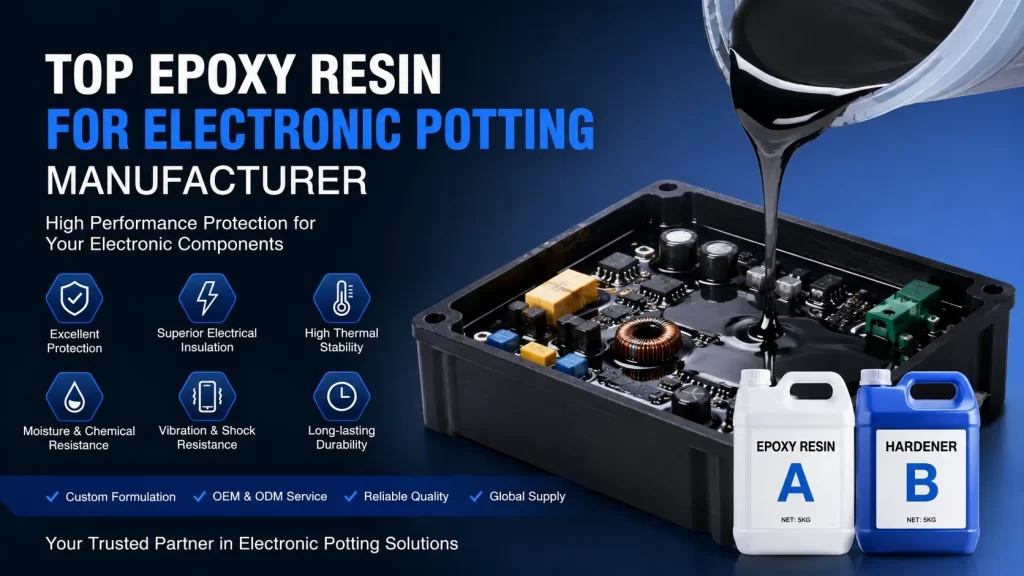
From producing LED drivers, automotive control units, power supplies, sensors, transformers and industrial electronics, selecting the right epoxy resin manufacturer can make a huge difference in the reliability and longevity of a product.
This guide covers everything you need to know about electronic potting epoxy, its advantages, selection criteria, applications and how to pick the best epoxy resin manufacturer for your business.
What Is Epoxy Resin for Electronic Potting?
Electronic potting epoxy resin is a 2 component thermosetting resin used for the potting of electronic assemblies. The resin and hardener are then mixed together and form a hard protective coating that completely encloses electronic components.
Potting compounds offer full environmental protection, enhance mechanical stability, and offer electrical protection, unlike conventional adhesives.
The best electronic potting epoxy generally provides:
- Excellent electrical insulation
- Strong adhesion to metals and plastics
- High mechanical strength
- Moisture and water resistance
- Chemical resistance
- Thermal stability
- Long service life
The qualities of epoxy resin make it one of the most popular materials in electronics production.
Why Electronic Manufacturers Choose Epoxy Potting Resin
Superior Environmental Protection
Humidification, salt spray, dust, oils and corrosive chemicals are all detrimental to electronic components. Potting resin creates a secure barrier, which keeps contaminants away from vulnerable circuits.
This protection is particularly crucial for automotive electronics, marine electronics, outdoor electronics, and industrial control systems.
Excellent Electrical Insulation
Epoxy resin has outstanding dielectric properties, helping prevent:
- Electrical leakage
- Short circuits
- Arc formation
- High-voltage breakdown
Reliable insulation ensures long-term operational safety.
Strong Mechanical Support
Vibration and impact may cause solder joints and precision electronic components damage.
Once set, epoxy resin firmly retains parts and enhances resistance to:
- Shock
- Vibration
- Mechanical stress
- Transportation damage
This makes epoxy ideal for automotive and industrial applications.
Thermal Stability
Most electronic equipment are hot when they are used.
Electronic components are subject to demanding operating conditions and performance over a broad temperature range is maintained with good epoxy formulations.
Common Applications of Electronic Potting Epoxy
Epoxy potting resin is used in numerous ways in the modern electronic industries.
Power Supplies
For power adapters and switching power supplies to function reliably, they must be protected with insulation and moisture resistance.
LED Drivers
Rain, humidity, UV and temperature changes are all challenges for outdoor LED lighting systems. When the potting is done with epoxy, the durability is enhanced.
Automotive Electronics
Automotive modules are exposed to vibrations, engine heat, road salt and water. Epoxy resists:
- Engine control units
- Sensors
- Battery management systems
- Charging modules
Industrial Control Systems
Factories are places that are dusty and moist. Industrial electronic equipment is protected from contamination and mechanical stress by potting resin.
Transformers
The small transformers and inductors have enhanced insulation, vibration resistance and heat management.
Sensors
Complete encapsulation is sometimes necessary for stable operation of pressure, temperature and proximity sensors in harsh environments.
Key Features to Look for in an Epoxy Resin Manufacturer
Epoxy suppliers are not all the same. Choosing the correct manufacturing partner is just as vital in the choice of resin.
Consistent Product Quality
Good manufacturers have a good quality control system during the manufacturing process.
Check the suppliers that provide delivery:
- Stable viscosity
- Consistent curing performance
- Reliable batch-to-batch quality
- Low impurity levels
Consistency minimizes production issues and improves product reliability.
Custom Formulation Capabilities
Different industries require different resin characteristics.
Leading manufacturers can customize formulations for:
- Low viscosity
- Flame retardancy
- High thermal conductivity
- Flexible curing
- Fast curing
- Low exotherm
- Optical transparency
Customized solutions help manufacturers meet unique application requirements.
Technical Support
Professional suppliers provide engineering support throughout the product development process.
Services often include:
- Material selection
- Potting process optimization
- Mixing ratio guidance
- Cure schedule recommendations
- Failure analysis
Strong technical support shortens development time and reduces manufacturing risks.
International Certifications
Choose manufacturers whose products comply with recognized quality standards such as:
- ISO quality management
- RoHS compliance
- REACH regulations
- UL flame-retardant standards (where applicable)
Certified products improve global market acceptance.
Production Capacity
For OEMs and large-scale manufacturers, stable supply is essential.
A dependable supplier should offer:
- Large production capacity
- Reliable lead times
- Global shipping
- Inventory management
- Long-term supply stability
How to Select the Right Potting Epoxy
Every electronic application has different requirements. Consider these factors before choosing a resin.
Operating Temperature
Evaluate both minimum and maximum operating temperatures.
Industrial electronics may require materials capable of continuous operation under elevated temperatures.
Cure Time
Production efficiency depends on curing speed.
Available options include:
- Room-temperature curing
- Heat curing
- Fast curing
- Multi-stage curing
Choose a curing process that matches your manufacturing workflow.
Viscosity
Low-viscosity epoxy easily flows into complex electronic assemblies with narrow gaps.
Higher-viscosity materials may be suitable for larger components where flow control is important.
Thermal Conductivity
Power electronics often generate substantial heat.
Thermally conductive epoxy helps dissipate heat more effectively, improving component reliability and extending service life.
Flame Retardancy
Many electrical products require flame-retardant materials that meet safety standards.
Flame-retardant epoxy resins help improve product safety in demanding environments.
Benefits of Working with a Professional Epoxy Resin Manufacturer
Choosing an experienced manufacturer offers advantages beyond purchasing materials.
Professional suppliers can provide:
- OEM and private label services
- Custom packaging
- Application-specific formulations
- Fast technical assistance
- Consistent production quality
- Competitive pricing
- Long-term supply partnerships
These capabilities help manufacturers reduce costs while improving product performance.
Emerging Trends in Electronic Potting Materials
With the further development of electronic devices, epoxy resin technology is advancing to solve new problems.
The following are trends in the industry as it is now:
Higher Thermal Conductivity
The demand for heat dissipation in electric vehicles, renewable energy systems and high power electronics is greater than ever.
Lower VOC Formulations
As manufacturers meet more and more stringent environmental requirements, the use of environmentally friendly materials is also growing in significance.
Faster Manufacturing
Rapid-curing epoxy systems help increase production efficiency and reduce manufacturing costs.
Miniaturized Electronics
Today's devices are even smaller and feature more intricate shapes where low viscosity resins are needed to fill the shapes without voids.
Improved Reliability
These mission critical applications are demanding a longer service life, as well as greater weather resistance and protection from thermal cycling from manufacturers.
Why Global Manufacturers Trust High-Quality Epoxy Resin Suppliers
Quality epoxy resin producers know how to produce high-quality epoxy resin products, and they use the latest in material science.
Rigorous quality testing is carried out on their products to ensure that:
- Stable electrical insulation
- Excellent mechanical performance
- Superior environmental resistance
- Reliable curing consistency
- Long service life
From consumer electronics to automotive systems, industrial equipment to telecommunications devices and renewable energy products, a trusted supplier can help mitigate production risks and enhance product quality.
Conclusion
Electronic potting epoxy resin is an important component used to shield today's electronic devices against harsh environmental conditions, mechanical damage, moisture and electrical failure. Choosing the right manufacturer guarantees you a uniform product, technical support, a reliable supply, and solutions designed for your particular applications.
Consider manufacturing experience, quality certifications, ability to meet custom requirements, production capacity, and technical expertise when assessing suppliers. A reputable epoxy resin company can be a long-term partner that can contribute to your business's ability to provide safer, more reliable, and durable electronics in today's competitive global marketplace.