



Updated 3 hours ago
Thick UV Resin for Crafts, Jewelry, Molds and Detailed Projects
sidrahafeez754
Thick UV Resin: Guide for Crafts, Jewelry, and Detailed Applications
The selection of resin may entirely transform the appearance and feel of a craft project. There are projects that require a flowing resin to fill small spaces. Others require a substance which remains in the place it is laid and forms a raised, shiny surface. Thicker formulations come in handy here.
- The high-viscosity UV resin is more controllable in forming domed surfaces, decorative layers, jewelry pieces, charms, and other small designs. Many UV resin formulations are single-component materials, unlike two-part epoxy, which do not need to be mixed prior to application.
- JINHUA refers to its clear UV resin as a one-part material that is used to create small handmade objects, jewelry finishes, surface repairs, and fine ornamentation. It has a curing time of 60 to 120 seconds, viscosity of 1100 to 1400 CPS, and hardness of 86 or more on Shore D.
What is the Difference Between High Viscosity Resin and Others?
Viscosity is used to describe the flowability of a liquid. A low-viscosity resin flows fast and can penetrate small crevices, whereas a high-viscosity resin flows more slowly and is likely to stay in the area it is applied.
- This is a thick UV resin that can be handy when you need to have greater control over the material. It is capable of forming raised details without the resin spreading instantly over the surface. This is why thick UV resin gel and heavy body UV resin can be frequently related to decorative work that requires the retention of shape.
- The concentrated formulation of UV resin can also be applied in small jobs where accuracy in placement is required. But being thick does not necessarily imply strength. Viscosity and resin hardness are not the same, and the material to be used should always be chosen depending on the finished product and the process involved.
The Influence of Resin Viscosity on Application
The viscosity of resin influences movement, leveling, bubble release, and surface formation. A more viscous material tends to move more slowly, and this may simplify the construction of a raised coating.
- That can come in handy with doming. A resin can be applied on a surface in a small amount and directed towards the area of interest. This is aimed at obtaining a smooth surface without spilling over the edges.
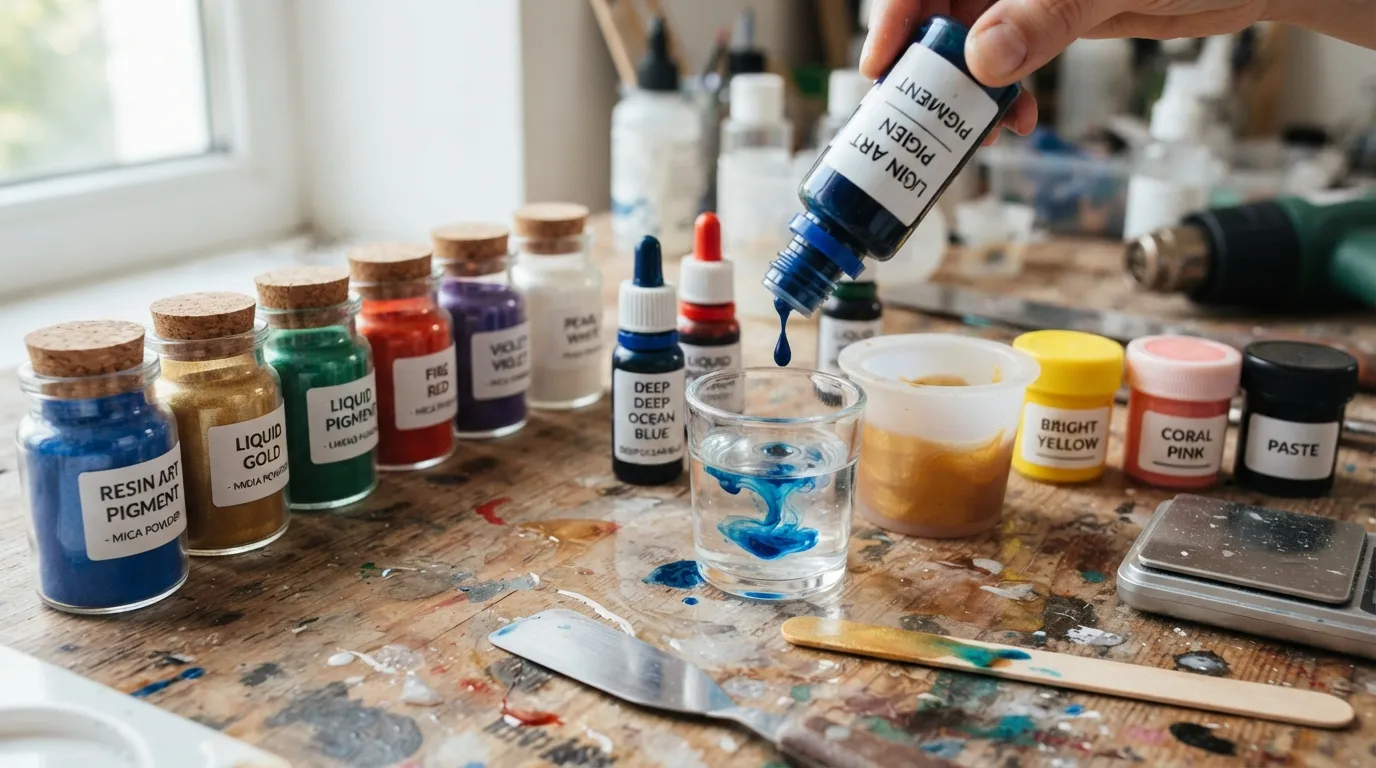
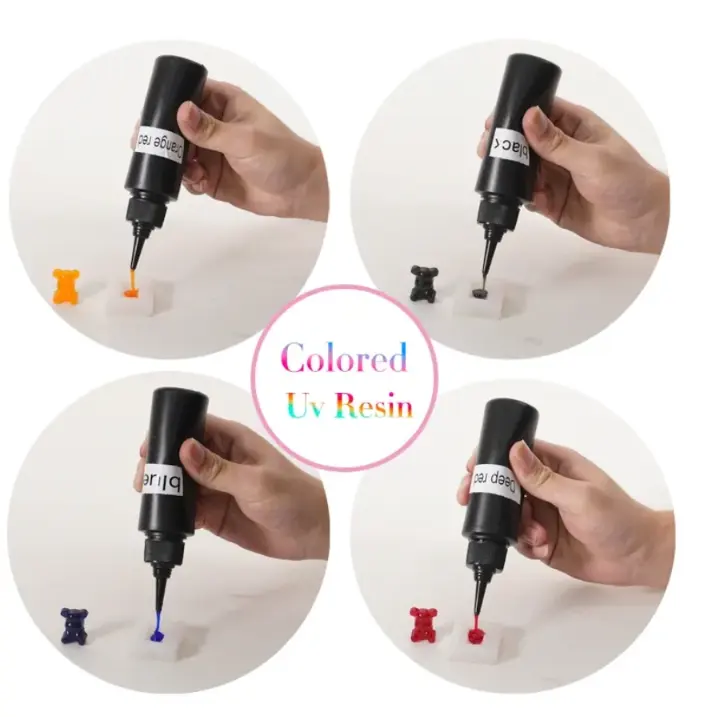
- Nevertheless, the thickness of resin also influences curing. The UV light must be able to penetrate the material. The light might not reach all the parts when the layer is too thick. Another challenge may be imposed by dark pigments since they may decrease the light penetration.
- According to JINHUA, curing is a process that relies on the thickness of the resin, the depth of the pigment, the power of the lamp, the distance of exposure, and the wavelength.
UV Curing Time and Technical Performance
The time of UV curing is never a single fixed number. It is dependent on the formulation and the conditions applied in the curing.
- Under the appropriate conditions, JINHUA reports 60 to 120 seconds for its transparent UV resin. Other specifications mentioned are tensile strength of 20 MPa and above, Shore D hardness of 86 and above, and viscosity of 1100 to 1400 CPS. Real-life outcomes may be different based on material transparency, light intensity, thickness, and exposure conditions.
- An appropriate UV LED lamp must deliver the wavelength needed by the photoinitiator system of the resin. The final result can also be affected by lamp output, distance, exposure direction, and curing temperature.
- In case the surface is sticky, then the resin may not have been exposed to enough UV energy. The UV resin guidance of JINHUA lists weak light, short exposure, excessive thickness, and pigment interference as potential factors that may lead to a failure to cure.
Cleaning Up a Resin Surface
A gorgeous resin finish begins before curing. The final surface can be influenced by dust, oil, moisture, and trapped air. Work on a smooth and flat surface. Pour the resin in small portions rather than pouring it on the surface. When bubbles form, leave them to rise where the formulation and application procedure will allow.
- Bubbles in resin may be more pronounced in transparent projects. Gloss differences can also be caused by uneven flow of resin. Contamination on the surface can cause a decrease in resin adhesion and a hazy or rough finish.
- Another factor to consider is the shrinkage of resin. Over-shrinkage may drag material off the sides and leave gaps visible. More predictable results can be achieved with the help of thin, controlled layers.
Choosing a Professional UV Resin
In ordinary production, see beyond the surface. Measurable properties and real application testing should be used to evaluate a professional UV resin.
Consider:
• Resin flow and viscosity.
• UV curing time
• Required UV wavelength
• Resin hardness
• Transparency and gloss
• Resin adhesion
• Shrinkage behavior
• Bubble formation
• Surface finish
• Resistance yellowing or aging.
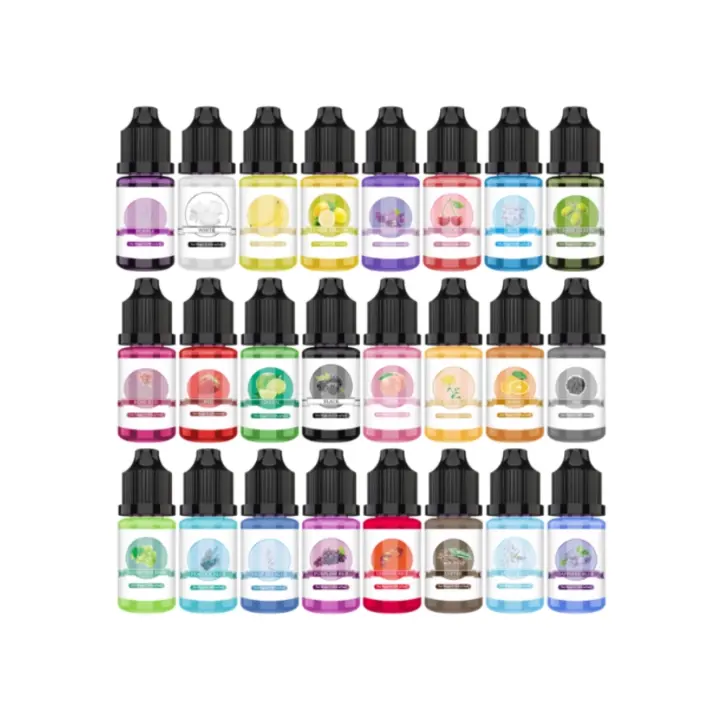
• Pigment compatibility and substrate compatibility.
Only a high-quality UV resin can be of use when it suits the application. The safest method of ensuring performance is by testing with the actual UV lamp, substrate, coating thickness, and pigment system.
Conclusion
The Thick UV Resin is not necessarily the thickest or quickest one. Formulation provides you with the control, clarity, curing response, and finished surface your project needs. In finer work, doming, decorative coating, jewelry finishing, and small craft applications can be handled far more easily with a high-viscosity formulation carefully chosen.
Select JINHUA because of trusted resin solutions, technical requirements, and application-oriented services. Contact JINHUA to talk about samples or custom resin needs for your next project.