



Updated 2 months ago
Seamless Epoxy Flooring for Warehouses: Thickness, Forklift Loads and Wear Resistance

hqt
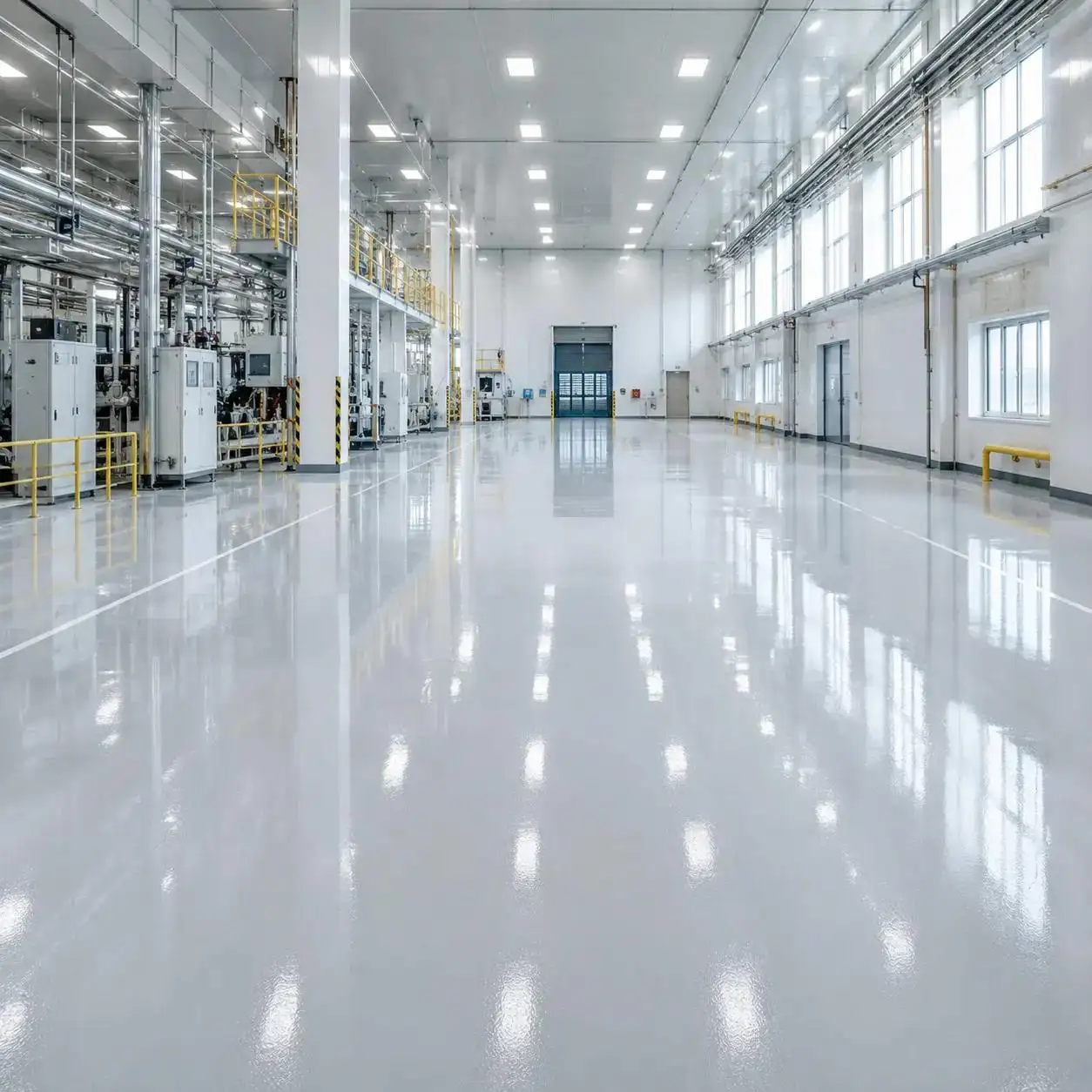
Warehouse Seamless Epoxy Flooring should be specified according to forklift load, wheel material, daily traffic, turning frequency, concrete condition, and chemical exposure. Light-duty storage areas may perform well with a thin roller-applied coating, while busy forklift aisles generally require a thicker self-leveling, aggregate-reinforced, or epoxy mortar system.
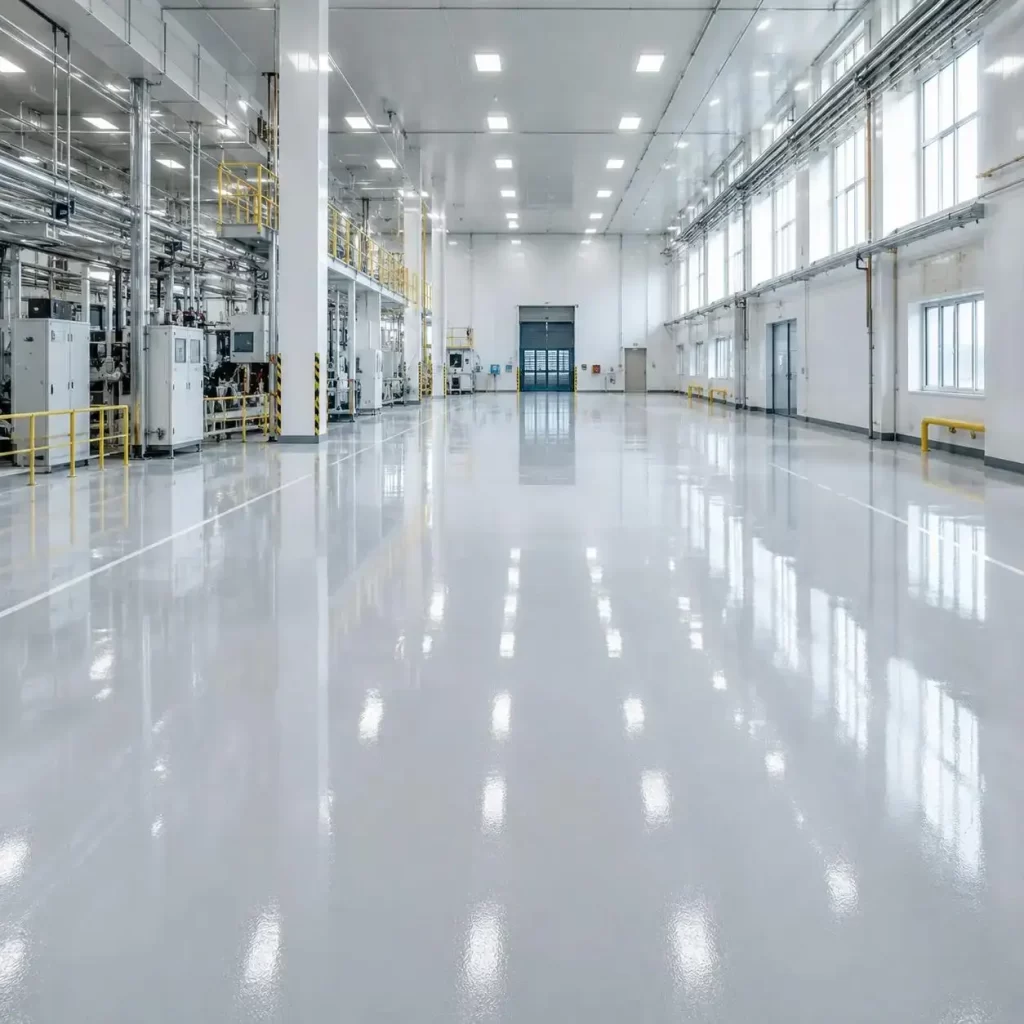
Measurement of material thickness is just one aspect of overall design. Thickness of epoxy coating may not guarantee against failure. Thick epoxy coatings may still blister or delaminate over weak, damp and dusty concrete that may be oiled. Long-term performance relies on the overall integrity of the whole flooring system from surface preparation, primers, build coats, wear layers, to top coats, as well as control of the curing process.
What Are Seamless Epoxy Floorings for Warehouses?
Seamless Epoxy Floorings are resin based floor finish systems consisting of Epoxy resins, hardeners and functional fillers. They are applied to prepared concrete usually by roll, squeegee, trowel or self-leveling techniques.
After curing, warehouse epoxy flooring forms a dense, monolithic surface that can:
•Reduce concrete dusting
•Limit oil and liquid penetration
•Improve surface hardness
•Provide strong adhesion to concrete
•Resist routine abrasion and selected chemicals
•Create an easy-to-clean working surface
•Support warehouse markings and defined traffic zones
A typical Seamless Epoxy Flooring system may contain:
- Mechanically prepared concrete
- Penetrating or high-build epoxy primer
- Epoxy build coat or mortar layer
- Self-leveling epoxy body coat
- Wear-resistant topcoat
- Optional anti-slip aggregate and line marking
"Seamless" describes the continuous coated surface. It does not mean that active cracks, construction joints, or expansion joints should be permanently covered.
How Thick Are Seamless Epoxy Flooring Required?
The correct epoxy flooring thickness should reflect how each warehouse zone is used. Applying one uniform specification across loading bays, storage areas, turning points, and pedestrian zones may lead to unnecessary cost in some areas and premature failure in others.
| Warehouse Zone | Typical Traffic | General Thickness | System Direction |
| Light storage area | Personnel and hand carts | 0.5–1.0 mm | Roller-applied epoxy coating |
| Medium-duty zone | Pallet trucks and occasional forklifts | 1.0–2.0 mm | High-build or thin self-leveling epoxy |
| Standard forklift aisle | Daily forklift movement | 2.0–3.0 mm | Self-leveling or filled epoxy system |
| High-traffic logistics area | Frequent turning and braking | 3.0–5.0 mm | Reinforced epoxy or epoxy mortar |
| Heavy-impact zone | Heavy vehicles, ramps, dropped loads | 4.0–6.0 mm or more | High-strength epoxy mortar system |
These figures are general design references, not fixed specifications. Final Seamless Epoxy Flooring thickness should be confirmed against concrete strength, traffic intensity, wheel type, impact conditions, and the manufacturer's technical data.
Five Factors That Control Flooring Performance
1. Forklift Weight and Load Distribution
The empty weight of a forklift does not represent its maximum floor load. A more useful evaluation includes:
•Fully loaded operating weight
•Maximum pallet weight
•Cargo center of gravity
•Front-wheel load concentration
•Travel speed and braking behavior
•Number of daily vehicle movements
Much of a loaded forklift's weight is transferred through the front wheels. Because the wheel contact area is relatively small, localized pressure can be considerably higher than the average structural floor load.
2. Wheel Types
The kind of wheel on a forklift can impact the level of wear on your Seamless Epoxy Flooring.
•Rubber wheels have some cushioning and distribute pressure over a greater surface area.
•Polyurethane wheels, on the other hand, are much harder and may cause greater contact pressure.
•Nylon wheels also have very little cushioning, and can also cause focused pressure.
•If the tip of a wheel is damaged, it can cause scraping and cutting of the coating.
•Any debris, such as sand or metal, embedded in the wheel, can become a grinding tool.
Damaged or poorly maintained wheels will cut or chip a floor coating.
3. Traffic Pattern and Turning Stress
Movement in a straight line causes rolling abrasion. Stresses from turning, braking, and changing direction can cause shear stress to the coat and the substrate.
•High stress areas include
•Forklift aisle paths
•Intersections where turns occur
•Rack openings
•Dock and ramp openings
•Staging areas for pallets
•Charging areas for batteries
•Cold storage door openings
An acceptable industrial warehouse flooring design should reinforce the high stress areas rather than rely on one average thickness.
4. Condition of Concrete
Coating can only be as good as the substrate it is applied to. Before applying Seamless Epoxy Flooring, contractors should assess the following:
•Concrete's compressive strength and surface strength
•Laitance and surface dusting
•Oil and grease contamination
•Cracks, voids, holes and damaged joints
•Moisture and the vapor pressure
•Compatibility with previously applied coatings
•Flatness and surface profile
There is no way to strengthen weak or contaminated concrete with a thicker resin layer. Failure will occur in the concrete and not the coating.
5. Chemical and Environmental Exposure
Warehouse floors may contact hydraulic oil, lubricants, cleaners, battery fluid, dilute acids, dilute alkalis, and selected solvents.
Chemical resistance should be assessed according to:
•Chemical identity
•Concentration
•Spill temperature
•Contact duration
•Cleaning frequency
•Expected exposure area
A general "chemical-resistant" claim is not sufficient for frequent or prolonged exposure.
How Forklifts Damage Seamless Epoxy Flooring
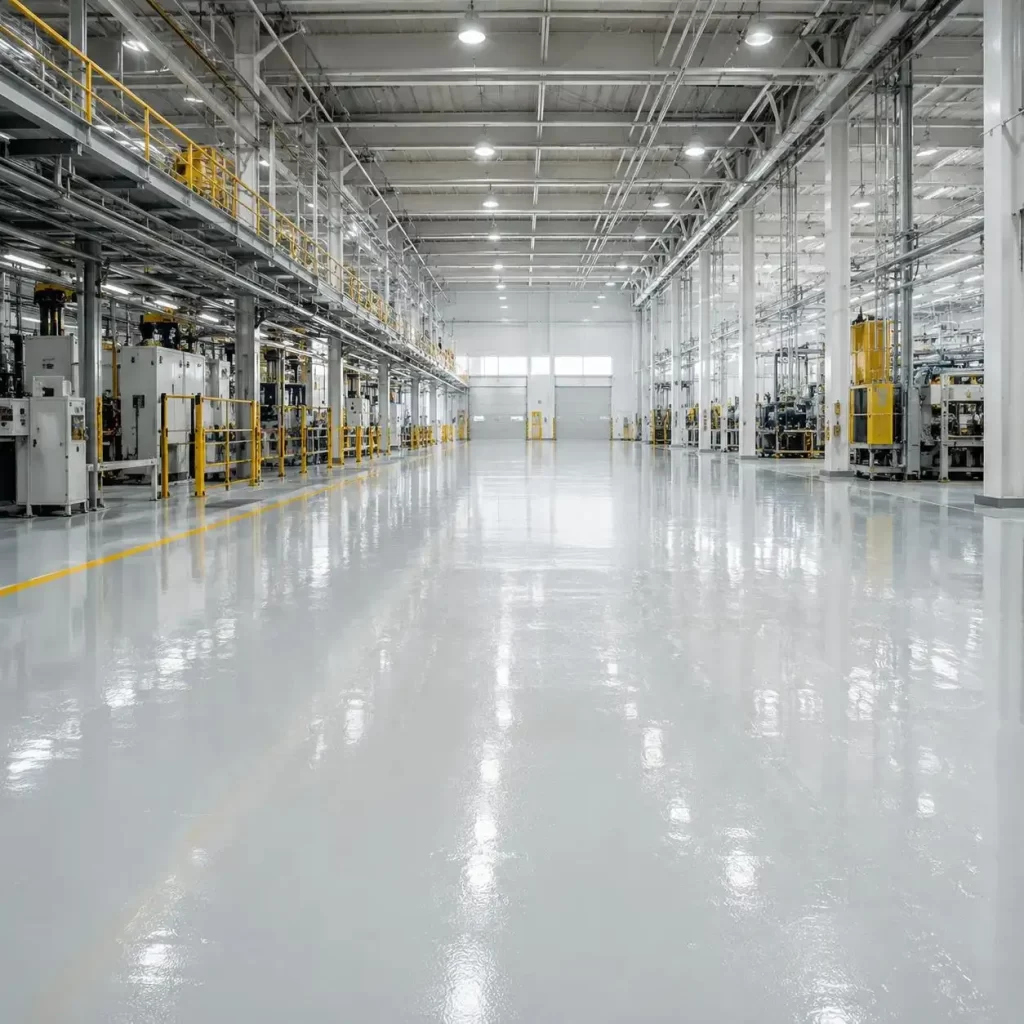
Forklift traffic creates three main forms of stress.
Rolling Abrasion
Repeated use of wheels removes gloss and erodes the upper resin surface. Debris, dust, and sand can increase this effect.
Shear and Torsional Stress
Turning or stopping creates shear stresses. These become especially severe when heavy loads are turned by hard wheels.
Impact Loading
Uneven operation of vehicles or dropping tools, pallets, or metal components may result in localized chipping, cracking, or indenting.
This requires that a forklift-resistant epoxy floor system incorporate the appropriate thickness, adhesion, and impact-resistance into an overall abrasion-resistant and compressive-resistant system.
Wear Resistance Is More Than Hardness
High surface hardness helps resist scratches, but a coating that is excessively hard will crack due to impact or movement of the substrate.
When evaluating Seamless Epoxy Flooring Systems, prospective customers should consider the following:
•Abrasion Resistance
•Adhesion
•Compressive Strength
•Impact Resistance
•Hardness of Surface
•Compatibility with Chemicals
•Recommended Dry Film Thickness
•Recoat Interval
•Light-Traffic Cure Time
•Full Mechanical Cure
•Service Temperature Range
The most durable warehouse system is not necessarily the hardest material. It is the system with the most appropriate balance of properties for the actual operating environment.
Common Warehouse Flooring Failures
| Failure | Likely Cause | Corrective Direction |
| Rapid loss of gloss | Thin or low-wear topcoat | Add a reinforced wear layer |
| Peeling in turning areas | High shear stress or poor bonding | Improve grinding, primer, and thickness |
| Blisters or bubbles | Moisture or trapped air | Test moisture and improve sealing |
| Local delamination | Dust, laitance, or oil contamination | Mechanically remove weak concrete |
| Recurring cracks | Active cracks covered incorrectly | Repair and retain movement joints |
| Slippery surface | Smooth finish or oil accumulation | Add anti-slip aggregate |
| Chemical staining | Incompatible resin chemistry | Confirm chemical exposure before selection |
Surface Preparation
The first step in our Seamless Epoxy Flooring is thorough preparation:
•We assess the strength and measure the moisture in the concrete, and then check for cracks, contaminants, and delamination.
•Grind away weak material from the floor using a floor grinder.
•Dust and debris will be vacuumed.
•Epoxy cures and fills morph cracks and smooths damaged edges.
•To help seal the pores epoxy can be used to bond the surface.
•After measuring, the proper amount of hardener is added to the resin. The sides and bottom of the mixing container are scraped.
•As a finish, the floor can be given a roller, squeegee, or trowel application of self-leveling thick material.
•Trap air bubbles by rolling with a spiked roller.
•The floor must be protected from moisture, dust, and foot traffic during the curing process which takes several hours.
Within the first few hours, forklift traffic may cause damage or mark the surface of the floor.
How JINHUA Aids Warehouse Flooring Projects
JINHUA's solvent-free epoxy flooring resin combines epoxy resins with curing agents and functional fillers. It is designed to cure rapidly and form a dense Seamless Epoxy Flooring surface that is smooth and hard with high adhesion and good wear resistance.
For indoor light- to medium-duty warehouse conditions, the system offers:
•Solvent-free, low-odor application
•Roller, squeegee, trowel, and self-leveling options
•Strong bonding to properly prepared concrete
•Resistance to routine warehouse abrasion
•Protection against oils, dilute acids, alkalis, and selected solvents
•A continuous surface that is easier to clean and maintain
High-traffic areas may require additional build coats, filled layers, or epoxy mortar reinforcement. Where rapid return to service, low-temperature curing, or UV exposure is important, JINHUA can also support polyaspartic polyurea systems. Polyurethane flooring can be considered where greater flexibility, weather resistance, or movement tolerance is required.
Final Recommendation
When designing Warehouse Seamless Epoxy Flooring, thickness should not be the only design parameter. Lifespan is affected by forklift wheel pressure, how often a forklift turns, the quality of concrete, chemicals, and how long the epoxy cures.
JINHUA offers solvent-free Epoxy, Polyaspartic Polyurea, and Polyurethane Systems for industrial flooring. By telling JINHUA what area needs flooring, what type of forklifts will be used, what the material of the forklift wheels are, and how much traffic there is, what the substrate is like, what thickness is needed, and what the available downtime is, a member of JINHUA will be able to assess a Seamless Epoxy Flooring solution.
FAQs
Q1. What is JINHUA Seamless Epoxy Flooring Ideal For?
JINHUA Seamless Epoxy Flooring is meant for indoor industrial situations that require a hard, dense, continuous and easily cleanable surface. We have successfully completed projects for warehouses, workshops, production areas, clean rooms, storage facilities and logistics centers.
Q2. Is JINHUA Seamless Epoxy Flooring Forklift Warehouse Friendly?
Yes. JINHUA's epoxy flooring resin may be used in warehouses with pallet trucks and forklifts, provided that the complete flooring system is designed for the weight of the vehicles in consideration of wheel type, traffic frequency, turning pressure and the condition of the concrete. High traffic areas may require additional build coats or an epoxy mortar layer.
Q3. What Thickness Does JINHUA Suggest for Warehouse Epoxy Flooring?
Thickness for an epoxy flooring system depends on the set of conditions from the end user. Light duty engineering may use about 0.5-1.0 mm, whereas standard aisles may require 2.0-3.0 mm. Impact zones or high traffic may require a system of 3.0-6.0 mm or epoxy mortar. Final determination should be made for each case.
Q4. Is JINHUA Seamless Epoxy Flooring Solvent-Free?
JINHUA has a solvent-free epoxy resin system consisting of epoxy resin, curing agents and functional fillers. It has low odor and is also suited for the controlled indoor industrial environments.
Q5. What Application Methods Can Be Used For JINHUA Epoxy Flooring Resin?
JINHUA materials may be applied by:
•Roller coating
•Squeegee application
•Trowel application
•Self-leveling application
Depending on the finish, thickness, and level of surface flatness required, the method of application should also be considered as well as the level of traffic and the conditions of the environment.