



Updated 2 months ago
How to Choose an Art Resin Manufacturer for Private Label and OEM Orders

hqt
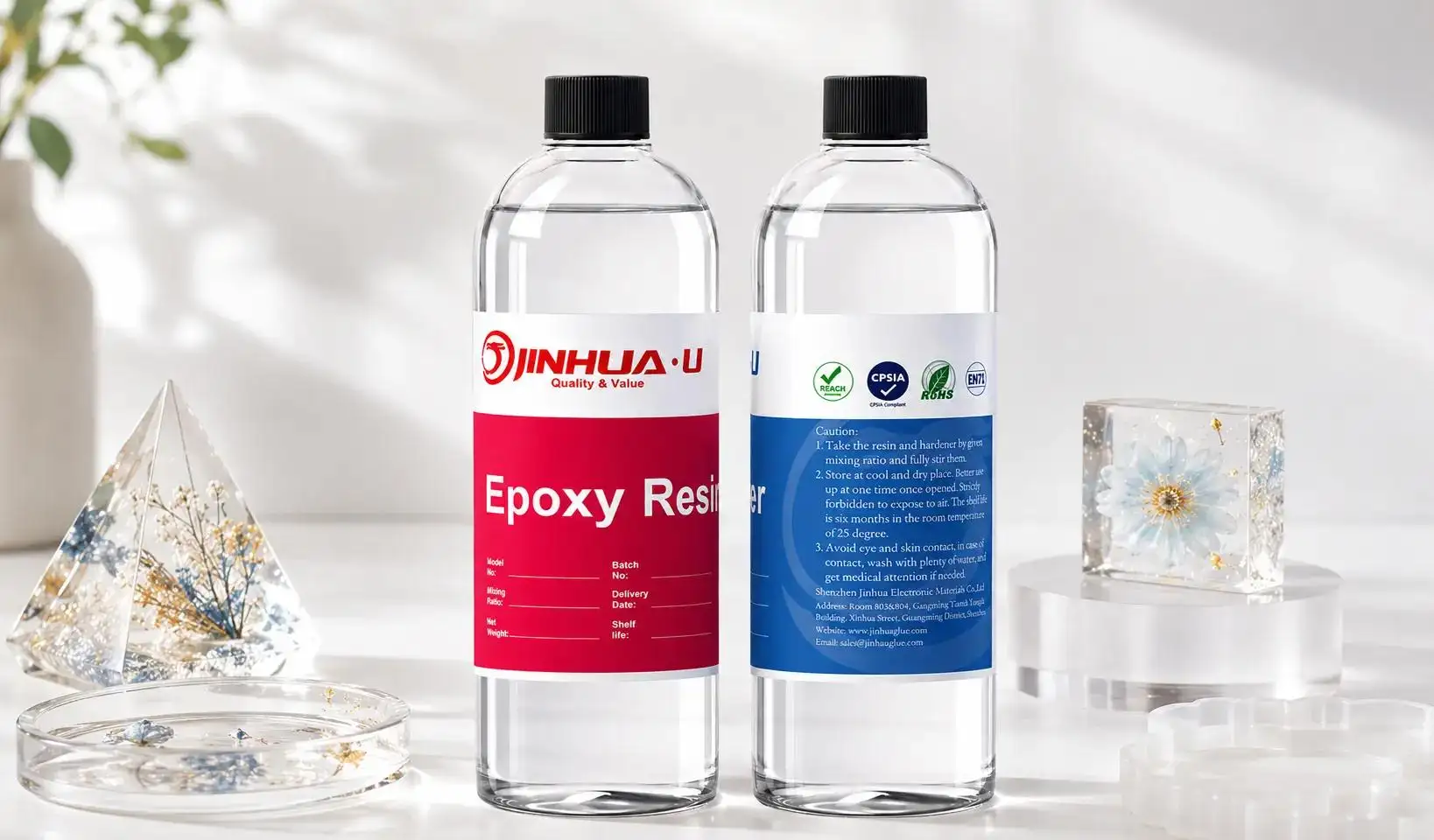
When considering an Art Resin Manufacturer for private label art resin or OEM orders, price quotes aren't the only number you should be looking at. Potential buyers must evaluate whether a manufacturer is able to provide a formulation that is consistent in curing, clear, has no yellowing, easily releases bubbles, is flexible with packaging, offers adequate documentation, and can be relied upon for manufacturing consistency.
A quality Art Resin Manufacturer is able to provide a resin system for a particular make, offer samples, and explain the plan to control a proposed formula during mass production. This is critical for resin brands, craft-material importers and e-commerce sellers, as inconsistent curing, leaking containers or yellowing can result in poor reviews, product returns and increased post-sales service costs.
Private Label, OEM and ODM Art Resin: What Is the Difference?
Not every customization project requires a completely new formula. The right cooperation model depends on the buyer's market position, performance requirements and launch schedule.
| Cooperation Model | Typical Scope | Best Suited To |
| Private Label | Existing formula with customized branding, labels and packaging | Start-ups, online sellers and distributors |
| OEM Manufacturing | Adjusted viscosity, mixing ratio, cure speed, hardness or packaging | Brands requiring differentiated performance |
| ODM Development | Product development from application concept to retail-ready solution | Companies launching a new resin category |
A capable Art Resin Manufacturer may support:
• 1:1, 2:1 and 3:1 resin-hardener systems
• Viscosity and flow adjustment
• Pot-life and curing-time optimization
• Yellowing-resistance improvement
• Bottle, kit, label and carton customization
• TDS, SDS and compliance-document preparation
• Sample validation, pilot production and mass production
Private labeling is therefore not simply a matter of placing a logo on a bottle. The formula, filling accuracy, packaging compatibility and user instructions must work together as one commercial product.
Start with the Intended Resin Application
A professional Art Resin Manufacturer should first ask where and how the resin will be used. Different applications require different balances of viscosity, working time, hardness and bubble release.
Coating and Artwork Applications
Resin used for canvas art, wooden artwork, photo sealing, decorative surfaces and fluid-art projects should provide:
• Good self-leveling
• High surface gloss
• Sufficient open working time
• Controlled bubble release
• Suitable yellowing resistance
A coating resin that cures too quickly may not level properly, while an excessively thin formula may flow away from edges or vertical areas.
Jewelry and Small Mold Casting
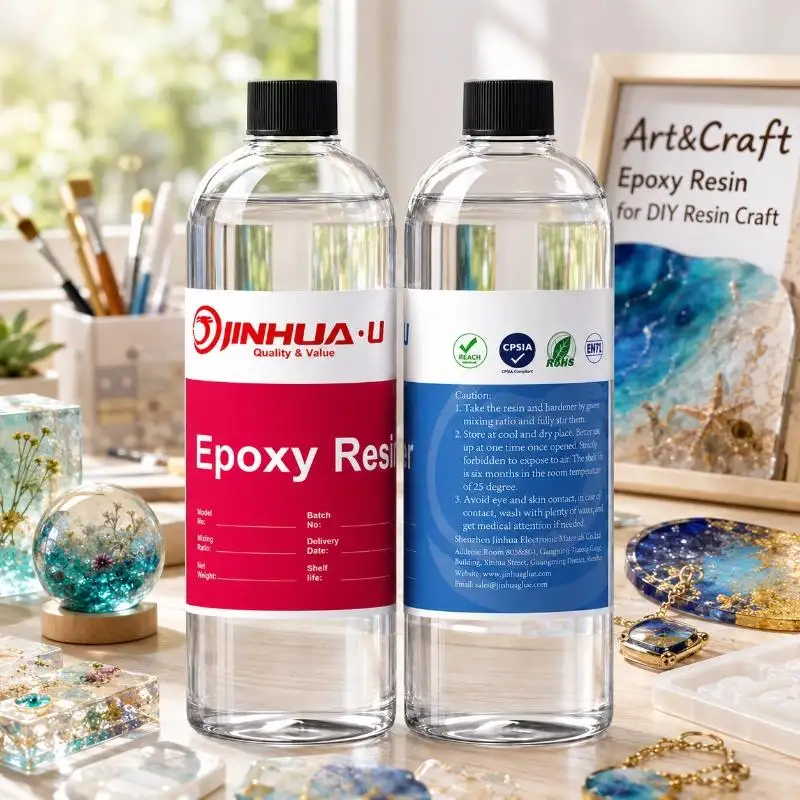
Pendants, earrings, keychains, miniatures and LED decorations generally need a lower-viscosity resin. The material must flow into narrow corners and reproduce fine details without trapping excessive air.
The most important criteria will be:
• Fine-cavity filling
• Clarity after curing
• Pigment compatibly
• Mold-release performance
• Surface hardness
• Resistance to water and light scratching
Fast-Production Crafts
Commercial craft studios and sellers of customized products may need faster demolding to increase output. In addition, shorter curing times may lower pot life and increase heat generation.
The Art Resin Manufacturer should therefore evaluate:
• Casting size and thickness
• Batch volume
• Room temperature
• Required demolding time
• Acceptable working time
• Heat sensitivity of pigments and embedded objects
Comparing 1:1, 2:1 and 3:1 Art Resin Systems
| Mixing Ratio | General Characteristics | Common Uses | Main Buying Considerations |
| 1:1 | Easy to measure and user-friendly | DIY kits, coatings and general artwork | Mixing tolerance, self-leveling and yellowing resistance |
| 2:1 | Balanced flow and working time | Jewelry, small molds and detailed crafts | Low viscosity, detail filling and bubble control |
| 3:1 | Often designed for specialized flow or faster curing | Small casting and higher-throughput production | Pot life, exotherm and curing speed |
Mixing ratio alone does not determine quality. Resin purity, hardener design, manufacturing accuracy and formulation stability are more important.
An experienced Art Resin Manufacturer should recommend a system based on the customer's application rather than simply promoting the formula currently available in stock.
Evaluate Clarity and Yellowing Resistance
Clear resin performance should be assessed under defined conditions. Transparency and long-term appearance may be influenced by:
• Base epoxy-resin quality
• Initial hardener color
• UV exposure
• Mixing accuracy
• Cure temperature
• Pigment or additive loading
• Product thickness
• Storage conditions
Buyers should ask whether the Art Resin Manufacturer measures initial color, conducts aging evaluations and controls color variation between batches.
Claims such as "never yellows" should be treated cautiously. A more technically responsible supplier will explain the expected yellowing resistance under specified curing, storage and exposure conditions.
Understand Pot Life, Cure Time and Hardness
| Parameter | Definition | Commercial Impact |
| Pot Life | Time the resin/hardener mix is usable | Allows control of batch size and work pace |
| Initial Cure | Can handle/demold the surface | Influences efficiency of the production process |
| Full Cure | Time to reach all properties | Affects the packing, testing and use of the end product |
| Shore D Hardness | Surface of the cure hardness | Influence of the resistance to scratching and rigidity |
The pot life of the cure can impact how rigid the cure is. Faster pot lives can mean a harder cure, but a harder cure is not always better. Detailed work typically benefits from long pot lives, but a high hardness can mean a cure is too brittle. All test results need to state the cure temperature and the conditions of the test.
Review Batch Control and Technical Documentation
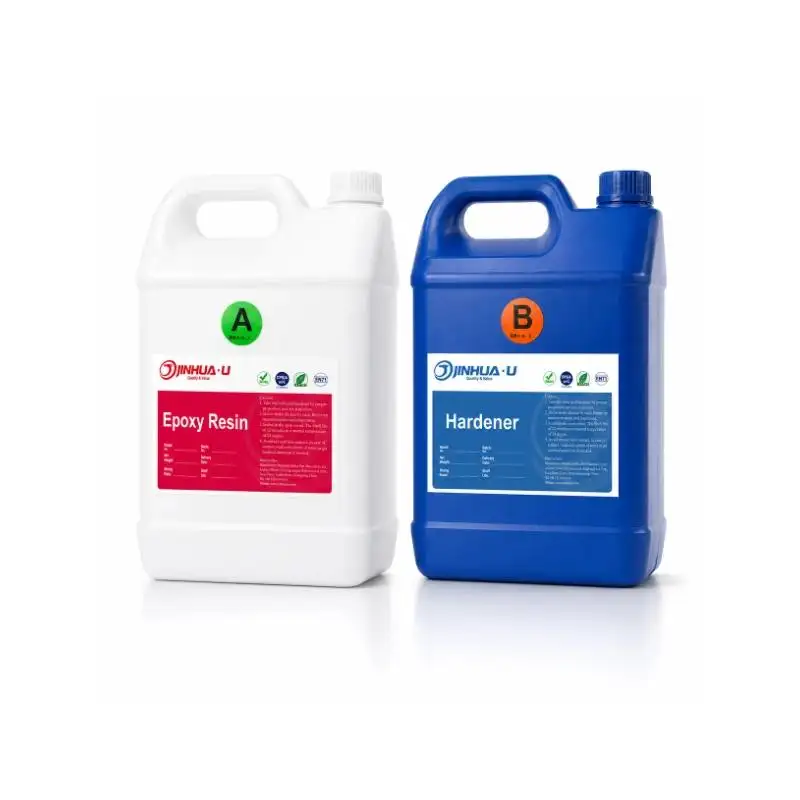
A dependable Art Resin Manufacturer should control the full process from incoming raw materials to final packing.
| Control Point | Main Risk | Expected Manufacturer Control |
| Mixing accuracy | Sticky or incomplete cure | Calibrated dosing and production records |
| Viscosity | Changed flow or bubble release | Batch viscosity testing |
| Color | Visible variation in clear resin | Raw-material and color control |
| Cure performance | Inconsistent user experience | Standard-temperature cure testing |
| Hardness | Soft or excessively brittle parts | Shore D testing |
| Packaging | Leakage or contamination | Filling and seal inspection |
Buyers may also request relevant TDS, SDS or MSDS, ISO documentation, SGS reports, REACH and RoHS files, CPSIA documents, EN71-3 reports and batch-specific records. The document must apply to the selected product model and destination market.
How JINHUA Addresses Private Label Art Resin Challenges
Private label buyers often face unstable curing, excessive bubbles, inconsistent viscosity, limited packaging choices and uncertain delivery. JINHUA addresses these issues through application-based formulation, standardized manufacturing and batch-level testing.
| JINHUA Product Direction | Ratio | Cure Time | Hardness | Typical Application |
| Anti-Yellowing Clear Art Resin | 1:1 | 12–24 hours at 25°C | Shore D 80±3 | DIY artwork and clear coating |
| Thin Clear Epoxy Resin | 2:1 | 12–24 hours at 25°C | Shore D 80±5 | Jewelry, keychains and small molds |
| Low-Viscosity Fast-Cure Resin | 3:1 | 8–10 hours | Shore D 85 | Small crafts and faster production |
| Fast-Cure Clear Casting Resin | 3:1 | 4–5 hours | Shore D 87 | Small transparent casting |
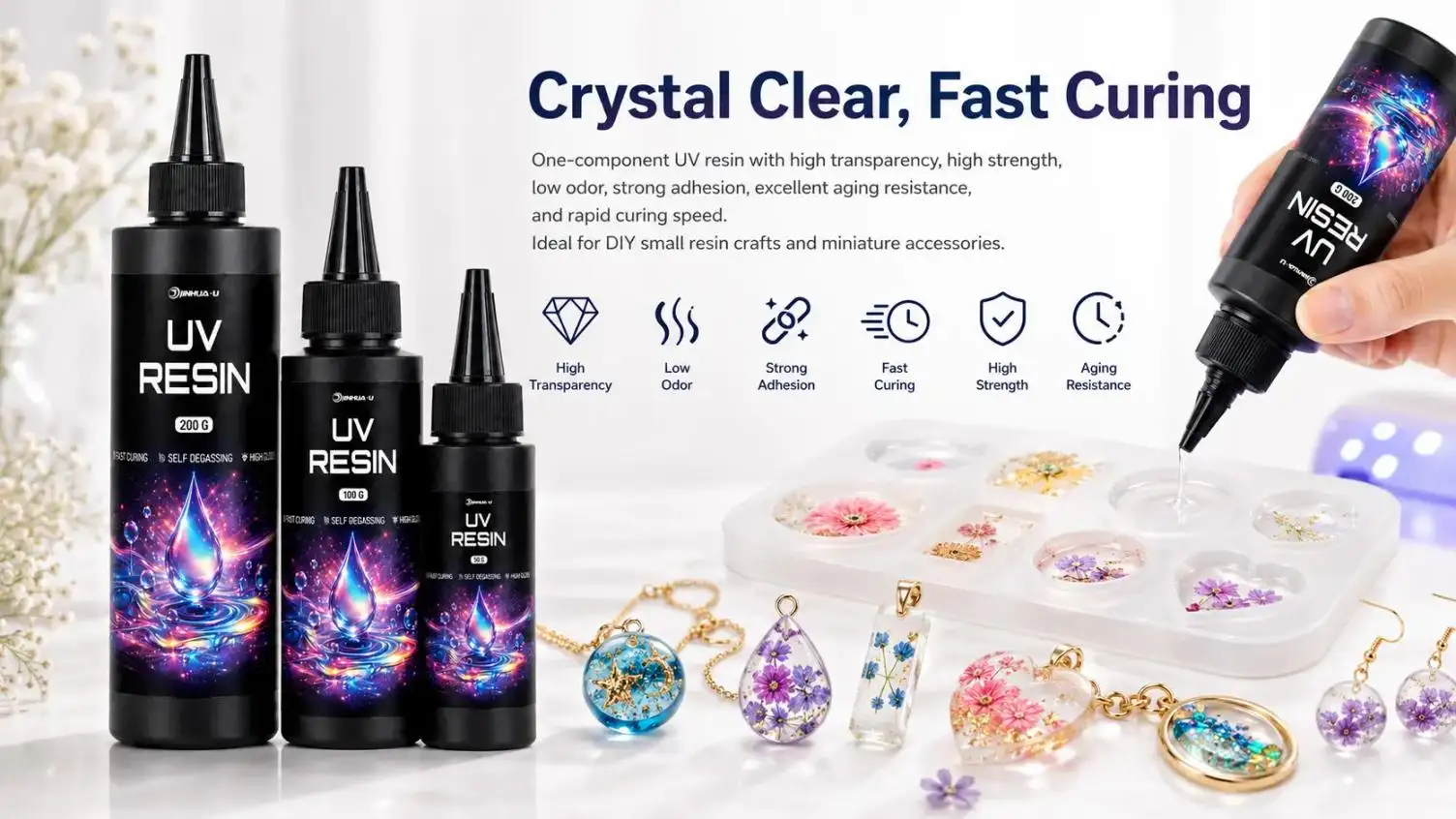
For detailed crafts, the 2120AB-M3 system uses a 2:1 ratio by weight, has an approximate 40-minute pot life and cures in 12–24 hours at 25°C. Its low-viscosity and self-leveling characteristics support narrow-cavity filling, bubble release and smooth surface formation in pendants, earrings, keychains and LED decorations.
JINHUA operates a 20,000-square-meter facility with eight automated production lines, annual capacity exceeding 10,000 tons and an R&D team of more than 20 members. These capabilities support formula development, batch control and the transfer from approved samples to mass production.
Customization may cover:
• Mixing ratio, viscosity and cure speed
• Hardness and yellowing-resistance direction
• Bottle size and kit configuration
• Labels, cartons and instructions
• Market-specific technical documents
Final Considerations
Do not select an Art Resin Manufacturer by price alone. Compare application fit, formula stability, sample performance, batch control, packaging, documentation and delivery planning.
For private label art resin or OEM development, buyers can share their application, preferred mixing ratio, packaging size, target market and expected order volume with JINHUA to receive a suitable product recommendation, sample plan and preliminary manufacturing assessment.
FAQs
Q1. Does JINHUA offer private label artificial resin?
As per our experience, private label art resin projects are more cost-effective if art resin formulations are customized, although we are capable of customizing packaging (bottles, labels, cartons). Bin instructions, and product packaging for the formulations. We require the anticipated order volume and the size and package of the intended product.
Q2. Does JINHUA accept custom-made OEM art resin formulations?
Yes, we, as a professional art resin manufacturer, accept various formulation requests based on mixing ratio, viscosity, pot life, curing time, degree of hardness, the evolution of bubbles and yellowing resistance. We require sample testing for final mass production confirmation.
Q3. What are the mixing ratios available at JINHUA?
We have 1:1, 2:1, and 3:1 mixing ratio art resin systems. The appropriate system is determined by the working time of the art resin, viscosity of the system, the thickness of the casting, and system efficiency.
Q4. Which JINHUA resin is suitable for jewelry and small molds?
The 2120AB-M3 resin is appropriate for jewelry (including earrings and pendants), keychains and small decorative molds. It is a 2:1 by weight mixing ratio art resin, has a pot life of about 40 minutes, and takes 12-24 hours to cure at 25 degrees Celsius.
Q5. How do JINHUA's art resins control bubbles in the resin?
We design art resins with formulations that control bubbles based on the application, and we control art resin viscosity for mold filling and bubble release. Actual bubble performance for a job is determined by mixing speed, ambient temperature, edge and center pour, mold geometry, and pigment content.