



Updated 4 hours ago
Pebble Floor Epoxy Resin for Durable Aggregate Flooring Systems
sidrahafeez754

Pebble Floor Epoxy Resin for Strong & Attractive Aggregate Flooring
A pebble floor is naturally attractive, which can hardly be matched by ordinary concrete. It is organic in texture; the colors are not monotonous, and tiny stones may form beautiful patterns in patios, paths, courtyards, and other landscape spaces. But loose aggregate requires a good binder in case the finished surface should remain stable and presentable.
- This is where pebble floor epoxy resin comes in handy. An epoxy system that is well designed can cement natural pebbles, gravel, sand, and other mineral aggregates to create a solid surface. It is also capable of giving a clear finish which enables the character of the stone to be seen.
- To contractors and flooring professionals, it is not just a matter of identifying a robust resin. The resin must have the appropriate viscosity, mixing ratio, curing profile, adhesion, and surface performance for the aggregate and environment.
Working of Epoxy Pebble Flooring
Pebble flooring epoxy is normally supplied as a multi-component system. The resin and hardener are mixed in a given ratio, and then the material is mixed with the chosen aggregate or laid down as a component of the flooring system.
- After the components are mixed, a chemical reaction commences. The epoxy resin is a two-part material that cross-links and transforms into a thermoset hard material. The aggregate, when properly incorporated, keeps the individual stones together and forms a more stable surface.
- The finished epoxy pebble flooring relies on a number of factors in order to determine the quality. The outcome depends on aggregate cleanliness, stone size, resin flow, mixing accuracy, substrate preparation, application thickness, and curing temperature.
Natural Stone, Gravel and Decorative Aggregate
- Aggregate flooring is beautiful due to the choice of the material. Soft, organic colors can be achieved with natural pebbles, river stones, and river pebbles. Ornamental work can be in colored pebbles, quartz aggregate, stone chips, or graded gravel.
- The aggregate size is also important. Fine aggregate is used to fill smaller areas and may give a more visual texture, whereas coarse aggregate gives a more distinct stone look. A well-chosen mixture of natural stone aggregate and decorative stone aggregate may result in a balanced surface with a texture and visual depth.
This method is usually applied in:
- Garden paths and courtyards
- Decorative patios
- Landscape surfaces
- Walkways and pathways
- Commercial decorative flooring
The end product may be similar to the exposed aggregate flooring, although the bonding process and the resin composition dictate the performance of the completed system.
Technical Properties of Pebble Floor Epoxy Resin
An excellent aggregate flooring resin should not just be able to hold stones together. The bond strength and coating adhesion of the epoxy bond are what define the effectiveness of the cured system to bond with the aggregate and prepared substrate.
- Chemical resistance is relevant in places that are exposed to cleaning products, oils, or other chemicals. The resistance to abrasion is important in areas where individuals are frequently walking on the surface. The consideration of impact resistance is more applicable where the equipment, tools, or heavy objects can come into contact with the floor.
- Moisture resistance, UV resistance, and weather resistance should also be taken into account with exterior installations. Expansion and contraction of the substrate and aggregate can occur due to temperature variations; thus, thermal resistance and flexibility of the entire flooring system can affect long-term performance.
- Slip resistance offers a smooth-appearing surface that might not offer the traction of a textured aggregate finish, especially when wet. The aggregate profile, resin coverage, and final surface texture should then be chosen based on the use of the floor.
JINHUA: Pebble Stone Flooring
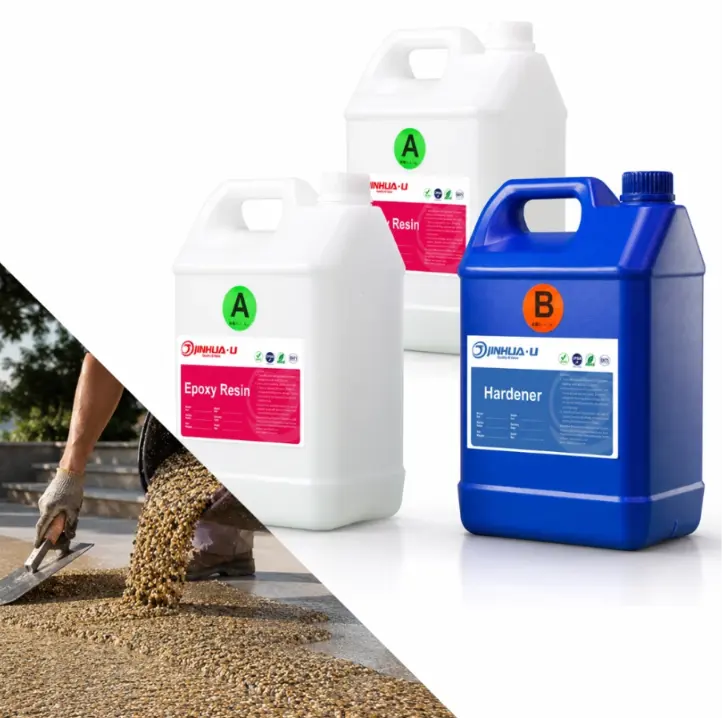
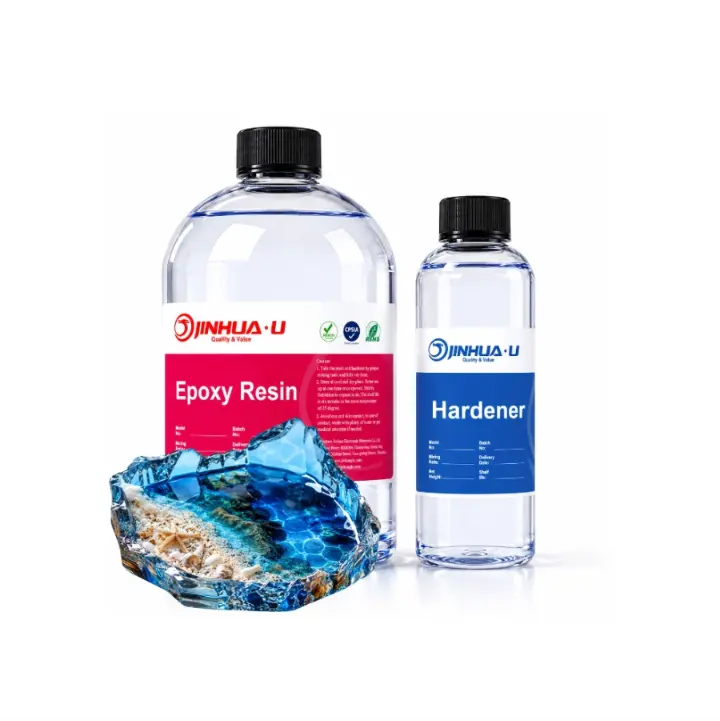
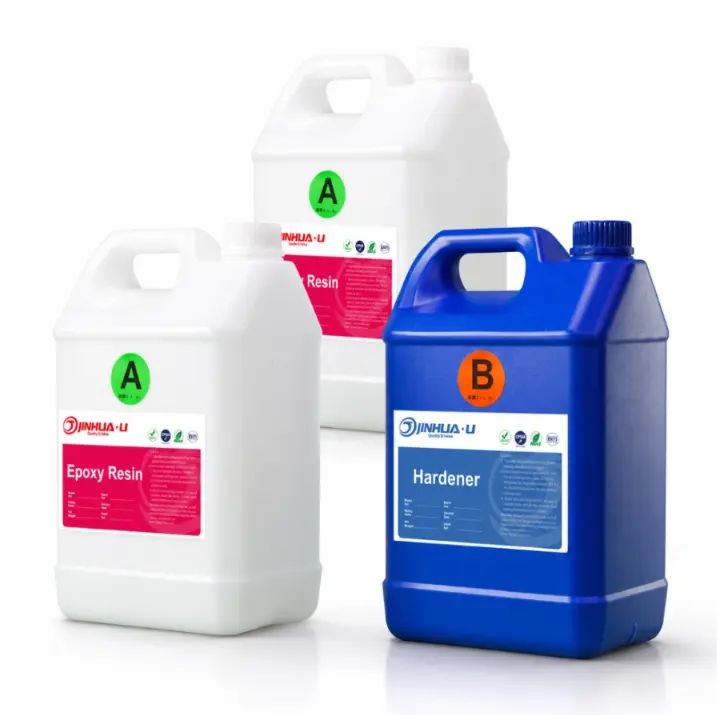
The pebble stone epoxy resin 2120AB-K26 of JINHUA is a 2:1 system that is used in aggregate-blended pavement bases, stone surfaces, and decorative floor structures. The pale blue transparent system is described by the company as curing to form a hard layer that assists in holding loose mineral materials into a more solid surface. It is also said to be waterproof and insulating.
- The technical specifications published contain helpful information on processing. The system has a 20-minute pot life at 25 o C with a curing time of 18-24 hours listed. The cured hardness is given as Shore D 80 +,3, and the given mixing ratio is 2:1 by weight.
- That weight ratio is important. JINHUA specially mentions that the product must not be measured at a 2:1 volume ratio. Weighing is important to ensure the desired chemical balance between resin and hardener.
It is also characterized as a high-adhesion, high-gloss resin that can be combined with sand, gravel, pebbles, and other aggregates to form epoxy gravel flooring and decorative uses like garden gravel paths and courtyard flooring.
Where Pebble Resin Flooring Can Be Used
Due to its versatility, resin pebble flooring can be used on numerous decorative and practical surfaces. An epoxy pebble floor may be used in patios, garden areas, pathways, courtyards, and selected commercial settings, provided the formulation is suitable for the service conditions.
- Outdoor projects: Applications can be a pebble resin driveway, pebble resin patio, pebble resin walkway, or pebble resin pathway. Garden pebble flooring can also be used in garden and landscape projects to provide a more realistic appearance of transition between planting and hard areas.
- Indoor uses may be indoor pebble flooring, decorative rooms, feature areas, and chosen commercial spaces. In the case of poolside applications, poolside pebble flooring must be given special consideration to slip resistance and exposure to moisture.
Examples: Likewise, a garage pebble floor and a commercial pebble floor might need greater resistance to traffic, abrasion, chemicals, and impact than a lightly used decorative surface.
Conclusion
A beautiful aggregate floor begins with beautiful stone, but the binder silently decides how well that stone will act as a finished surface. Thousands of individual particles can be united with the right epoxy, and their natural color, shape, and texture can be maintained.
Discover the JINHUA pebble floor epoxy resin to read the technical specifications, packaging choices, and application information, and talk to the team about your aggregate flooring needs.