



Updated 4 hours ago
Epoxy Floor Coating Manufacturer for Industrial Flooring Solutions
sidrahafeez754

Epoxy Floor Coating Manufacturer: A Guide to Industrial Flooring Systems
An effective floor coating does not just enhance the look of concrete. A floor in a busy warehouse, workshop, factory, or clean room must be able to support daily traffic, spills, cleaning, equipment movement, and daily wear. It is there that the formulation of an epoxy coating comes in.
- A skilled epoxy floor coating producer creates resin systems that strike a balance between adhesion, hardness, chemical resistance, and practical application needs. The appropriate system is capable of producing a smooth, dense, seamless surface that covers prepared concrete and simplifies the process of cleaning it regularly.
- JINHUA also produces industrial resin and coating solutions for various flooring needs. Its epoxy floor coating is meant to be used in indoor industrial floors requiring high adhesion, hard surface curing, and practical resistance to chemicals. The product is situated in light to medium load applications like workshops, warehouses, and clean rooms.
What is an Epoxy Flooring Manufacturer?
An epoxy flooring manufacturer is not just a manufacturer of resin. The production process entails the development and integration of the resin, curing materials, fillers, additives, and other materials required to make a usable flooring system.
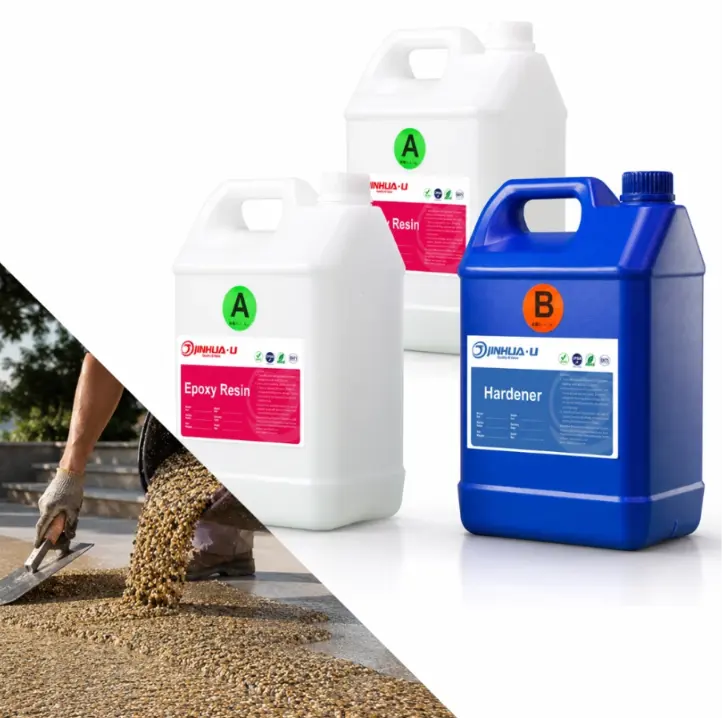
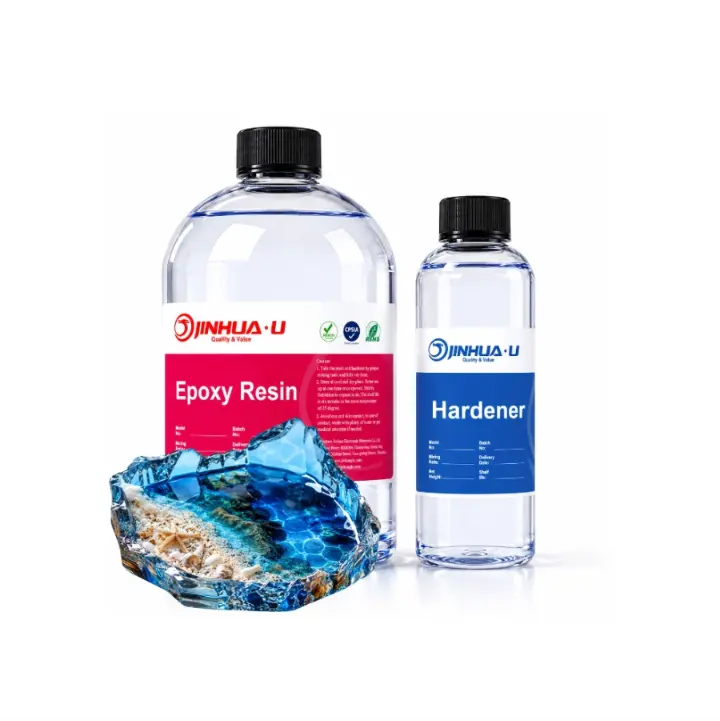
- An average epoxy floor coating system is a combination of an epoxy resin and an epoxy hardener or curing agent. After mixing the components at the desired ratio, a chemical reaction starts. The molten substance slowly cross-links and creates a hard thermoset surface.
- That is why professional manufacturers are very concerned about such aspects as viscosity, mixing ratio, curing speed, hardness, adhesion, and environmental resistance.
According to JINHUA, its industrial epoxy system is a solvent-free formulation that comprises epoxy resin, curing agents, and functional fillers. The completed material may be troweled, roller coated, or self-leveling.
Mechanism of an Epoxy Floor Coating System
An epoxy resin floor coating is often initiated with the preparation of the concrete surface. The dust, oil, loose particles, and other contaminants must be eliminated to allow the coating to bond well with the substrate.
- When indicated, the epoxy primer assists in surface preparation and enhancement of the coating adhesion. The primary coating is then applied to the necessary thickness. An epoxy topcoat can be applied to offer extra protection or to give a specific finish, depending on the system.
- The liquid resin system is transformed into a solid network by the curing process. This forms the hardness and durability that is characteristic of epoxy flooring.
- The product information of JINHUA states that our epoxy floor coating will create a seamless, smooth, monolithic surface upon curing.
Technical Properties That are Important in Industrial Flooring
All floors do not need the same performance. A warehouse with moderate traffic does not require the same as a chemical processing area or a heavy manufacturing plant. There are a number of technical properties that should then be taken into consideration when comparing an industrial epoxy flooring manufacturer.
- Chemical resistance is significant in areas where floors can be exposed to oils, dilute acids, solvents, cleaning agents, or other chemicals. According to JINHUA, its epoxy system offers convenient chemical resistance to oil, dilute acids, and some solvents.
- Abrasion resistance is a measure of the ability of the cured surface to resist repeated friction caused by foot traffic, carts, equipment, and regular cleaning. Where tools, materials, or equipment may fall on the floor, impact resistance is more significant.
- The resistance to moisture is also worth noting, as moisture in concrete may influence the adhesion of coating and the long-term performance.
- Lastly, the durability of floor coating is determined by the complete system, such as substrate preparation, application thickness, and curing conditions, and the operating environment of the floor.
Industrial Epoxy Flooring Uses
The application environment should always guide product selection. What is a good coating in a workshop might not be the correct one in a harsh chemical environment or on an outdoor floor. Common applications include:
• Warehouse epoxy flooring
• Factory floor coating
• Manufacturing floor coating
• Commercial epoxy flooring
• Workshop floors
• Clean rooms
• Industrial production areas
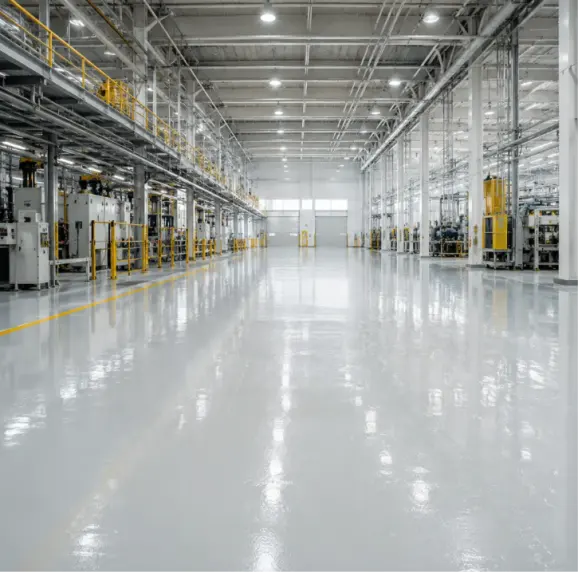
JINHUA, an epoxy floor coating manufacturer, particularly outlines its epoxy flooring in the case of indoor industrial settings that have light to medium load, such as workshops, warehouses, and clean rooms. In heavier conditions, it is also worth considering the comparison of epoxy with other resin technologies instead of considering that one coating fits all floors.
Questions to Ask an Epoxy Floor Coating Supplier
When it comes to selecting an epoxy floor coating supplier, price is not the only factor to consider. Technical documentation can inform you a lot more about the suitability of a product. Ask for information covering:
• Mixing ratio of resin and hardener.
• Recommended application method
• Curing conditions
• Pot life or working time.
• Recommended coating thickness
• Adhesion performance
• Abrasion resistance and chemical resistance.
• Storage requirements
• Shelf life
Why JINHUA is a Unique Epoxy Floor Coating Manufacturer
JINHUA, an epoxy floor coating manufacturer, unites the technology of epoxy resin and the development of industrial coating within a single product range. Its epoxy floor coating is developed using epoxy resin, curing agents, and functional fillers to form a hard and smooth surface to fit appropriate indoor industrial settings.
- The company also offers OEM and ODM services, where customers can negotiate customized formulations, color, glosses, curing rates, packaging, and labeling.
- Its extended product line comprises floor resin in addition to composite materials resin, electronic potting resin, soft epoxy resin, and other adhesive and resin products.
Conclusion
A good floor begins way before the initial roller comes into contact with the concrete. The chemistry of resin, the surface preparation, the curing conditions, the thickness of the coating, and the method of application all play a role in the outcome. For companies that are seeking an epoxy flooring manufacturer, JINHUA provides industrial epoxy flooring, polyurethane and polyaspartic options, as well as OEM and ODM solutions to various commercial needs.