





One of the simplest methods for easily changing clear epoxy resin to a colorful, dimensional, and eye-catching material is to use metallic epoxy pigment powder. Metallic pigments can imbue your table tops with shimmer, your counter tops with depth, pearlescent highlights and rich color accents for your decorative flooring, your jewelry, artwork, and your custom castings.
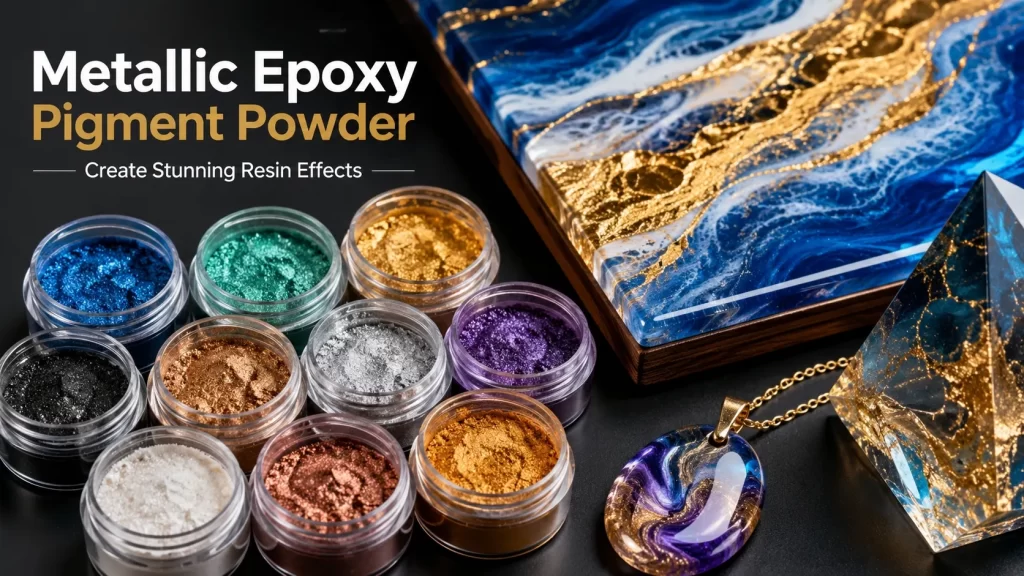
Metallic pigment powders are different from conventional liquid colouring materials, and contain extremely small reflective particles that interact with light. These particles can be scattered in clear epoxy to produce flowing patterns, marble effects, metallic veining and three-dimensional movement in visual patterns. This is why metallic epoxy pigment powder is a top choice among professional resin artists and those interested in doing-it-themselves.
What Is Metallic Epoxy Pigment Powder?
Metallic epoxy pigment powder is a finely ground pigment which is recommended to be dispersed into epoxy resin and various compatible clear coatings. A large number of metallic effect pigments are made from mica flakes which are coated with a colored material to provide a reflective, pearlescent or iridescent quality.
The particles reflect and scatter light when the powder is suspended in transparent resin. The outcome is more than just a flat colour. The subtle pearl, strong metallic, cloudy movement or dramatic marble effect can be achieved depending on the type of pigment, resin, concentration, and application technique.
This is particularly advantageous when the desired effect is to provide a high-end appearance to a decorative surface, using metallic pigment powder.
Why Use Metallic Pigments in Epoxy Resin?
There are several reasons makers choose powder pigments instead of traditional colorants.
1. Creates Depth and Dimension
Metallic pigments can produce visual depth that ordinary solid colors cannot easily replicate. The reflective particles move visually through clear resin, creating a dynamic appearance that changes with viewing angle and lighting.
2. Produces a Premium Metallic Finish
Gold, silver, copper, bronze, pearl, blue, green, purple, and other metallic shades can give epoxy projects a luxurious appearance. These effects are particularly attractive for furniture, countertops, artwork, and decorative flooring.
3. Supports Custom Color Mixing
Different pigment colors can be combined to create unique shades. For example, metallic gold can be blended with bronze for a warmer finish, while silver and blue can produce a cooler modern appearance.
Manufacturers of metallic pigments commonly offer broad color selections, making it possible to develop customized visual effects for different projects.
4. Works With Many Resin Applications
Metallic powders can be used in a wide range of epoxy applications, including casting resin, coating resin, river tables, countertops, decorative objects, jewelry, geode art, and flooring.
How to Mix Metallic Epoxy Pigment Powder
Using metallic pigment powder is relatively simple, but the mixing process can significantly influence the final appearance.
Step 1: Prepare the Epoxy Resin
Always measure and mix the epoxy resin and hardener according to the manufacturer's specified ratio. Accurate measurement is essential because excessive pigment or incorrect resin-to-hardener ratios can interfere with curing.
Step 2: Start With a Small Amount of Pigment
Add a small amount of metallic pigment powder to the properly mixed resin. It is easier to increase pigment concentration gradually than to correct an overly saturated mixture.
A commonly recommended starting point is approximately 1 gram of pigment for 1–5 ounces of epoxy, depending on the desired color intensity and project requirements. Some product guidance also recommends keeping pigment concentration within a limited percentage of the total resin weight. Always follow the specific pigment and epoxy manufacturer's instructions.
Step 3: Mix Thoroughly
Stir slowly and consistently until the pigment is evenly dispersed. Scrape the sides and bottom of the mixing container to eliminate unmixed powder.
Avoid excessive stirring because aggressive mixing can introduce unnecessary air bubbles into the resin.
Step 4: Test Before the Main Pour
For important projects, create a small test batch first. The same pigment can look different depending on resin thickness, background color, lighting, and concentration.
Testing helps determine whether you need more pigment, less pigment, or a different color combination.
How Much Metallic Pigment Should You Add?
There is no universal pigment-to-epoxy ratio that works for every project. The ideal amount depends on several factors:
- Desired color intensity
- Pigment particle characteristics
- Resin transparency
- Casting thickness
- Coating thickness
- Background color
- Desired metallic effect
- Application method
Thinner coatings may require a different pigment concentration than deeper castings. Too much pigment can negatively affect the resin system and may interfere with curing, so adding more is not always better.
For this reason, always start conservatively and increase the amount gradually.
Best Applications for Metallic Epoxy Pigment Powder
River Tables
Metallic pigments are widely used to enhance epoxy river tables. Blue, turquoise, black, silver, and green pigments can create water-inspired effects, while gold and bronze can provide a dramatic contrast against natural wood.
Countertops and Bar Tops
Metallic epoxy coatings can transform ordinary countertops and bar surfaces into customized decorative features. Marble-like swirls, metallic veins, and layered colors can create a high-end appearance.
Epoxy Flooring
Metallic epoxy flooring uses colored resin to create dramatic, seamless decorative surfaces. Metallic pigments can help produce cloudy, marble, stone, or three-dimensional effects that are particularly suitable for garages, showrooms, commercial interiors, and residential spaces.
Resin Jewelry
Small quantities of metallic pigment can add shimmer and color to pendants, earrings, rings, keychains, and other resin accessories.
Geode and Marble Art
Gold, silver, copper, white, and pearl pigments are especially useful for creating veins and highlights in geode-inspired artwork.
Decorative Castings
Metallic epoxy pigment powder can also be incorporated into molds for trays, coasters, sculptures, ornaments, and other decorative castings.
Metallic Pigment Powder vs. Liquid Pigment
Metallic powder and liquid pigment are not identical.
Metallic powder is particularly useful when you want reflective effects, shimmer, pearlescent color, or visible movement within clear resin. Powder pigments can also be mixed in different concentrations to control transparency and visual intensity.
Liquid pigments, on the other hand, are often preferred when you want smooth, uniform color without a strong metallic effect.
For artistic resin projects, combining the two can create even more sophisticated results. A liquid pigment can establish the base color, while metallic powder adds highlights, shimmer, or depth.
Tips for Creating Better Metallic Effects
Use Clear Resin
Clear epoxy provides a strong background for metallic particles to reflect light and create depth.
Combine Compatible Colors
Try using two or three related colors instead of adding too many contrasting shades. For example, gold, bronze, and brown can create a warm luxury effect.
Use Different Concentrations
A lighter pigment concentration can create translucent effects, while a higher concentration can produce stronger metallic coverage.
Experiment With Movement
Metallic pigments can be manipulated during the working stage to create swirls, clouds, waves, veins, and flowing patterns. The technique you use can be just as important as the pigment itself.
Consider the Final Lighting
Metallic effects are highly dependent on light. A pigment that looks subtle under diffuse lighting may become much more reflective under direct or angled light.
Common Mistakes to Avoid
Common error is over-pigmenting. A very concentrated mixture can be visually appealing at first, but can have a negative impact on the curing behavior of the resin.
Another common error is not totally mixing the powder. If the pigment is not dispersed, it can result in streaks, clumps or uneven color.
Too many colours can also create a muddy appearance in a project. If you're working to make a marble or geode effect, work with limited colors and proceed step-by-step.
Lastly, don't assume that all pigments will be compatible with all resin systems. Before undertaking any large project, check for compatibility.
How to Choose the Best Metallic Epoxy Pigment Powder
When comparing metallic epoxy pigments, consider:
- Color range: Look for a supplier with the shades required for your applications.
- Pigment concentration: Highly concentrated powders can provide strong color with relatively small quantities.
- Dispersion: Fine particles should mix consistently into the resin.
- Light stability: If the project will receive significant light exposure, choose pigments designed for appropriate color stability.
- Resin compatibility: Confirm that the pigment is suitable for your specific epoxy system.
- Particle characteristics: Particle size and structure influence shimmer, opacity, and visual depth.
- Application requirements: A pigment for a small jewelry project may have different requirements from one intended for flooring or furniture.
Final Thoughts
Metallic epoxy pigment powder is an effective product for epoxy resin manufacturers to produce unique colors and interesting visual effects. The transparent resin can be customized to form a surface from river tables and countertops, to flooring, to jewelry, to decorative artwork.
Beautiful color isn't enough to get the job done. The pigment concentration, mixing, the kind of resin used, testing color before pouring a large batch and understanding how thickness and lighting will affect the color are also important.
With beginners, use a little bit of pigment and play around with different mixtures. The combination of metallic colours, transparent pigments and controlled pouring can offer close to infinite design options for those experienced in resin art.
Using the appropriate metallic epoxy pigment powder, clear epoxy resin can be so much more than a coating or casting medium; it can be a medium that provides depth, movement, colour and high impact decorative finishes.