



Updated 1 month ago
The Difference Between Epoxy Powder Pigments and Liquid Pigments

hqt

The colorant can be a key factor in the look and function of an epoxy resin project. Epoxy pigments can be used to tailor the colour, tint and appearance of the surface in the completed product, whether for a river table, countertop, bar top, art or decorative crafts, jewellery or any other use.
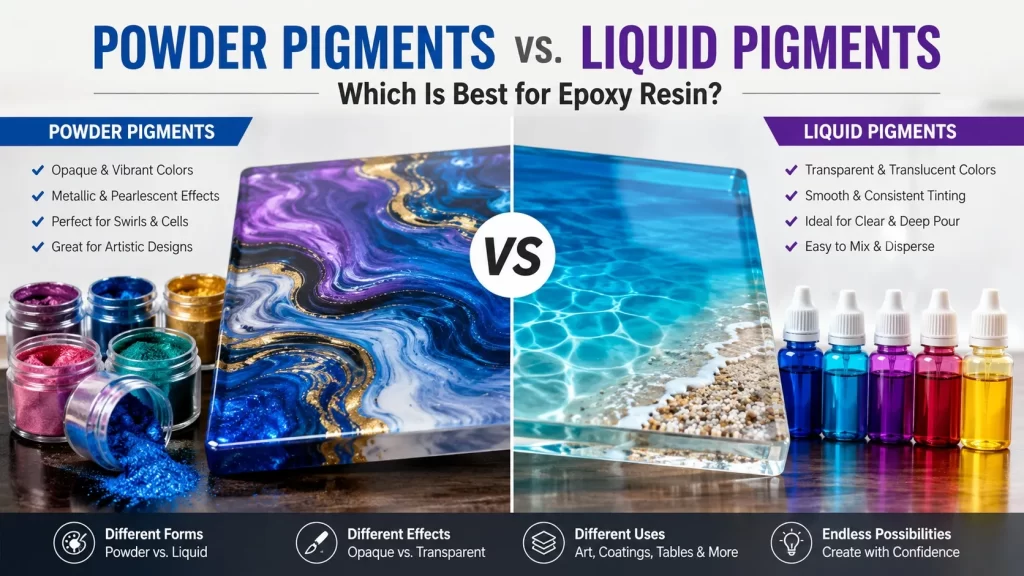
Powder pigments and liquid pigments are the two most popular choices. Both can impart lovely color to the epoxy resin, but they have different properties and effects.
Hence, which one is more effective, powder pigment or liquid pigment?
It depends on the aesthetics you are going for, the kind of epoxy project that you are going to create and the level of transparency or opacity you're aiming for.
What Are Epoxy Powder Pigments?
Epoxy powder pigments are finely ground solid colourants which are dispersed in the resin during mixing. Many Powder Pigments are made to produce opaque, metallic, pearlescent or shimmery effects and are popular such as Mica powder.
The pigment particles are suspended within the epoxy, so their presence allows for creating visual depth and movement during curing of the resin. This results in the increased popularity of powder pigments for artistic use.
Powder pigments are frequently a good choice for:
- River tables
- Epoxy countertops
- Bar tops
- Resin artwork
- Ocean-wave designs
- Marble effects
- Metallic finishes
- Decorative crafts
Powder pigments are very versatile. You can achieve a subtle translucent look or a much more opaque color by adjusting the quantity of pigment you're using.
Powder pigments can also be mixed with other colours to produce distinctive colours and effects.
What Are Liquid Pigments?
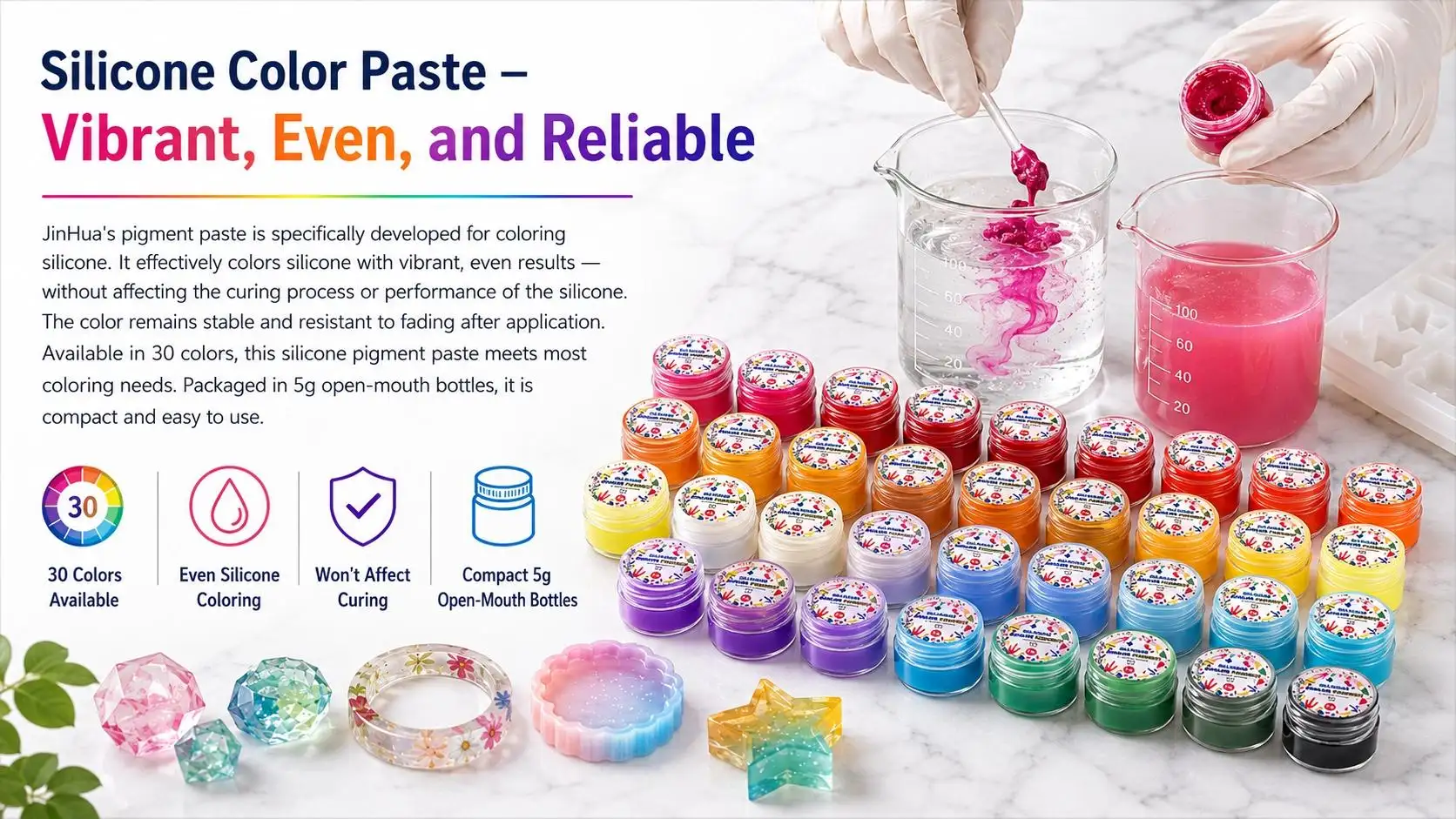
Concentrated pigments that are suspended or dissolved in a liquid carrier are called liquid pigments, or resin dyes or liquid colorants. They are intended to be easily dispersed in epoxy resin.
The liquid colorants often do not create as many specks as powder pigments. They are able to produce clear, translucent or very saturated colours depending on product and dosage.
Liquid pigments are particularly helpful where you would like to:
- Transparent or translucent resin
- Smooth, consistent color
- Stained-glass effects
- Deep blue or ocean effects
- Layered color transitions
- Minimalist decorative finishes
- Even color distribution
Because liquid pigments disperse easily, they can be convenient when you need to tint a large amount of epoxy consistently.
Powder Pigments vs. Liquid Pigments: Key Differences
The most important difference between powder and liquid pigments is how they interact with epoxy and the appearance they create.
| Feature | Powder Pigments | Liquid Pigments |
|---|---|---|
| Form | Dry powder | Liquid |
| Typical appearance | Opaque, pearlescent, metallic | Transparent, translucent, or smooth |
| Mixing | Requires thorough dispersion | Usually disperses easily |
| Visual effects | Swirls, shimmer, marble, metallic | Smooth tint and gradients |
| Color intensity | Strong and customizable | Highly concentrated |
| Transparency | Usually lower | Usually higher |
| Best for | Artistic and opaque effects | Transparent and uniform effects |
| Storage | Generally easy to store | Requires sealed liquid storage |
Neither option is universally better. The best choice depends on your desired result.
When Should You Choose Powder Pigments?
Powder pigments work best when the color will be a key element of the design.
For instance, in the case of a metallic epoxy countertop, powder pigment could be used to offer the surface with depth and even a subtle motion. The shimmer of the pigment depends on the angle at which you view it, and can vary using mica-based pigments.
Marble, stone, cloud and ocean-wave effects can be made with powder pigments as well. Various color can be poured in one project and manipulated to create natural color pattern.
Another benefit is efficiency. Powder pigments contain concentrated colour and relatively small quantities can alter the colour of an epoxy mixture. The dosage however, is always recommended depending upon the pigment and epoxy system used.
When Should You Choose Liquid Pigments?
For clean, uniform and transparent colours, liquid pigments are frequently the better choice.
For instance, a river table with a desire to have the epoxy look as though it was a deep blue colour with some light penetrating. Through use of an appropriate liquid pigment, a transparent or semi-transparent blue effect can be achieved.
Liquid pigments are also a good option if consistency is important. The colourant is already in a liquid form, so disperses rapidly into a properly mixed epoxy.
This means that liquid pigments are a viable choice for:
- Transparent resin projects
- Deep-pour applications
- Decorative castings
- Ocean-inspired designs
- Gradient effects
- Translucent artwork
Using a small amount generally creates a lighter tint, while increasing the amount can produce a deeper and more saturated color.
How to Mix Powder Pigment Into Epoxy Resin
Preparation and mixing are important for best results.
First, measure the epoxy resin and hardener, according to the manufacturer's recommended mixing ratio. Never alter resin to hardener ratio to obtain more colour content.
Then mix in a bit of the powder pigment. Add pigment gradually to achieve the color desired.
You can start by adding a little amount of color and test it out before adding more. It will allow you to fine-tune opacity and intensity.
Make sure the powder is completely dispersed. If mixing is not done properly, pigment particles may remain or there may be uneven areas in the completed epoxy.
How to Mix Liquid Pigment Into Epoxy
In general, liquid pigments are easy to be added to epoxy.
Always start with a small amount of liquid colorant and thoroughly mix it into the resin system. Continue adding pigment gradually until the desired color is achieved.
Some liquid paints can be very thick so using too much in one sitting may lead to uneven application, as well.
Follow the instructions for use provided by the manufacturer of the pigment. Too much pigment may actually have a negative impact on the curing behaviour of an epoxy system, so too much is no good.
If there is a large project, do a small test batch first. This way you can judge the color after curing—it's not just what cured resin looks like.
Which Pigment Is Better for Transparent Epoxy?
For transparency, liquid pigments may be a better place to begin.
Liquid dyes can create a bright "translucent" color with a clear epoxy. This is why they are favored for projects such as river tables, decorative castings and stained glass.
Pigments that are powdered tend to produce more opacity and movement on the surface, especially if the pigment is based on mica. These are ideal for projects where you want the color and pigment effects to predominate.
The final result will vary depending on the product, concentration, epoxy formulation and quantity of colorant used.
Which Pigment Is Better for Opaque Epoxy?
Powder pigments are usually the best option for producing strong coverage and good appearance.
They can produce colors that are rich and provide special shades like metallic, pearlescent and shimmering. They work well on countertops, furniture, art displays and decorative surfaces where the substrate is not to be seen.
For instance a blend of white, gray, and black powder pigments will help to give a marble effect, or metallic pigments can give gold, silver, copper, or bronze.
Can You Mix Powder and Liquid Pigments?
Yes, sometimes powder and liquid colorants can be mixed to make special effects.
For instance, a liquid blue pigment can be used to create a transparent base and then white powder pigment can be added to produce highlights or wave effect.
This can give more control over depth, contrast and movement. But, there is a need for compatibility. Always verify specific pigments for use with your particular epoxy system.
Additionally, it's best to try the blend on a small test area before using it on a larger project.
Common Mistakes When Coloring Epoxy Resin
Choosing the right pigment is only part of achieving a professional result. Several common mistakes can affect the finished epoxy.
1. Adding Too Much Pigment
More colorant does not always mean better color. Excessive pigment or dye can interfere with the intended resin formulation.
2. Poor Mixing
Incomplete dispersion can create streaks, clumps, or inconsistent color. Mix slowly and thoroughly according to the manufacturer's instructions.
3. Ignoring the Cured Color
Uncured epoxy can look different from fully cured epoxy. Always make a small test sample when color accuracy is important.
4. Using Incompatible Colorants
Not every pigment, dye, paint, or household coloring product is suitable for epoxy resin. Use colorants specifically formulated or recommended for resin applications.
5. Changing the Resin-to-Hardener Ratio
Never alter the required resin-to-hardener ratio to compensate for pigment or dye. The correct ratio is essential for proper curing.
Powder or Liquid Pigment: Which Should You Buy?
The easiest way to decide is to start with the finished appearance you want.
Choose powder pigments if you want:
- Opaque or semi-opaque color
- Metallic effects
- Pearlescent shimmer
- Marble and stone patterns
- Strong artistic effects
- Rich visual depth
Choose liquid pigments if you want:
- Transparent or translucent color
- Smooth color distribution
- Stained-glass effects
- Deep water-like tones
- Clean gradients
- Consistent tinting
For many experienced resin artists, having both types available provides the greatest creative flexibility.
Final Thoughts
Powder vs liquid pigments for epoxy resin is mainly based on the appearance, transparency, mixing properties and the project you are making.
When it comes to big, opaque, metallic, pearlescent, and artistic effects, the powder pigments are the best. Liquid pigments are frequently more suitable for transparent, translucent and easily tinted applications.
No one pigment is the best for all types of epoxy projects. Depending on the desired colour, transparency, artistic technique and epoxy formulation, the right choice is made.
Always use an epoxy colorant that is compatible with the epoxy resin; follow the manufacturer's instructions for dosage; ensure that the correct ratio of resin to hardener is used; and test your own color before beginning a large job.
If you add the right mix of epoxy resin and pigment, you can customize a plain clear pour to create a surface with color, depth and visual interest.