



Updated 2 months ago
How Does Epoxy Resin Improve Industrial Flooring Performance?

hqt

The harshest use conditions in manufacturing plants, warehouses, workshops, laboratories, garages and processing plants occur on industrial floors. Standard concrete floors are easily compromised by the passage of heavy machinery, forklifts, chemical spills, oil, moisture, abrasion and constant foot traffic. That's why epoxy resin flooring has become a popular choice for challenging industrial applications.
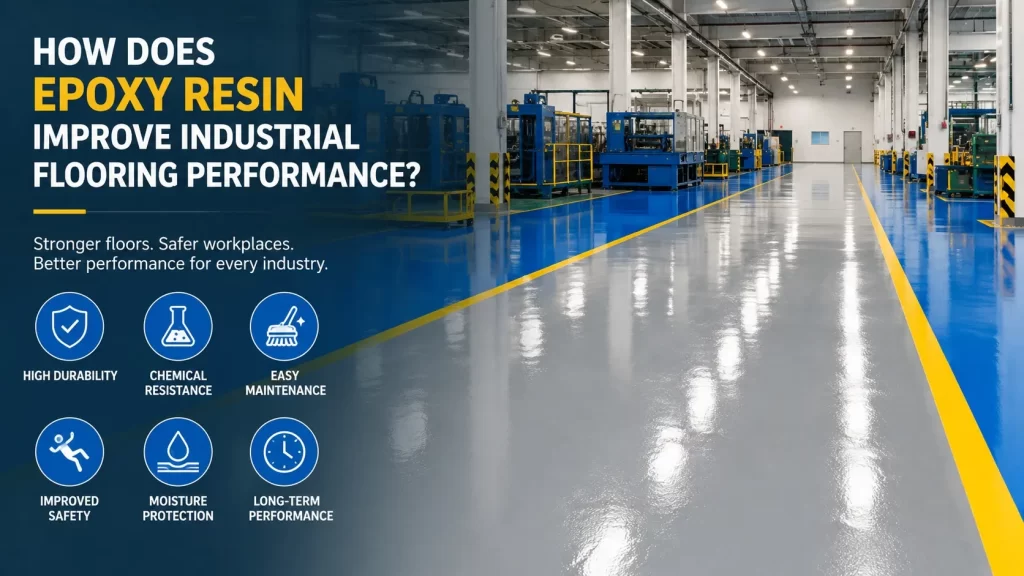
So, how does epoxy resin enhance the performance of industrial flooring? The secret is that it is combined with high mechanical strength, chemical resistance, seamless protection, easy maintenance and long service life. A well designed and applied epoxy floor coating can help to turn a standard concrete floor into a more robust, sanitary and low maintenance work surface.
What Is Epoxy Resin Flooring?
Epoxy resin flooring is a protective floor system that is formed by mixing epoxy resin and curing agent together. The mixed materials are applied to a prepared concrete surface and then react chemically to create a hard durable surface of polymer.
The thickness, texture, color and performance of epoxy flooring systems vary based on the specific type of application they are being used for. Typical types of epoxy systems are epoxy coatings, self-leveling epoxy floors, heavy duty epoxy floors, anti-slip epoxy flooring and decorative industrial flooring.
The proper formulation gives manufacturers flexibility with the optimization of properties such as hardness, adhesion, chemical resistance, flexibility and curing time.
1. Improves Mechanical Strength and Durability
The durability of the mechanical stresses is one of the greatest benefits of epoxy resin flooring.
Forklifts, pallet trucks, carts, heavy equipment, and production machines are common pieces of equipment in industrial facilities. Conventional concrete surfaces may crack, deteriorate or become dusty with repeated loading and movement.
The proper design of an epoxy floor forms a hard barrier that protects the underlying concrete. This layer helps the floor withstand:
- Heavy equipment and machinery
- Forklift and vehicle traffic
- Repeated impact and loading
- Abrasion from wheels and equipment
- High levels of pedestrian traffic
Therefore, epoxy resin can greatly enhance the lifespan and overall quality of the industrial floor.
2. Provides Excellent Chemical Resistance
Chemicals, oils, solvents, cleaning agents and other potentially aggressive products are often found at industrial facilities. When exposed to unprotected concrete, these materials can stain, deteriorate the surface or damage the structure with time.
An epoxy floor offers a solid surface that can withstand a variety of industrial chemicals. This is very useful in manufacturing plants, laboratories, automotive facilities, warehouses and chemical processing areas.
But the resistance of a chemical will vary with different epoxy formulations and exposure situations. When dealing with highly corrosive chemicals, companies must ensure that they use an epoxy system that is designed for the kind of chemicals they are using.
3. Creates a Seamless and Low-Porosity Surface
Conventional Concrete is relatively porous. Contaminants, water, dust and oil may be able to penetrate through surface pores and small cracks and can be hard to remove with cleaning.
When installed properly, epoxy resin flooring provides a seamless surface with little to no joints. It has low porosity which results in reduced penetration of liquids and contaminants.
The beauty of this seamless is that it offers a number of benefits:
- Easier cleaning
- Reduced dirt accumulation
- Better resistance to spills
- Improved workplace hygiene
- Less surface dust
This can be a significant performance benefit in factories and facilities where cleanliness is a critical issue.
4. Enhances Abrasion and Wear Resistance
Industrial floors are subjected to wear on the surface on a non-stop basis. Over time, the concrete floor may become worn through by forklift tires, metal equipment, pallets, tools and foot traffic.
Coatings of epoxy resin can offer good abrasion resistance, preserving the look and performance of the floor during rigorous use.
Resin chemistry, coating thickness, aggregate selection, surface preparation and installation quality are among several factors that affect the actual wear resistance. In more demanding industrial applications, thicker epoxy systems or specific aggregates might be necessary to meet performance criteria.
5. Improves Moisture Protection
Another problem that occurs quite often with concrete floors is moisture. Concrete can absorb water and cause staining, deterioration of the surface, or other issues with the flooring.
The selection of an appropriate epoxy system can yield a protective barrier to limit surface moisture exposure.
This is especially beneficial in:
- Food and beverage facilities
- Workshops
- Manufacturing plants
- Garages
- Warehouses
- Processing areas
Moisture vapor transmission from the concrete substrate, however, should be determined prior to installation. Long adhesion requires proper preparation of the substrate and moisture testing.
6. Makes Industrial Floors Easier to Maintain
Industrial facilities require flooring which can be properly cleaned in a swift and efficient manner. Imperfections in the concrete such as cracks, irregular surfaces, or high porosity may cause difficulty to maintain the concrete and allow dirt to become trapped.
Epoxy flooring is easy to clean due to its smooth surface. Industrial detergents, water and mechanical cleaning equipment can usually be used to clean floors, depending on the system selected.
The surface is resistant to many common contaminants, which decreases the maintenance teams' time to waste on stains, embedded dirt, and deterioration of the surface.
Reduced maintenance requirements may help to reduce operating costs during the life span of the flooring system.
7. Improves Workplace Safety
If designed properly, epoxy flooring can also help to make the industrial space safer.
While smooth, manufacturers can add anti-slip aggregates or textured finishes to standard epoxy surfaces when extra traction is needed. This is especially crucial where the surface is likely to be slick from water, oil or other liquids.
In addition to the colours and line-marking systems discussed above, epoxy floors can be used to visually separate:
- Pedestrian walkways
- Equipment zones
- Storage areas
- Production areas
- Safety zones
Such a surface performance and visual organisation can contribute to the efficiency and safety of the workplace.
8. Offers Flexible Design and Customization
Industrial floorings don't need to be simply functional. There are many different colors, levels of shine, texture and decorative finishes possible with epoxy resin systems.
Organizations have the option to choose colors depending on their facility design or business brand. Variations in color may also help visually organize the text.
For instance, a floor might be a different color in a production area than it is in a storage area, and than the color of a walkway.
This is why epoxy flooring is a functional solution for facilities that require function and professional appearance.
9. Can Reduce Long-Term Flooring Costs
While the floor's initial installation cost may be greater than with basic concrete finishing, it is important to consider flooring not just on first cost.
By minimizing the need for frequent repairs, floor surface deterioration, cleaning, and early replacement, a durable epoxy system can help lower overall costs.
The overall value will depend on such things as:
- Floor traffic
- Chemical exposure
- Required coating thickness
- Installation quality
- Maintenance practices
- Expected service life
The cost of an industrial facility with high traffic areas and the need to continually repair an unprotected concrete floor may not be as cost-effective as investing in a proper epoxy floor system.
How to Choose the Right Epoxy Resin for Industrial Flooring
Not every epoxy resin system is suitable for every industrial application. Before selecting a product, facility managers should consider the actual operating environment.
Important factors include:
Traffic level: Determine whether the floor will experience light pedestrian traffic or heavy forklift and machinery traffic.
Chemical exposure: Identify the specific chemicals, oils, solvents, and cleaning agents that may contact the floor.
Temperature: Consider operating temperatures and potential thermal shock from hot or cold materials.
Slip resistance: Wet or oily environments may require an anti-slip surface.
Required thickness: Heavy-duty applications generally require more robust flooring systems than light-duty areas.
Substrate condition: Concrete must be properly prepared, clean, dry, and structurally sound before epoxy installation.
Curing requirements: Select a system with a curing schedule that fits the facility's production and downtime requirements.
Why Is Epoxy Resin a Good Choice for Industrial Flooring?
The biggest benefit of epoxy resin is that it offers several performance features in a single flooring system. Rather than just protecting a concrete surface, an epoxy floor installed correctly can offer a long lasting protective surface suitable for the industrial environment in which it is used.
It is highly mechanical durable, resistant to abrasion, chemical resistance, resistant to moisture, easily cleaned, has a customizable appearance and better safety options.
Conclusion
The epoxy resin is a liquid that enhances the properties of industrial floors by forming a strong and protective layer on top of concrete to form a seamless surface. It enhances the ability of the floor to resist heavy duty traffic, abrasion, chemical exposure, moisture and day-to-day stresses while providing improved cleaning and maintenance.
The most appropriate system of epoxy flooring for factories, warehouses, workshops, laboratories, garages, and processing facilities may be the balance of practical durability, protection, safety and long-term value.
But, it is very much dependent on the selection of the right epoxy formulation and substrate preparation of the concrete. Companies can design industrial floors that perform reliably for years by matching with the actual environment and optimizing the coating composition, thickness, surface texture, and installation.