



Updated 3 hours ago
Epoxy Potting Compound for Electronic Encapsulation and Protection
sidrahafeez754

Epoxy Potting Compound for Reliable Electronic Protection
Electronic components can be miniature, yet they can be used in harsh conditions. Sensitive parts can be affected by moisture, dust, vibration, heat, chemicals, and electrical stress over time. These components are enclosed in a cured protective layer with an appropriate epoxy potting compound. It is capable of insulating, sealing, supporting the assembly mechanically, and protecting it against moisture.
To manufacturers, potting does not merely involve pouring resin into a housing. The material should be able to pour into small crevices, moisten the component appropriately, discharge air, cure steadily, and provide reliable characteristics upon hardening. Of interest are viscosity, mixing ratio, pot life, curing time, hardness, and electrical performance.
What is an Epoxy Potting System?
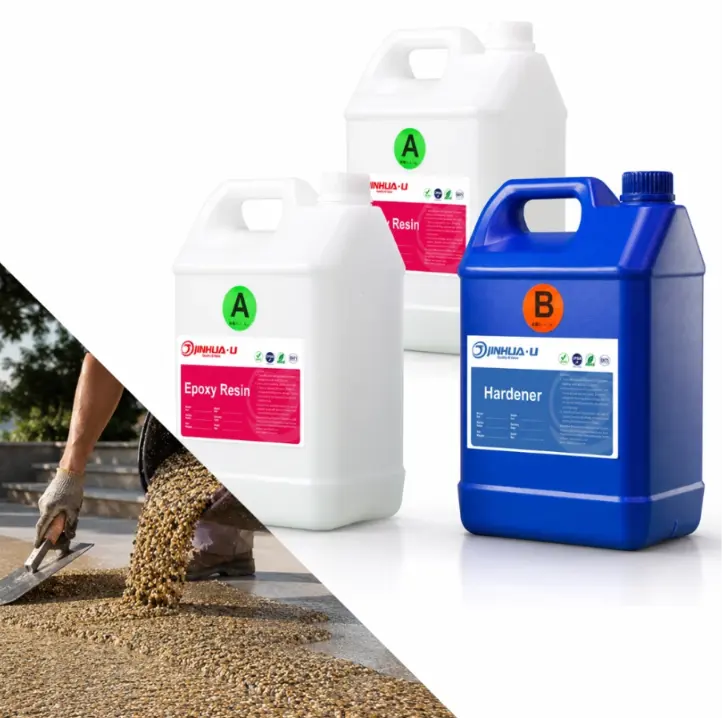
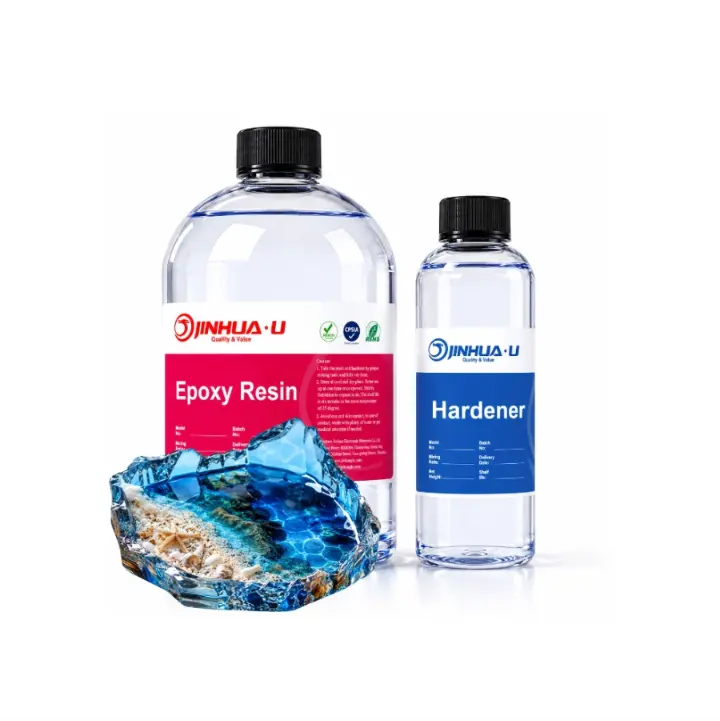
- An epoxy potting resin is a liquid material that is used to enclose electronic and electrical components. Once it has cured, it is an epoxy encapsulation material that is capable of shielding the assembly against the environment. The majority of professional products are available in the form of a two-part epoxy potting compound. Part A has epoxy resin, and Part B has the curing component.
- A chemical reaction starts when the epoxy resin and hardener are combined at the desired ratio. The liquid mixture is slowly transformed into a solid thermosetting epoxy resin by epoxy cross-linking. The cured epoxy compound may then be used to offer electrical insulation, physical support, sealing, and environmental protection.
Electrical Insulation and Component Protection
- A potting compound used to enclose the electrical parts must do more than just cover them. It is able to provide a protective layer around conductive components and assist in minimizing exposure to moisture and contaminants. Some of the important electrical properties to consider are dielectric strength, dielectric constant, volume resistivity, surface resistivity, insulation resistance, and electrical breakdown strength.
We explain that 2120AB-25D offers electrical insulation, waterproofing, low shrinkage, and moisture resistance. Its transparent finish also enables internal components to be seen visually.
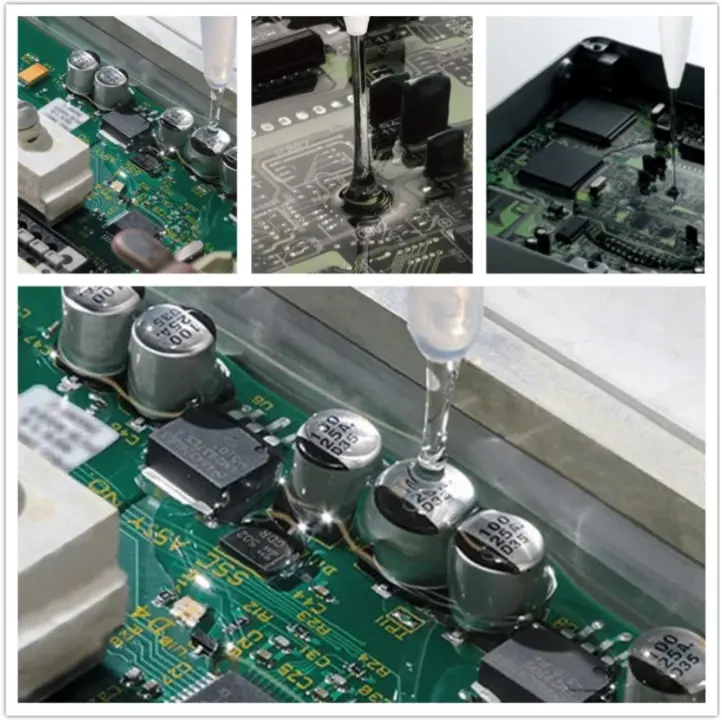
Applications of Electronic Potting Resin
Many types of assemblies can be encapsulated by an electronic encapsulation resin. Common uses include:
• Insulation and sealing transformer potting compound.
• Capacitor potting compound
• Sensor potting compound
• LED potting compound
• Power supply potting compound.
• Battery potting compound
• Potting compound for cables and connectors.
Moisture, Chemical and Environmental Resistance
- Moisture may lead to corrosion, leakage currents, and insulation issues within electronic assemblies. An epoxy that is moisture-resistant can be used to provide a protective shield around delicate parts. Waterproof potting compound and water-resistant epoxy potting systems can be of great use in products that are applied in wet conditions.
- Chemical-resistant potting compound can prove handy in the area of the chosen oils, cleaning agents, and industrial chemicals, yet the degree of resistance is contingent on the precise formulation and the conditions of exposure. Additional requirements can be heat resistance, vibration resistance, impact resistance, UV resistance, and corrosion protection. Contamination can also be limited with the assistance of a dust-proof encapsulation layer.
Heat Exposure and Thermal Management
- Electronic components produce heat, and therefore thermal behavior is important when selecting materials. An ordinary electrically insulating resin and a thermally conductive epoxy have other applications. A thermally conductive potting compound or thermally conductive potting resin can be used where heat transfer is necessary to conduct heat out of the selected components.
- In the case of harsh conditions, it might be required to use a heat-resistant epoxy potting compound or a high-temperature potting compound. The temperature capability of the resin should be compared to the real service conditions.
Potting Resin of Various Electronic Designs
PCB encapsulation resin can require fine flow and electrical insulation, whereas battery encapsulation resin can need greater environmental protection. A sensor encapsulation epoxy compound may be designed with a focus on moisture sealing, but LED encapsulation resin may be more focused on transparency and appearance.
- A potting compound resin must be easily mixed during production runs, flow through dispensing equipment, and have a predictable working time. Depending on the design of the assembly, an epoxy potting adhesive can also be used to hold the components together prior to complete curing.
- In comparing an epoxy potting system, manufacturers must look at the type of material to be used, whether it is to be cured at room temperature or accelerated heat curing. The process selected must be in accordance with the temperature range and the manufacturing time of the component. A consistent cure assists in producing a more reliable cured epoxy compound in consecutive batches.
- JINHUA offers product details, technical details, and use instructions for its electronic potting resin. The buyers are able to test the system prior to ordering samples and testing it in their real operating conditions.
Choosing an Industrial Potting Material
It is important to choose an industrial epoxy potting compound based on the application instead of the label of the product. Manufacturers should consider component geometry, insulation requirements, exposure to moisture, operating temperature, curing time, appearance, and mechanical support required.
- A high-performance potting compound can be chosen when demanding equipment is required, and a flexible epoxy compound may be more appropriate when movement or thermal expansion is required. Epoxy resin with low shrinkage is applied in situations where too much curing shrinkage may cause stress to delicate components.
- The formulation is crafted to be encapsulated easily, with internal components to be visible. JINHUA also refers to it as self-leveling, bubble-free, waterproof, electrically insulating, and low-shrinkage. These features render it applicable in the chosen lighting and electronic sealing applications.
Conclusion
Good encapsulation is something that is not noticed since the electronics just continue to work. The reliability behind that is a well-chosen resin system which flows well, cures reliably, and shields the assembly against moisture, contamination, mechanical stress, and electrical risks.
Visit the JINHUA electronic potting epoxy resin page to see the specifications and application information. When manufacturers are comparing an epoxy potting compound supplier, the ultimate choice must always be based on technical requirements, and sample testing is used to ensure that it performs in the real application.