



Updated 3 hours ago
Epoxy Composite Manufacturer for Fiberglass Composites
sidrahafeez754
Epoxy Composite Manufacturer for Advanced Fiberglass Applications
The new composite materials are constructed on the basis of a very simple concept: they consist of a powerful reinforcement and a trustworthy resin matrix. The outcome can be light, strong, and durable compared to most traditional materials. But the resin does much more than hold fibers together. It regulates wetting, curing, adhesion, hardness, and a lot of the performance of the final composite.
- This is why it is important to select an appropriate manufacturer of epoxy composite. An effective manufacturer knows the interaction of resin chemistry with carbon fiber, fiberglass, molds, processing temperatures, and production needs.
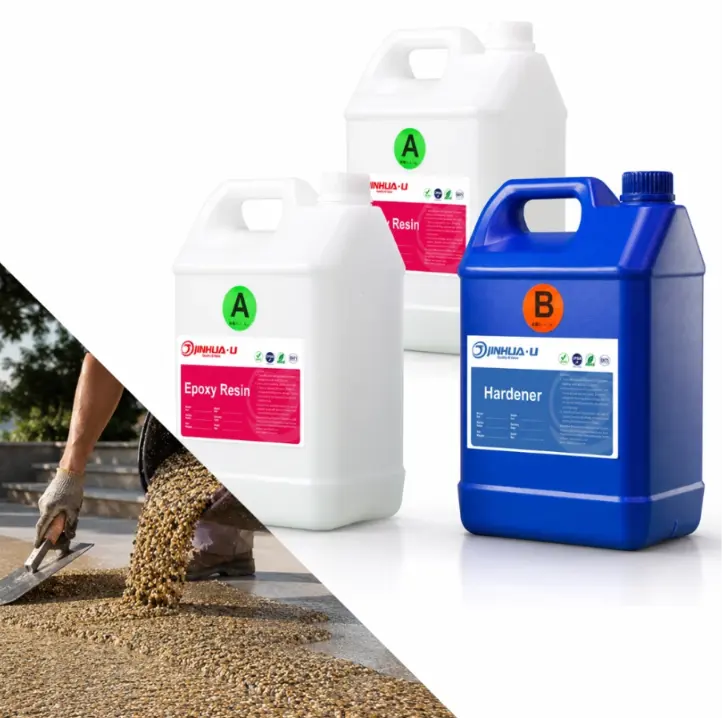
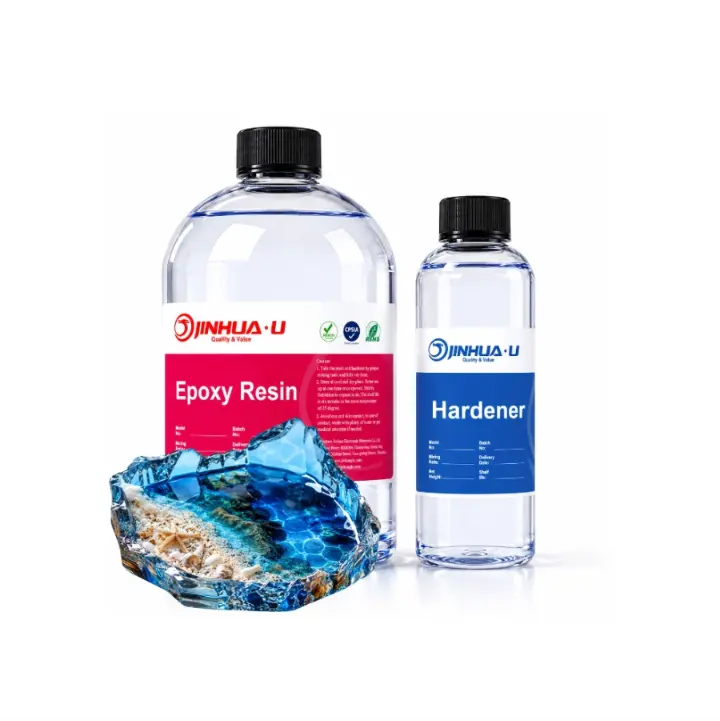
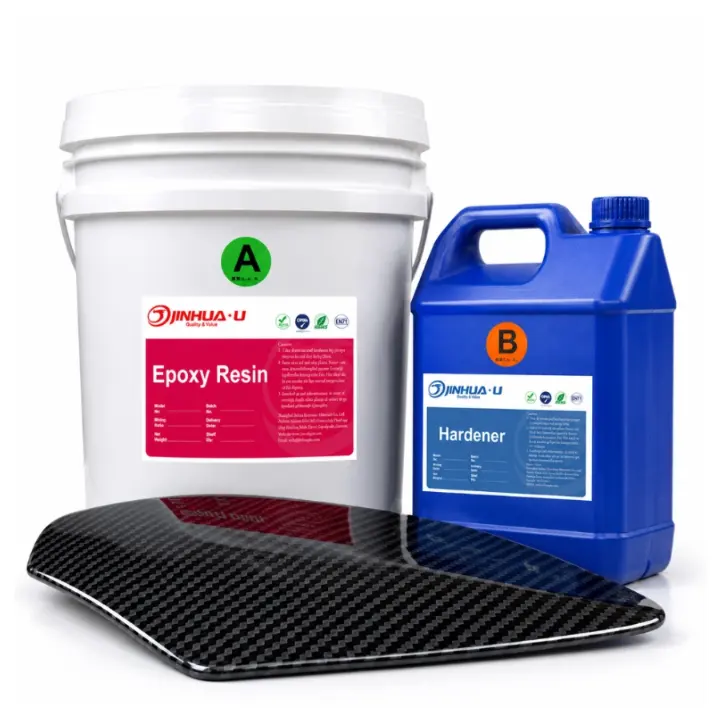
- JINHUA, epoxy composite manufacturer, also produces epoxy resin systems used in composite applications, such as a high-hardness 6992AB system that is used in carbon fiber and fiberglass lamination, mold filling, LED potting, and selected craft applications. The product is a 4:1 weight ratio of resin to hardener and is meant to yield a hard-cured surface.
What is an Epoxy Composite Resin System?
Epoxy composite resin is a resin that serves as a matrix to reinforcing fibers. Reinforcement is achieved by carbon fiber, fiberglass, or aramid fiber, and the epoxy matrix transfers loads between the separate fibers and serves to shield the fibers against the environment around them.
- An average epoxy resin system consists of resin and a curing agent. These can be provided in either two part epoxy resin or two part epoxy system. The epoxy resin and hardener are mixed in a given ratio before being applied.
- The chemical reaction that follows forms a polymer network cross-linked. This is called epoxy cross-linking, and it transforms the liquid substance into a solid thermosetting resin.
- The completed composite relies on the two components of the system. The choice of fiber influences reinforcement and stiffness, whereas the resin formulation influences bonding, toughness, temperature performance, and processing behavior.
Technical Characteristics of Composite Performance
- In the case of an industrial composite manufacturer, it is more helpful to assess technical information rather than general statements about strength. The strength of the epoxy bond influences the effectiveness of the resin in transferring loads between fibers and the cured matrix. In case of poor adhesion, the composite can fail to perform as expected despite having a strong reinforcement.
- The tensile strength, flexural strength, and compressive strength of the resin are also useful in giving information about the cured matrix. These values, however, should not be equated to the strength of the completed fiber composite. The end laminate is based on the type of fibers, the orientation of the fibers, the amount of resin used, the level of voids, the conditions of curing, and the quality of manufacturing.
Other properties can be:
• Impact resistance
• Chemical resistance
• Thermal resistance
• Moisture resistance
• Surface hardness
• Dimensional stability
The glass transition temperature is most useful when it is to be used in high-temperature applications. Polymer behavior may vary dramatically above the corresponding transition region, and thus the resin system must be chosen based on the real service temperature.
Composite Manufacturing Methods
Not all production methods may be compatible with the same epoxy system. The manufacturing of composites has a number of established procedures, each having varying processing requirements. Hand lay-up involves positioning of reinforcement by hand, using resin and working into the fibers. It may be applicable to smaller production runs and larger parts that have comparatively simple shapes.
- Resin infusion involves a pressure difference to force resin through dry reinforcement. Vacuum infusion: Vacuum pressure aids in drawing the resin into the laminate and consolidating the reinforcement.
- Another process that is related is vacuum-assisted resin transfer molding, which is also referred to as VARTM. In this case, resin is placed in a pre-prepared mold with dry reinforcement, and vacuum aids in resin flow and curing.
- Resin transfer molding, or RTM, involves the closed mold into which the resin is injected around the reinforcement. The process has the potential to offer improved dimensional control and repeatability to appropriate production volumes.
- The other methods are composite lamination, composite molding, pultrusion, and filament winding. The various processes have varying requirements on the resin viscosity, pot life, cure speed, and temperature.
JINHUA to High-Hardness Composites
JINHUA offers high-hardness epoxy resin for composite material applications. The company refers to it as appropriate in carbon fiber lamination, fiberglass lamination, LED potting, mold filling, and selected craft applications. It has a Shore D hardness of 92, which is a firm cured surface.
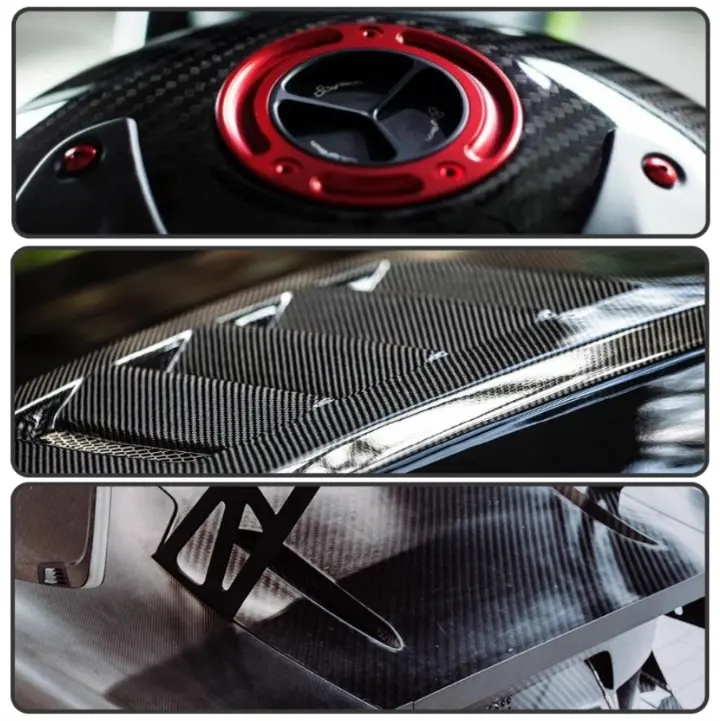
- The product is also characterized as being transparent, free of bubbles, high in hardness, and yellowing resistant. To protect composite surfaces, JINHUA locates the formulation to be applied in applications like automotive parts made of carbon fiber where a hard protective layer is needed.
- It has a published curing specification of 25 C in three hours, or 55 C in 15 minutes on a 2 g sample. The mentioned pot life is 10 minutes. The actual processing behavior may depend on batch size, geometry, temperature, and application conditions, and therefore manufacturers are advised to test the system in their own process prior to full production.
What to Consider in an Epoxy Composite Supplier
Technical support and consistency should be placed next to price in the eyes of buyers comparing an epoxy composite supplier. Look for a supplier that can provide clear information about the resin's:
• Mixing ratio
• Viscosity
• Pot life
• Cure schedule
• Hardness
• Recommended processing temperature
• Storage conditions
• Available packaging
• Application compatibility
The shelf life provided is one year under a temperature of about 25 C in a cool, dry area devoid of sunlight, high temperatures and high humidity. To manufacturers, such practical information can be a lifeline in the transition between laboratory tests and repeatable production.
Conclusion
The consistency of a composite is as consistent as the system. The choice of fiber is important; however, viscosity, wetting, curing, adhesion, and temperature control are also important. With these factors in check, the resin is able to work silently and with efficiency, leaving the reinforcement to perform as intended.
Being an epoxy composite manufacturer, JINHUA can also assist buyers who seek resin solutions that can be tailored to meet particular composite production needs, reinforcement types, and processing techniques.