



Updated 2 months ago
Epoxy Potting Compound vs Silicone Potting: Which Is Better?

hqt

Electronic devices are getting smaller, smarter and more powerful, with the need to be protected from moisture, vibration, heat and environmental damage growing. Potting compounds are critical in safeguarding sensitive electronic parts, filling gaps, sealing circuits, and enhancing long-term reliability.
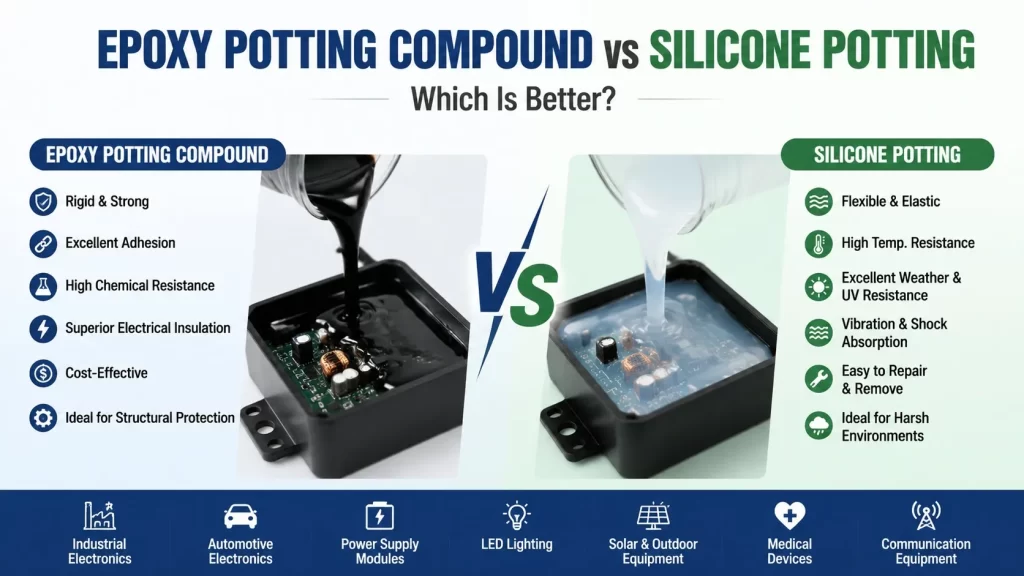
Of those solutions, epoxy potting compound and silicone potting compound are two popular options. They offer very high electrical insulation and protection levels, but differ dramatically in terms of their flexibility, high temperatures, durability and suitability for use.
So, epoxy potting compound vs silicone potting - which is better? The answer is related to the requirements of your project, your operating environment and your performance expectations. This guide will give a comparison of the main features of these potting materials, to help the manufacturers choose the best fit for their product.
What Is Epoxy Potting Compound?
Epoxy potting compound is a thermosetting resin system which consists of epoxy resin and curing agent. It forms a hard and rigid protective layer around the electronic components after curing.
Epoxy potting is commonly used in the industrial electronics, automotive, power supply, sensor and circuit protection industries due to its high mechanical strength, chemical resistance and good adhesion.
Key Features of Epoxy Potting Compound
1. Excellent Mechanical Strength
Epoxy forms solid structure on curing. This rigidity makes it very resistant to external stress, vibration and physical impact.
2. Superior Chemical Resistance
Epoxy potting compounds are highly resistant to oils, solvents, moisture and many harsh chemicals, which makes them ideal to use in tough industrial environments.
3. Strong Adhesion
Epoxy adhesive will adhere to metal, plastic, ceramics and circuit boards. This high bonding power aids in resisting water penetration and enhances the stability of the components.
4. High Electrical Insulation
Epoxy materials have outstanding electrical properties, such as high dielectric strength, making them suitable for shielding electronic circuits against electrical failures.
5. Good Heat Resistance
There are a number of epoxy compounds that will function at higher temperatures and are therefore suitable for power electronics and industrial applications.
What Is Silicone Potting Compound?
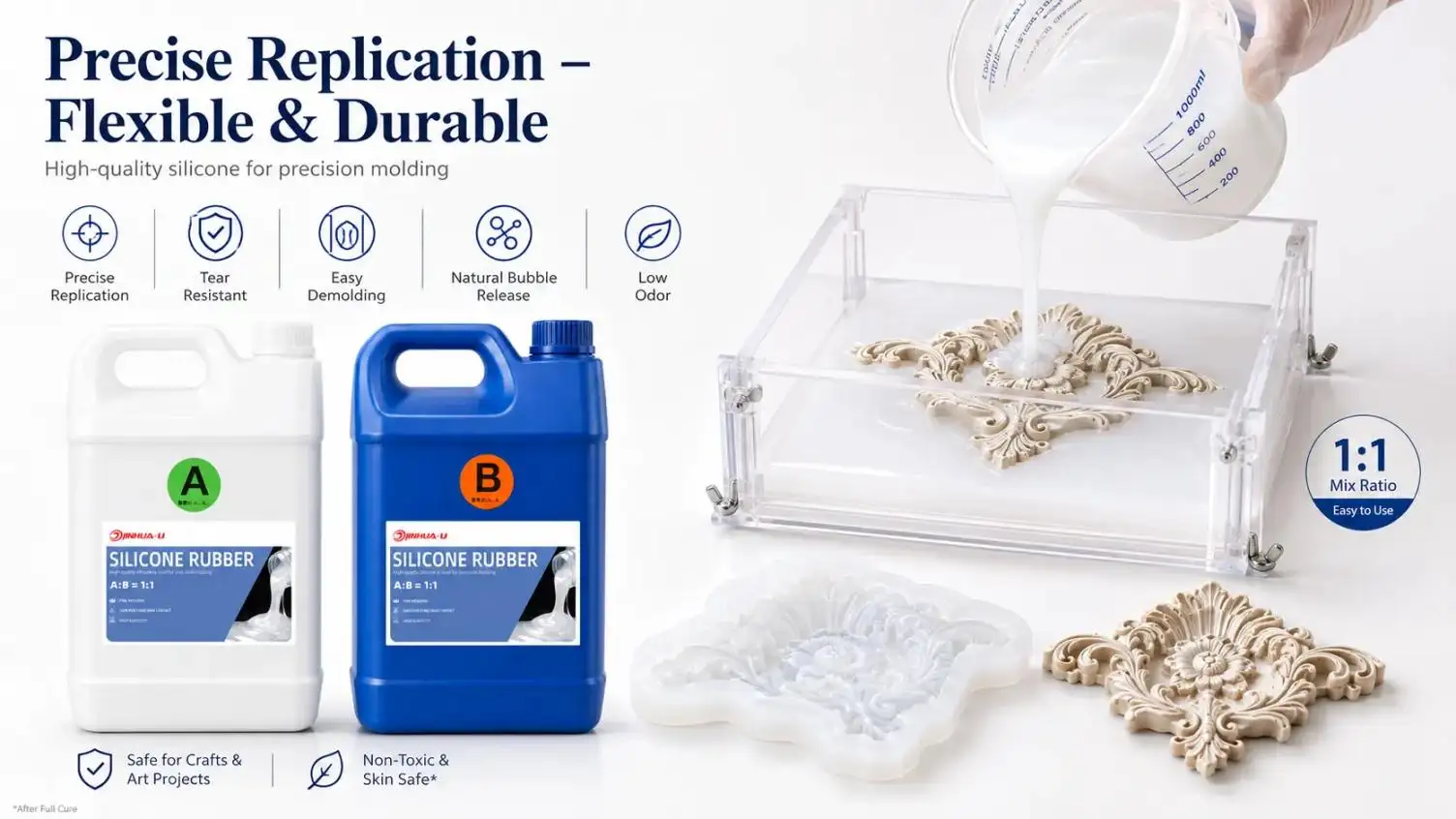
Silicone potting compound is a silicon polymer compound that has the characteristics of flexibility. Silicone does not harden to the same extent as epoxy does and is flexible.
This means that silicone potting material can take up physical stresses created by thermal expansion, vibrations and movement.
In LED lighting, silicone potting is widely employed, as is done in automotive electronics, outdoor equipment, medical devices and high-temperature applications.
Key Features of Silicone Potting Compound
1. Excellent Temperature Resistance
Generally silicone potting compounds can perform in extreme temperature ranges.
This makes them suitable for use in applications that are subject to temperature changes.
2. High Flexibility
After curing, silicone is rubbery and won't break when electronic components expand and contract.
3. Excellent Moisture Protection
Silicone is a durable material that is waterproof and protects against moisture, which makes it ideal for outdoor electronic devices.
4. UV and Weather Resistance
In comparison to many other materials, silicone is effective in exposing to sunlight and harsh weather conditions.
5. Easy Repair and Maintenance
Silicone is also softer than epoxy allowing it to be removed more easily if electronic components need to be inspected or repaired.
Epoxy Potting Compound vs Silicone Potting: Key Differences
1. Hardness and Flexibility
The biggest difference between epoxy and silicone potting is their mechanical properties.
| Feature | Epoxy Potting | Silicone Potting |
|---|---|---|
| Cured structure | Hard and rigid | Soft and flexible |
| Shock resistance | Good | Excellent |
| Vibration resistance | Moderate | Excellent |
| Stress absorption | Limited | High |
Epoxy provides stronger physical protection, while silicone performs better in environments where movement and vibration are common.
2. Temperature Performance
The resistance to high temperature plays an important role in electronic protection.
Epoxy potting compounds have good heat resistance but could have a rigid structure which would cause stress if exposed to extreme temperature changes for long periods.
Silicone potting compounds are more flexible over a greater temperature range and are more desirable for repeated heating and cooling applications.
Best Choice:
- High-temperature environments → Silicone potting
- General industrial electronics → Epoxy potting
3. Moisture and Waterproof Protection
Both epoxy and silicone are highly resistant to moisture.
But silicone is more effective in outdoor conditions, as it stays flexible and can accommodate changes in temperature due to weather conditions.
Epoxy forms a tighter permanent seal, is ideal for applications where maximum protection from chemicals and mechanical damage is required.
Best Choice:
- Outdoor electronics → Silicone potting
- Chemical exposure environments → Epoxy potting
4. Mechanical Protection
Epoxy potting compounds form a hard coating around the parts, giving them a good level of protection against impact and physical damage.
Epoxy is used for products that require reinforcement to the structure.
Silicone provides improved vibration protection by absorbing mechanical vibrations rather than transferring them to components.
Best Choice:
- Impact resistance → Epoxy
- Vibration resistance → Silicone
5. Repairability
An epoxy once cured is very hard and hard to remove. This offers a good deal of protection but repairs are difficult.
Silicone is flexible and is generally easier to remove, giving technicians a chance to reach the inside of the components.
Best Choice:
- Disposable or sealed products → Epoxy
- Maintainable electronics → Silicone
6. Cost Considerations
Epoxy potting compounds are, in general, less expensive, because of their low material cost and ease of processing.
Silicone potting compounds usually have a higher price because of their advanced temperature stability and flexibility.
But, product life, maintenance needs, and environmental conditions should be factored into the total cost.
Applications Comparison
Common Applications of Epoxy Potting Compound
Epoxy potting is widely used in:
- Power supply modules
- Transformers
- Industrial controllers
- Automotive electronics
- Battery protection systems
- PCB encapsulation
- Sensors
- Communication equipment
Its excellent strength and chemical resistance make it ideal for demanding industrial applications.
Common Applications of Silicone Potting Compound
Silicone potting is commonly used in:
- LED lighting systems
- Outdoor electronics
- Automotive sensors
- Medical devices
- Solar equipment
- High-temperature electronics
- Flexible circuit protection
Its flexibility and weather resistance make it ideal for applications exposed to temperature changes and vibration.
Which Is Better: Epoxy Potting Compound or Silicone Potting?
There is no universal winner between epoxy and silicone potting compounds. The better option depends on the specific application.
Choose epoxy potting compound when you need:
- Maximum mechanical strength
- Strong chemical resistance
- Permanent protection
- Excellent adhesion
- Cost-effective encapsulation
Choose silicone potting compound when you need:
- Extreme temperature performance
- High flexibility
- Vibration resistance
- Outdoor durability
- Easier maintenance
For example, a factory producing industrial power modules may prefer epoxy because of its strength and durability. Meanwhile, an LED manufacturer or automotive electronics supplier may choose silicone because of its flexibility and temperature stability.
How to Select the Right Potting Compound Manufacturer
Choosing a reliable potting compound supplier is just as important as selecting the right material. A professional manufacturer should provide:
Customized Formulations
Different industries require different properties, including thermal conductivity, curing speed, hardness, and flame resistance.
Quality Control
A trusted supplier should conduct testing for:
- Electrical insulation performance
- Temperature resistance
- Adhesion strength
- Moisture protection
- Aging resistance
OEM and ODM Services
Epoxy or silicone potting compounds can be created by the manufacturer to meet product needs and requirements.
Conclusion
In the comparison between epoxy potting compound vs silicone potting, both are capable of providing adequate protection for electronic components, with each one having its own specific application.
Epoxy potting compounds are exceptionally hard, strong and resistant to all chemicals, making them very suitable for industrial and high protection applications. Silicone potting compounds are highly flexible, temperature resistant and environmentally resistant and are suitable for use in outdoor and high vibration settings.
There are various types to choose from, depending on product design, operating conditions, and performance requirements. Manufacturers can choose the optimal material to enhance service life and reliability of their products based on understanding the difference between epoxy and silicone potting materials.
Partnering with an experienced epoxy potting compound manufacturer or silicone potting supplier can guarantee businesses a consistent quality, customization options, and long-term performance when it comes to electronic protection solutions.