





Yes, you can epoxy a wood floor, but it's not as easy as a concrete floor. While epoxy is a way to produce a durable, moisture-resistant and good-looking surface over wood, the outcome of the project will largely depend on the condition of the wood, moisture control, the preparation of the wood surface and the type of epoxy flooring system chosen.
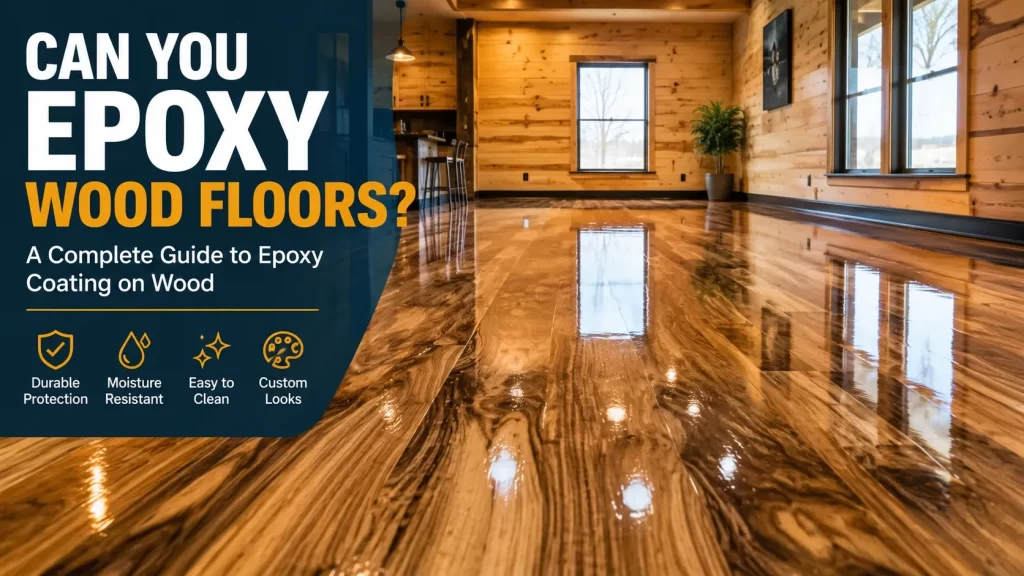
Wood expands and contracts and flexes with changes in humidity and temperature, whereas concrete does not. This movement is a problem with cured epoxy as it has relatively low flexibility and, if the flooring system is not designed and installed properly, these movements may cause peeling and cracking or delamination of the epoxy.
The answer to the question “Will epoxy stick to wood?” isn't the only one you need to consider if you are thinking of an epoxy wood floor. What really matters is whether the wood substrate can offer a long lasting resin flooring system.
Can You Put Epoxy Over a Wood Floor?
When the subfloor is structurally safe and adequately prepared, epoxy can be used over some wood floors. But the conventional epoxy products, which are used mainly in concrete, do not automatically work for wood.
Wood is a material that is sensitive to moisture and has a dynamic response. Absorbs and rejects moisture from the surrounding environment, resulting in dimensions changes. A non-moving epoxy coating will not endure long if the coating surface experiences any movement. One of the largest concerns of using epoxy flooring over wood flooring is the difference between the coating and the substrate.
The existing wood may be stabilized and a suitable plywood underlayment may be installed prior to the resinous flooring system being installed for some projects. Epoxy primers, flexible epoxy systems and compatible underlayments can also help minimize movement issues.
So, it's not impossible, but a different system must be used for epoxying over wood, not just any garage floor epoxy.
What Are the Benefits of Epoxy Flooring on Wood?
If installed correctly, an epoxy coating can have a number of benefits.
1. Improved Durability
Epoxy will provide a firm, uninterrupted protective barrier that will help to safeguard the wood from daily wear, impact, stains and abrasion. This is helpful for areas such as workshops, utility rooms, commercial areas and other places where wood flooring might get a lot of use.
2. Moisture Resistance
When properly cured, an epoxy coating will form a fairly impermeable surface. This can assist in safeguarding the base material from liquid and spillage on the surface.
Epoxy is not to be considered a solution for an existing moisture problem, however. Where water is already trapped in the wood or subfloor, sealing it under an impermeable surface can cause bubbling, blistering and/or failure to adhere. Therefore, moisture assessment should be done prior to coating.
3. Easy Maintenance
The most obvious benefit of resin floors is that they are seamless. If the floor surface is not finished or is too rough, then the epoxy floor can be easier to clean than the rough surface because dirt does not build up in the same areas.
The regular sweeping and cleaning with a mild cleaner that will not damage the surface and is suitable for your floor type is generally enough for regular cleaning.
4. Decorative Appearance
Wood grain can be accented with clear epoxy and decorative systems can produce completely different effects using pigmented systems.
Depending on the flooring system, homeowners and businesses can consider:
- Clear epoxy over decorative wood
- Solid-color epoxy
- Metallic epoxy effects
- Decorative flakes
- High-gloss finishes
- Satin or matte topcoats
This makes epoxy an option for projects where both performance and appearance matter.
What Are the Main Problems With Epoxy on Wood?
Wood movement is the greatest consideration.
Wood is subject to changes in size and shape due to variations in the environment. Older plank floors, flexible subfloors and boards that aren't properly secured can move even more. When cured, normal epoxy is fairly stiff. Stress can be developed at the bond line due to repeated movement under the coating and cause cracking or delamination.
Moisture is also an important issue. The moisture in the wood, if too high when application of the coating is done, can cause interference with adhesion and cause blistering and bubbling.
Other possible issues are:
- Loose or moving floorboards
- Cracks and gaps between boards
- Existing wax or polyurethane finishes
- Oils, dirt, and contaminants
- Excessive wood moisture
- Poor adhesion
- Air bubbles or outgassing
- Incompatible primers
- Insufficient surface preparation
Epoxy flooring over wood in general is therefore more complex and requires more testing and preparation than epoxy flooring over a stable concrete slab.
How to Prepare a Wood Floor for Epoxy
Preparation is arguably the most important part of an epoxy wood flooring project.
Step 1: Inspect the Floor
Before applying anything, inspect the entire floor.
Look for:
- Loose boards
- Rot or water damage
- Cracks
- Excessive flexing
- Uneven areas
- Protruding fasteners
- Open joints
- Existing coatings
Damaged or unstable wood should be repaired or replaced before coating.
A resin floor should not be used to hide structural problems underneath.
Step 2: Stabilize the Substrate
The floor should be as firm as can be. Boards and areas that bend too much can add stress to the epoxy.
An adequate exterior grade plywood underlayment can be used to provide a more stable surface for some installations. Industry recommendations for all wood subfloors under resinous flooring focus on the requirement to anchor the existing floor and choosing matching plywood and construction techniques.
The exact construction should be determined according to the flooring manufacturer's specifications and the building's requirements.
Step 3: Remove Existing Finishes
Adhesion of epoxy can be affected by paint, wax, varnish, oil and other contaminants.
It may be necessary to remove the existing finish mechanically, such as sanding. The goal is to produce a clean, sound and well-profiled surface.
Step 4: Sand and Clean
Gross sanding provides mechanical profile which allows better adhesion of the primer to the substrate.
Sand and then thoroughly remove dust. Any dust or debris, no matter how small, can change the look and finish of the applied coating.
Step 5: Check Moisture
Prior to coating the wood, moisture testing should be conducted.
There is no single number that can be used for all products and manufacturer requirements, therefore the acceptable moisture level is dependent on each specific product. The technical data sheet should always be followed but some recommendations for wood moisture content before coating are 10-12%.
If moistures are excessive, locate the cause of excessive moisture and fix it before continuing.
Choosing the Right Epoxy for Wood
Not all epoxy flooring products can be used with wood.
When considering a product, check if the product is compatible with wood substrates. These include some of the following features:
- Strong adhesion to wood
- Suitable flexibility or elongation
- Compatible primer
- Moisture-management characteristics
- Appropriate curing performance
- Resistance to expected traffic and chemicals
Allow for some movement by using a flexible or elastomeric primer. Some resin floor systems can also utilize flexible flooring underlayments or elastomerics to minimize stress from movement and vibration.
Never mix together different products that are not part of the same system. Always use the full system specification from the manufacturer.
Can You Epoxy Hardwood Floors?
Yes, but for hardwood flooring, there are specific precautions that must be taken.
Older hardwood floors can be engineered to move naturally. If the flooring is not sufficiently stable, this can cause problems if they are covered with a rigid resin system.
For natural beauty with an expensive hardwood, a traditional wood floor finish might be more suitable. Where a very durable seamless floor is desired, whether in a workshop, utility room, a commercial setting or an appropriate other location, a special resin flooring system might be considered.
Before making the decision, an understanding of the existing floor condition and construction should be obtained.
Is Epoxy Better Than Traditional Wood Floor Finishes?
Not necessarily. Depending on the situation, the most suitable floor coverings may vary.
Traditional wood finishes have been formulated with wood in mind and work with the properties of wood. Epoxy has other benefits: It is hard, seamless and highly customizable.
Select epoxy if you are looking for properties like:
- Seamless flooring
- High durability
- Chemical resistance
- Decorative customization
- Easy cleaning
- A modern resin-based appearance
When preserving natural wood movement, texture and traditional appearance are the focus, opt for a conventional wood finish.
Should You DIY an Epoxy Wood Floor?
Epoxy flooring done on site can be effective when installed on the appropriate subfloor; however, compatibility with the product and subfloor preparation are more critical with wood floors than with many types of concrete floor.
Professional evaluation is recommended with large, questionable, flexible, and/or moisture exposed floors.
A professional installer can determine the stability of the substrate, moisture conditions, existing coatings, product compatibility, and correct topcoat/primer system before installation.
Final Answer: Can You Epoxy a Wood Floor?
Yes, a wood floor can be epoxyed, but it does need the correct conditions and a correct flooring system.
The key factors are moisture control, surface preparation, substrate stability, epoxy system suitable for wood, and using a compatible epoxy primer. The direct application of a regular concrete epoxy to an untreated wood floor won't necessarily have a long-term solution for adhesion and cracking.
In order to achieve the best results, the wood floor should be inspected first, the substrate should be repaired and stabilized, incompatible finishes should be removed, the floor should be thoroughly prepared, moisture should be checked, and a coating system must be one that is specifically approved for wood floor.
To sum it up, epoxy can turn a wood surface that has been properly prepared into a long-lasting, beautiful resin floor, if the right wood and epoxy are used and the wood is prepared accordingly.