




A garage floor is much more than just to support your vehicles. It is subjected to oil, grease, road salt, chemicals, hot tires, heavy tools, moisture and heavy foot traffic. Concrete will eventually become stained, cracked, dusty, and hard to maintain if it is not properly maintained.
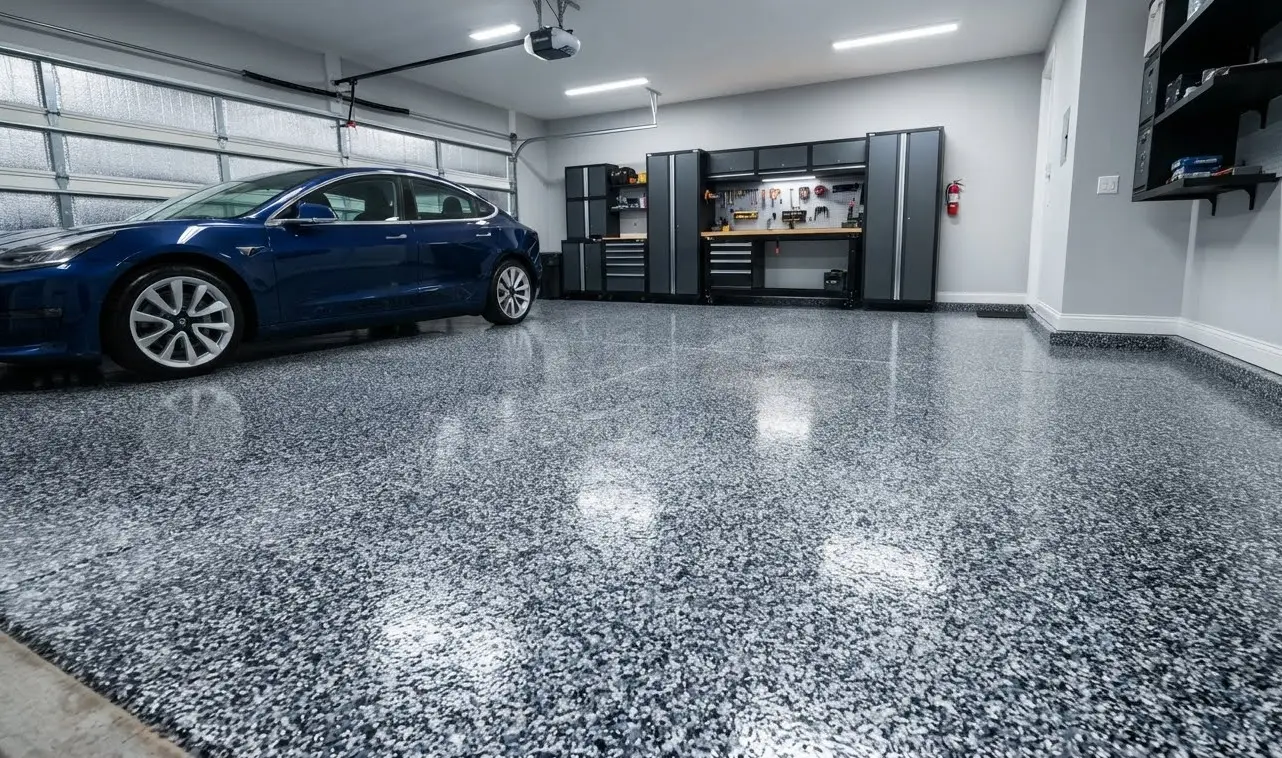
A garage epoxy floor coating will give the garage a cleaner and more attractive appearance, while simultaneously protecting the concrete. Professional epoxy systems are engineered to produce a strong, non-breakable surface that will resist the tough conditions found in a home garage.
However, epoxy is not the best option for garage flooring in your home? What are the advantages, why it is installed, and how it compares to more recent coatings like polyaspartic? This guide will tell you what the homeowner needs to know prior to selecting a garage floor coating.
What Is a Garage Epoxy Floor Coating?
Garage epoxy floor coating is a protective coating system that is applied on the surface of concrete that has been prepared properly. Epoxy is usually made from a resin and a hardener which chemically react to create a hard and durable surface.
The coating is applied over the concrete and forms a continuous skin after the cure. This can be used to help prevent automotive fluids, stains, abrasion, moisture and wear on the floor.
Some professional garage floor systems might also be made up of epoxy and other coating systems. In one example, an epoxy-based base coat is used together with decorative vinyl flakes and a polyaspartic top coat, which offer a combination of good adhesion, decorative appeal, UV resistance and durability.
This is a multi-layered process as opposed to just painting a concrete floor. The performance of a garage coating is based on the coating material, preparation of the concrete, technique of the coating, the curing conditions and the quality of the complete system.
7 Key Benefits of Epoxy Garage Floor Coating
1. Protects Concrete From Daily Wear
Garages are a far cry from the gentler treatment enjoyed by most parts of a house. Bare concrete can deteriorate over time due to vehicles, tools, bicycles, and pedestrian traffic.
When properly installed, a floor coated with epoxy will provide a protection that will help the floor to last for years without being put to use. It can help lessen abrasion effects and help to maintain the surface.
2. Resists Oil, Grease and Automotive Chemicals
A leaking oil filter and fluid spills frequently occur in the garage. Bare concrete is porous, meaning that liquids will soak through the surface and create stains which will not be removed.
When oil, grease or other automotive fluids are spilled on a properly installed coating surface is easier to clean-up and does not become porous. Epoxy systems also have a high resistance to most typical stains and chemicals.
An epoxy coated garage can be especially beneficial for the homeowner that works on their vehicles or conducts home improvement projects.
3. Creates a Seamless, Easy-to-Clean Surface
A garage floor coating has one of the most notable benefits as it makes maintenance easier.
Bare concrete may get dust and dirt into its pores and small defects. It is much easier to sweep, vacuum and mop a seamless coated surface.
Typically, homeowners just need to sweep or vacuum away any loose debris and they can vacuum or mop the floor with a mild cleaning solution when necessary for routine maintenance. Avoid using harsh or abrasive cleaners, as they could impact the finish over time.
4. Improves Garage Appearance
A garage doesn't have to be just a functional space.
The epoxy garage flooring has a variety of colors and decorative designs. Solid colors, decorative flakes or multi-coloured systems that produce granite-like effects are popular choices.
Decorative flake flooring, in particular, is very popular as it can offer a visual depth and mask a few minor spots of daily dirt.
A clean, well done and polished garage floor can transform the whole space to look cleaner, brighter, and more orderly.
5. Can Improve Traction
Epoxy smooth surfaces can get slippery when wet. But professional installers can also incorporate materials that enhance traction in the coating system.
Additional texture and footing may be achieved with the use of fine aggregate or other anti-slip additives where water or other liquids might be present.
When it comes to choosing a garage floor coating, it's a crucial factor to keep in mind for homeowners. It shouldn't be a shiny finish, but just the right amount of grip for where it's being used.
6. Offers Long-Term Value
Garage floor coatings have a variety of factors influencing their lifespan, such as the condition of the concrete floor, how the concrete is prepared for the coating, the quality of the coating, the method used for applying the coating, traffic volume, and the maintenance program.
High quality epoxy garage floors may last many years, even 10-20 years or more if conditions are optimal.
Good preparation is especially crucial. The industry advises that inadequate surface preparation and contamination are key factors in coating failure.
7. Provides Customization Options
Garage flooring can be customized to complement the style of the home.
Homeowners can choose from:
- Solid-color epoxy floors
- Decorative flake floors
- Multi-color flake blends
- Metallic-style finishes
- Glossy or more textured finishes
- Slip-resistant surfaces
The right choice depends on the desired appearance, garage usage, maintenance requirements, and budget.
How Is a Professional Garage Epoxy Floor Installed?
Professional installation generally involves several important steps.
Step 1: Inspect the Concrete
The installer first evaluates the existing concrete for cracks, pits, damaged areas, contaminants, and moisture-related concerns.
Coating over an unsuitable substrate can result in poor adhesion or premature failure.
Step 2: Repair Cracks and Damage
Cracks, holes, and surface imperfections should be properly repaired before coating.
The objective is to create a stable and appropriately prepared substrate rather than simply covering visible damage with resin.
Step 3: Mechanically Prepare the Surface
Surface preparation is one of the most important stages of the project.
Professional installers may use diamond grinding or other mechanical preparation techniques to remove contaminants and create the appropriate concrete surface profile for coating adhesion.
Step 4: Apply the Base Coat
After preparation and cleaning, the selected base coating is applied according to the manufacturer's specifications.
Depending on the system, this may be an epoxy or another high-performance resinous coating.
Step 5: Add Decorative Flakes
If a decorative flake system is selected, vinyl flakes can be broadcast into the coating while it is still workable.
This creates the characteristic speckled or granite-style appearance often associated with premium garage floors.
Step 6: Apply the Topcoat
A protective topcoat can be applied after the base layer and decorative elements have been installed.
Polyaspartic topcoats are commonly used in professional systems because they offer fast curing, strong abrasion resistance, and better UV stability than traditional epoxy alone.
Step 7: Allow the Floor to Cure
The floor must remain undisturbed during the appropriate curing period.
Exact curing times depend on the products used, temperature, humidity, substrate conditions, and installation system. Some epoxy systems require several days before vehicle traffic is allowed, while faster polyurea or polyaspartic systems can often return to service much sooner.
Epoxy vs. Polyaspartic Garage Floor Coating
Epoxy remains a popular choice because it provides strong adhesion, durability, chemical resistance, and attractive finishes.
However, polyaspartic coatings have become increasingly popular for professional garage flooring.
The primary differences include:
| Feature | Epoxy | Polyaspartic |
|---|---|---|
| Durability | High | Very high |
| Chemical resistance | Excellent | Excellent |
| UV stability | Can yellow over time | Excellent |
| Cure time | Generally slower | Generally faster |
| Decorative options | Excellent | Excellent |
| Installation difficulty | Moderate | Higher |
| Initial cost | Often lower | Often higher |
The best solution does not always have to be one material or the other. Many professional garage flooring systems combine materials, using epoxy as a base layer and polyaspartic as a protective topcoat.
This hybrid approach can take advantage of the strengths of different coating technologies.
How Much Does Garage Epoxy Floor Coating Cost?
There is no single price for every garage floor coating project.
The total cost can depend on:
- Garage size
- Concrete condition
- Number of cracks or repairs
- Surface preparation requirements
- Coating system selected
- Decorative flakes or other finishes
- Number of coating layers
- Labor and local installation costs
A floor requiring extensive preparation may cost more than a clean, relatively new concrete slab.
For this reason, homeowners should compare complete installation proposals rather than choosing a contractor based only on the advertised price per square foot.
Is Professional Installation Worth It?
DIY garage epoxy kits can be attractive because of their lower initial price. However, coating performance depends heavily on preparation and application.
Professional installers have access to mechanical grinding equipment, moisture-testing procedures, industrial coating products, and specialized application techniques.
The most expensive garage floor is not necessarily the one with the highest material price. A coating that fails prematurely because of poor preparation may require removal and replacement.
For homeowners looking for long-term performance, professional installation can therefore provide better overall value than choosing a coating based solely on upfront cost.
How to Maintain an Epoxy Garage Floor
A coated garage floor is relatively easy to maintain.
Follow these basic practices:
- Sweep or vacuum regularly to remove dirt and abrasive debris.
- Clean spills as soon as practical.
- Use a mild cleaner for routine mopping.
- Avoid highly abrasive cleaning products.
- Use suitable mats beneath equipment that may leak fluids.
- Avoid dragging extremely heavy or sharp objects across the surface.
- Follow the coating manufacturer's maintenance recommendations.
Regular maintenance helps preserve both the appearance and protective performance of the floor.
Frequently Asked Questions
How long does garage epoxy flooring last?
A high-quality professionally installed epoxy garage floor can last approximately 10–20 years or longer depending on the coating system, installation quality, traffic, chemical exposure, concrete condition, and maintenance.
Is epoxy garage flooring waterproof?
Epoxy creates a seamless, non-porous surface that can help protect concrete from moisture and liquid penetration. However, it should not be considered a solution for an underlying structural moisture problem.
Can epoxy be applied to cracked concrete?
Yes, but cracks and damaged areas should be properly cleaned, prepared, and repaired before coating. Applying epoxy directly over untreated cracks can increase the risk of visible defects or coating problems later.
Is epoxy garage flooring slippery?
Epoxy can be slippery when wet, particularly when installed with a very smooth finish. Anti-slip additives or textured finishes can increase traction and improve safety.
How long before I can park on a new epoxy floor?
There is no universal answer, it depends on the coating system and the environment. Some polyurea and polyaspartic systems are able to be returned to service much sooner than conventional epoxy would take. Always follow the installer and manufacturer's curing instructions.
Final Thoughts
A garage epoxy floor coating isn't only a look-over renewal. If properly designed and installed, it can help to prevent the concrete from staining, chemical reactions, abrasion, moisture, and normal garage use and help to clean and maintain the space more easily.
When it comes to choosing garage floor materials for homeowners, the primary considerations are not the material's name or the price tag it claims to offer. Consider all the aspects of the system: concrete preparation, crack repair, base coat, decorative finish, topcoat, curing, warranty, and experience.
Many garages can benefit from an epoxy and a good polyaspartic topcoat, which offer a combination of adhesion, protection, UV stability, abrasion resistance and long lifespan that is quite pleasing.
The final decision on which garage floor coating to use will depend on the condition of your concrete, what you'll use your garage for, the desired look, the budget, and the longevity of the garage floor. All of these can help to ensure you have a garage floor that looks better, works better and lasts longer.