


Updated 4 weeks ago
2026 Trends in 3D Epoxy Flooring Material for Commercial Spaces

JINHUA

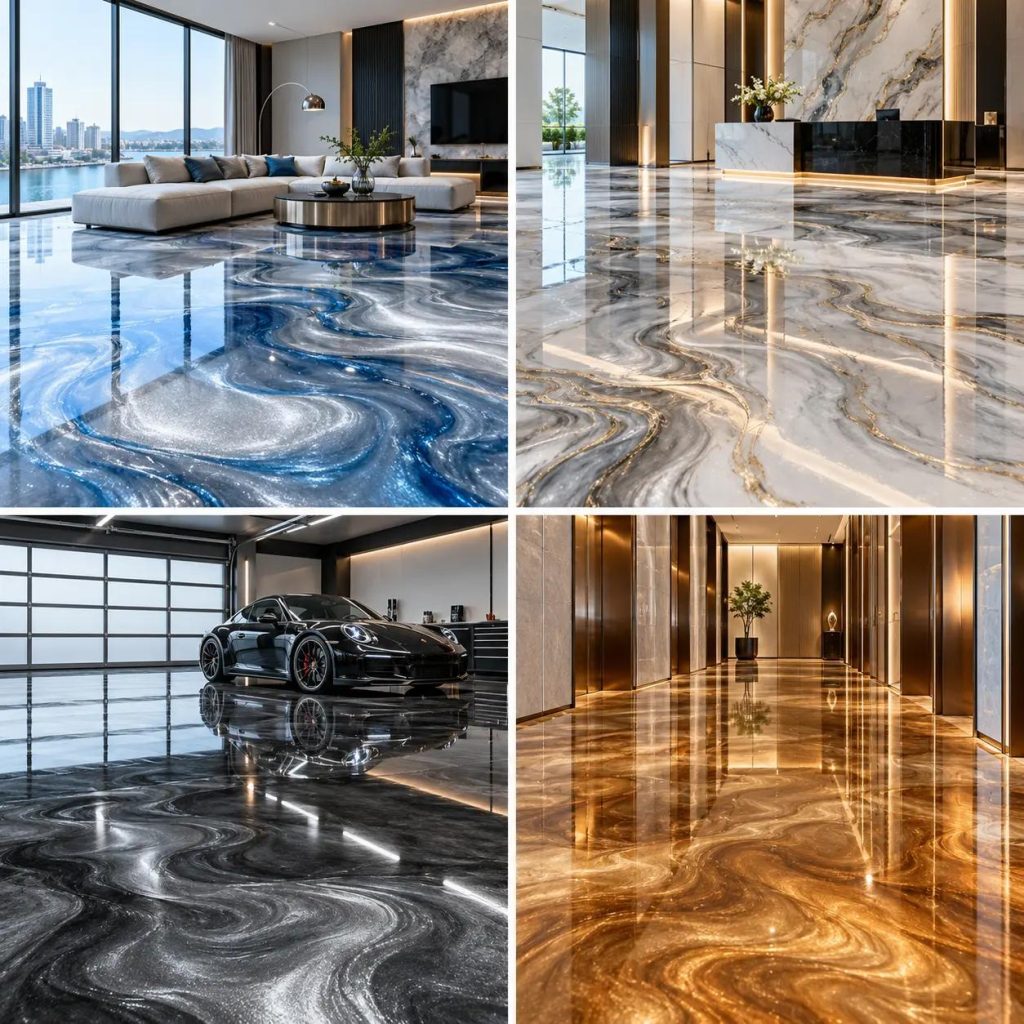
A high-gloss 3D floor can look flawless during handover yet develop visible scratches, yellowing, or localized delamination within its service life. For contractors specifying decorative floors in hotels, retail stores, and commercial interiors, the difficult part is not producing the initial image. It is matching the transparent resin, substrate preparation, and protective coating to actual operating conditions.
In 2026, there will be three things our clients will want the most: transparency, control over installation downtime, and verified performance data. As for 3D Epoxy Flooring, JINHUA looks at the behavior of the resin in the entire flooring system.
1. High-Transparency Flooring Is Moving Toward System-Level Design
Why Clear Resin Alone Cannot Guarantee Image Quality
A printed 3D floor depends on light passing through the transparent coating, reflecting from the decorative image, and returning without excessive scattering or color distortion.
Air bubbles, uneven film thickness and the use of incompatible print materials can all block this optical path. When it is installed, a clear resin in a mixing cup can still result in cloudy spots or distortion of an image over a large area.
Three interfaces require more consideration:
•Primer-to-concrete: Surface contamination, weak laitance, and inadequate mechanical preparation can cause adhesive failure.
•Image-to-resin: Interference at this level may be caused by printed film materials, or ink and/or adhesive residues and may affect the resin's ability to wet and/or cure.
•Resin-to-topcoat: Weak intercoat adhesion may be caused by an inadequate time between recoats or the use of incompatible resin systems.
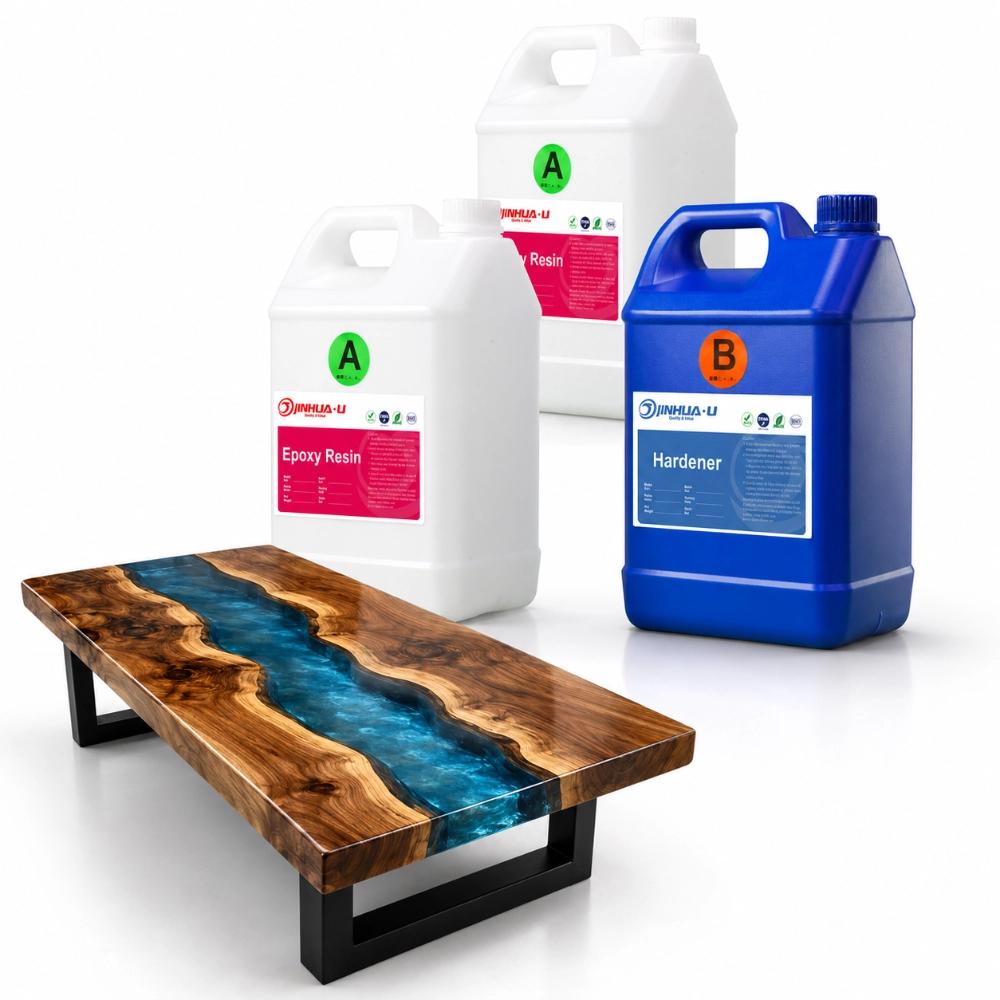
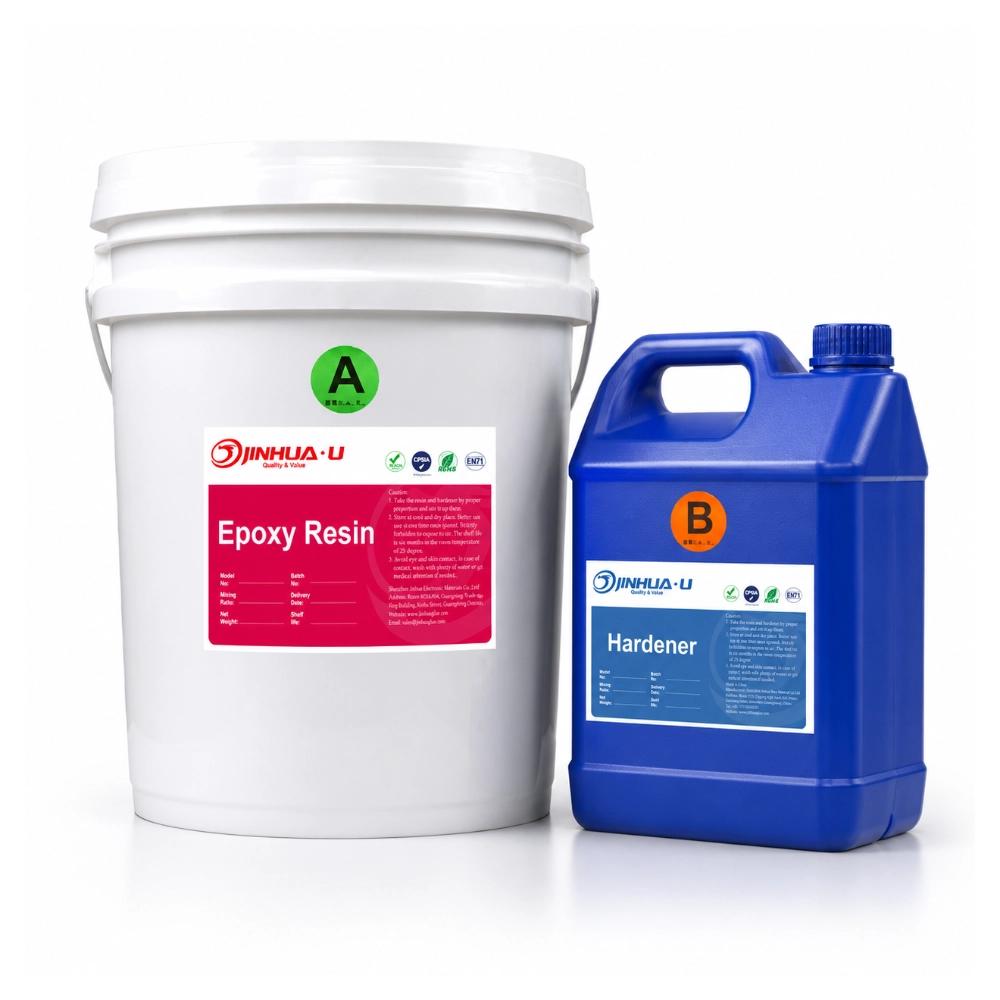
JINHUA supplies clear epoxy resin for 3D and metallic decorative floors with the properties of transparency, leveling and bubble release, which are described in our product information. These properties support the end result; however, compatibility with a specific image substrate would require a representative test panel.
2. Faster Installation Depends on Pot Life, Not Just Curing Time
Commercial operators increasingly evaluate flooring against shutdown windows. However, shortening installation time without controlling resin chemistry can compromise the finished surface.
Our JINHUA 113AB-2 transparent floor resin has the following specifications:
| Property | JINHUA 113AB-2 | Procurement Implication |
| Mixing ratio | A = 3:1 by weight | Requires weighing, not direct volumetric proportioning |
| Pot life | 45 minutes | Mixing quantities must suit installation speed |
| Curing time | 8–10 hours at 25°C | Does not establish full-load service readiness |
| Part A viscosity | 2,000–4,000 cps at 25°C | Does not alone establish mixed-resin flow |
| Hardness | Shore D 80 | Cannot substitute for abrasion testing |
Pot life is particularly sensitive to mixed-batch geometry. Epoxy curing releases heat; resin retained in a deep container dissipates heat less efficiently than a thin coating. The resulting temperature rise accelerates the reaction and can shorten usable working time.
For larger floors, smaller batches and a controlled application sequence help minimize roller marks and inconsistent leveling. The published cure times should be distinguished from readiness for pedestrian traffic, furniture installation and chemical cleaning. These should be evaluated on-site, under the job site conditions and temperatures.
3. Slip Resistance and Surface Wear Are Reshaping Decorative Finishes
The popularity of smooth, reflective coatings in displays and interiors is undiminished. However, the safety of retail staff and the public can conflict with the requirements for reflectivity in coatings. For example, in food-service areas, there are greater slip potentials and thus greater safety concerns.
For slip-resistance, aggregate can be mixed in a protective topcoat, however, if the load is too high, the coating can lose its depth of image, and the surface can trap dirt.
The solution is to separate the decorative and functional layers: The decorative function can be served by a clear epoxy layer. The protective function can be served by a topcoat chosen based on the abrasion, chemical, and cleaning requirements. The layer can be assessed for slip-resistance and a project-specific standard established.
The safety of the end-user can be verified by ANSI A326.3, which outlines the evaluation of dynamic coefficient of friction for hard flooring, and ASTM D4060, which outlines a standard test method for determination of the effect of abrasion and mar resistance of clear and colored coatings on metal and alloy substrates.
Neither measurement should be inferred from resin hardness alone.
4. UV Stability Is Becoming a Critical Selection Factor
Glass façades and large skylights expose decorative floors to prolonged daylight. Even indoors, ultraviolet radiation can initiate photo-oxidation in susceptible epoxy networks.
Yellowing becomes especially visible over pale printed graphics, where relatively small color changes alter the intended design.
A transparent topcoat described as UV-resistant may reduce this problem, but it cannot automatically prevent color changes throughout the underlying resin.
For sun-exposed commercial spaces, we recommend evaluating:
•Accelerated light-aging results for the proposed coating system.
•Color change and gloss retention before and after exposure.
•Compatibility between the UV-protective finish and the transparent epoxy layer.
JINHUA's 113AB-2 specifications establish its transparent decorative application, but do not provide sufficient UV-aging data to claim a defined outdoor or prolonged-sunlight service life.
5. Concrete Moisture Remains a More Serious Risk Than Cosmetic Defects
A glossy floor cannot compensate for an unstable substrate.
Moisture moving through concrete can collect beneath a relatively impermeable coating, contributing to blistering and loss of adhesion. Existing cracks can reflect through a rigid resin system as the slab moves.
Contractors should differentiate surface contamination, inadequate concrete strength and moisture-related risks, prior to installation.
Although ASTM F2170, provides a method to measure the internal relative humidity of concrete slabs, the measured values need to be assessed against the moisture limits specified in the approved flooring system.
ASTM D7234 can evaluate coating pull-off strength on concrete. Recording the failure location is as useful as the numerical result: failure within weak concrete suggests a different corrective action from separation at the primer interface.
No universal moisture or adhesion acceptance value should be assumed without the complete system specification.
6. Low-VOC Documentation and Mock-Up Testing Are Stronger Purchasing Filters
Environmental regulations are increasingly dictating the choice of materials for commercial interiors. Customers may request safety documentation, emissions testing, and VOC content data specific to the product.
These are different forms of evidence. A high-solids epoxy is not automatically a certified low-emission flooring product, and a VOC-content result does not establish indoor-air emissions performance.
For 2026 projects, our suggested approval process is to prepare a representative mock-up using the proposed primer, printed image, JINHUA clear resin, and protective topcoat.
The acceptance review will cover the following four questions.
•Appearance: Is haze, trapped air and image distortion acceptable under actual or specified lighting conditions?
•Application: Is working time and leveling still manageable at the proposed batch size?
•Durability: Do adhesion, abrasion, slip and chemical resistance test results, and other test results, support the intended use of the product?
•Documentation: Do test results and supporting documentation for the product (VOC content, safety data sheets, and other test reports) meet customer requirements?
When the assembly is tested as a whole, rather than individual resin samples, incompatibilities are often revealed before costly site defects occur.
For contractors and commercial flooring buyers evaluating 3D Epoxy Flooring Material, JINHUA offers clear resin for metallic and 3D epoxy flooring. Contact us to review formulation specifications and sample requirements for your planned flooring system.
FAQs
Q1. What 3D Epoxy Flooring Material does JINHUA offer?
JINHUA offers clear epoxy resins for decorative 3D and metallic flooring in 1:1, 2:1, and 3:1 mixing formulations, designed for different viscosity and application requirements.
Q2. Which JINHUA resin is suitable for commercial 3D flooring?
JINHUA 113AB-2 is designed for transparent decorative flooring, including 3D image floors, metallic effects, and marble-effect finishes. Commercial suitability depends on the complete coating system.
Q3. What is the mixing ratio of JINHUA 113AB-2?
The specified resin-to-hardener ratio is 3:1 by weight. Accurate weighing is required; the ratio must not be applied directly by volume.
Q4. How long is the working time of JINHUA clear floor resin?
JINHUA 113AB-2 has a published pot life of 45 minutes. Actual usable working time can vary with temperature, batch size, and mixing conditions.
Q5. How long does JINHUA 3D epoxy floor resin take to cure?
JINHUA 113AB-2 has a published curing time of 8–10 hours at 25°C. Full traffic readiness and chemical resistance require separate confirmation.