





There are a number of traditional bonding materials, like wood glue, contact cement, hot melt, or general-purpose adhesive that have been used for many years. Epoxy resin is however preferred in professional and industrial applications as industries require more durable, stronger and more reliable bonding materials.
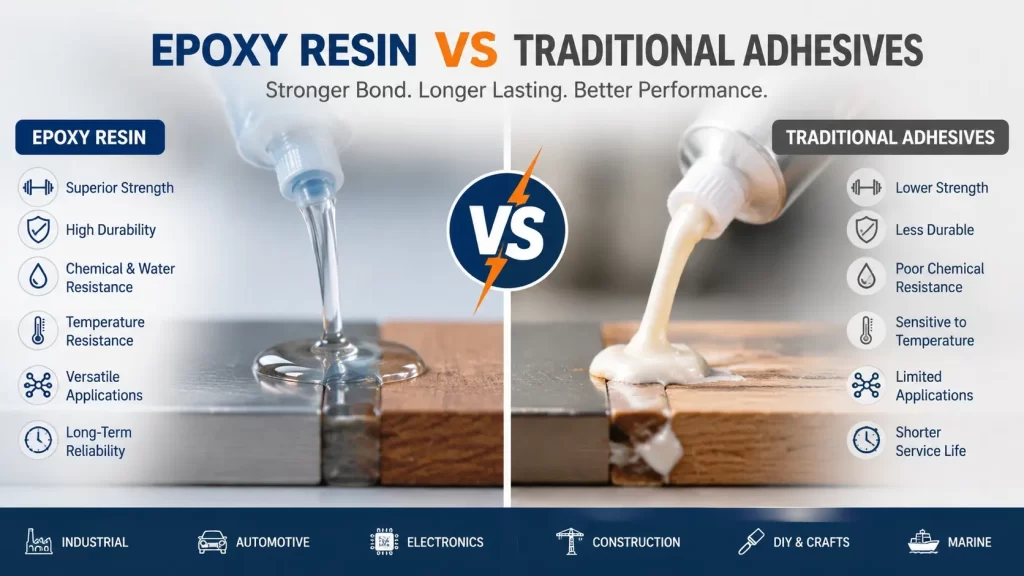
Epoxy resin is an excellent bonding system that offers high bonding strength, chemical resistance, durability and versatility. Whether it's for aerospace applications, automotive parts, electronics, construction, or DIY projects, epoxy resin offers advantages that are simply hard to beat.
However, why would epoxy resin be better than regular adhesives? This article will look at the main differences, and show why epoxy resin is quickly becoming the material of choice in today's market.
1. Superior Bonding Strength
Epoxy resin has one of the greatest strengths in comparison to conventional adhesives, which is its strong bonding ability.
Most traditional adhesives are surface adhesive materials that primarily adhere objects to each other by surface adhesion. This is good for light loads, but it can fail in the presence of heavy loads, vibration, temperature change, or environmental stress.
Epoxy resin creates both mechanical and chemical bonding. The epoxy molecules during the curing process create a strong cross linked structure which tightly bonds with the surfaces being bonded. This gives a far more robust and durable bond.
Epoxy resin is capable of good bonding on most materials such as:
- Metals
- Plastics
- Wood
- Glass
- Ceramics
- Carbon fiber
- Composite materials
Epoxy resin adhesives offer great benefits to industries that demand long-term reliability.
2. Excellent Durability and Long-Term Performance
Some conventional adhesives are susceptible to deterioration when exposed to water, high temperatures, chemicals, or physical force. After months and years, they can have poorer bonding performance.
The chemical structure of epoxy resin is very stable so that it has excellent durability. After complete cure, epoxy forms a strong and durable bond that can resist harsh environments.
The durability advantages are:
- High impact resistance
- Excellent wear resistance
- Low shrinkage during curing
- Strong structural stability
- Long service life
Durability is important for items like industrial equipment, electronics and automotive assemblies. Epoxy resin will cut down maintenance workload and enhance the reliability of products.
3. Better Resistance to Chemicals and Moisture
Some of the traditional adhesives are not suitable for use in water, oils, solvents or chemicals. Peeling, cracking or loss of adhesion may occur due to moisture affecting the adhesive layers.
Epoxy resin is highly resistant to:
- Water and humidity
- Oils and fuels
- Acids and alkalis
- Industrial chemicals
- Cleaning agents
This makes epoxy resin appropriate for challenging environments such as:
- Marine applications
- Chemical processing equipment
- Factory machinery
- Electronic encapsulation
- Outdoor structures
Compared to the traditional adhesives, epoxy resin has a much higher reliability in the project that needs to be reinforced against environmental factors.
4. Higher Temperature Resistance
The adhesive performance is very sensitive to temperature changes. Traditional adhesives get soft under high temperature, or get brittle under low temperature.
Epoxy resin formulations can be used with high temperature resistance, so they can keep bonding even in extreme temperature environments.
Depending on the formulation, epoxy adhesives can withstand:
- High operating temperatures
- Thermal cycling
- Cold environments
- Heat generated by electronic devices
This makes epoxy resin widely used in industries such as:
- Electronics manufacturing
- Automotive production
- Aerospace engineering
- Industrial equipment
One of the primary advantages of using epoxy resin over regular adhesives is its performance stability in thermocycling.Epoxy resin's capacity to withstand temperature fluctuations is one of the primary drawbacks that makes it a favored selection over regular adhesives.
5. Versatility Across Different Applications
Another great benefit of epoxy resin is that it is incredibly versatile.
Typical adhesives are typically manufactured to use on specific materials or within a specific application. For instance, wood glue is suitable for wood, but not for metal or plastic.
Epoxy resin, however, can be used in a wide variety of applications, such as:
Structural Bonding
The construction sector, machinery, and transportation industries all rely on the use of epoxy adhesives for strong connections.
Electronic Potting and Encapsulation
Epoxy resin provides moisture, dust, vibration and chemical protection to delicate electronic components.
Composite Manufacturing
Epoxy is frequently combined with carbon fiber, fiberglass and other composites due to its superior strength-to-weight ratio.
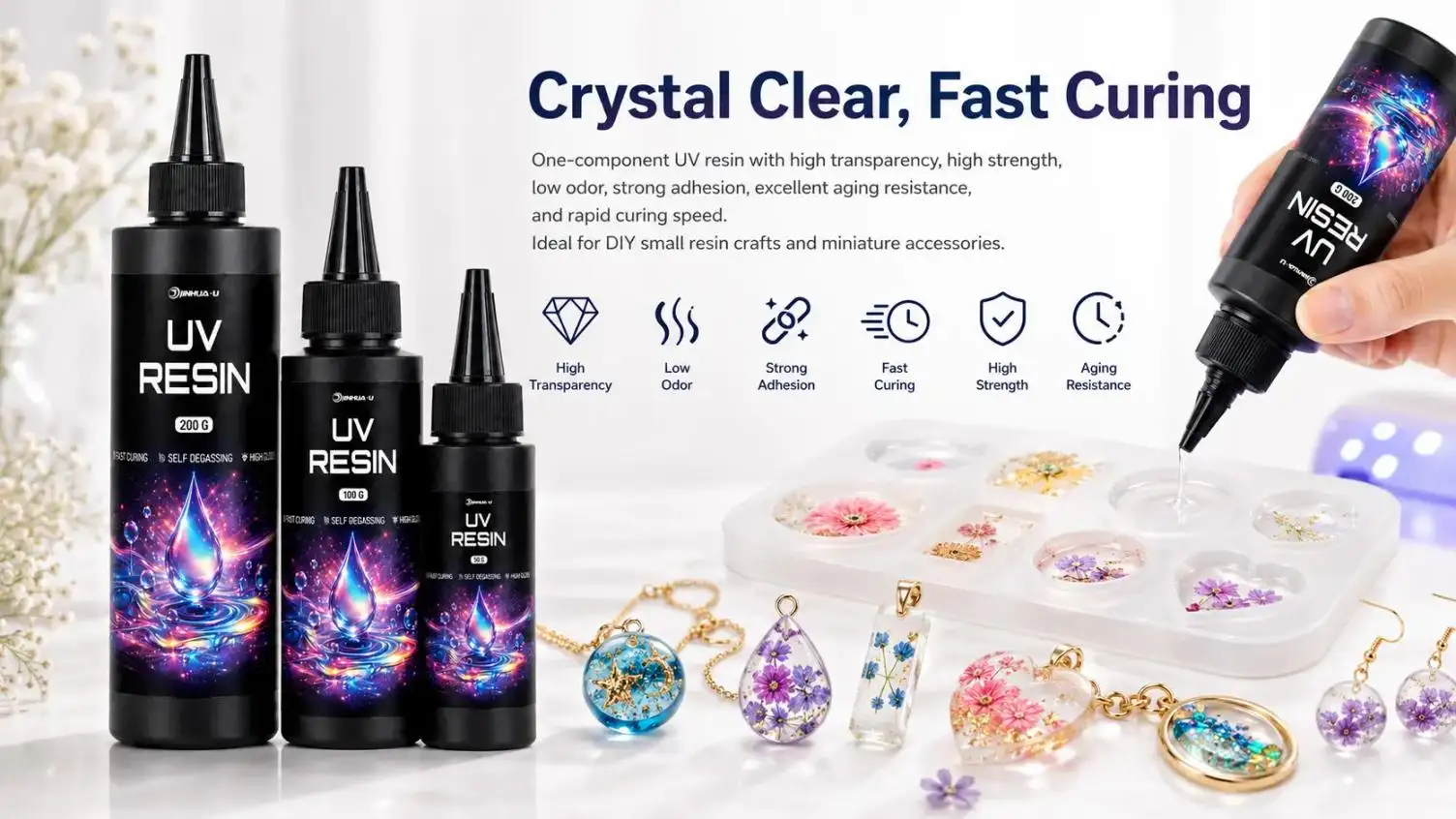
DIY and Craft Applications
Clear epoxy resin is popular for:
- Jewelry making
- River tables
- Artwork
- Decorative coatings
- Repairs
This wide range of applications makes epoxy resin a more flexible solution compared with many traditional adhesives.
6. Strong Gap-Filling Capability
The problem with using traditional adhesives is that they are not very good at filling the voids between irregular surfaces.
Epoxy resin is a material with good filling ability. It can bond well even if the surface is not completely smooth or the surface is a little imperfect.
This is particularly beneficial for:
- Repair work
- Machinery assembly
- Construction projects
- Composite manufacturing
The ability to fill gaps improves contact between materials and creates a stronger overall structure.
7. Better Protection and Sealing Performance
Besides bonding, epoxy resin also provides excellent sealing and protective functions.
After curing, epoxy forms a solid barrier that protects surfaces from:
- Moisture penetration
- Corrosion
- Dust contamination
- Mechanical damage
In electronics, for instance, epoxy potting compounds are used to safeguard circuit boards and components against the environment. Epoxy is used in industrial coatings to coat floors and equipment with a durable protective layer.
Typical adhesives are typically only for bonding purposes and don't offer the same level of protection.
8. Customizable Formulations for Different Needs
Modern epoxy resin technology allows manufacturers to develop customized formulas for different industries.
Epoxy systems can be adjusted to achieve specific properties, such as:
- Fast curing speed
- Flexible bonding
- High transparency
- Low viscosity
- High thermal conductivity
- Flame resistance
- UV resistance
The ability to customise makes epoxy resin an ideal material for specific applications where other adhesives can't deliver the performance.
Epoxy formulations can be selected according to the production environment, material properties, and environmental issues.
9. Cost Efficiency Over Time
Epoxy resin can be more expensive than some of the more standard glues, however, it can be more beneficial in the end.
Epoxy bonds have a longer lifespan and are less susceptible to environmental factors, which can lead to a reduction in costs by companies.
- Repair costs
- Replacement frequency
- Production downtime
- Maintenance expenses
For industrial users, choosing a stronger adhesive solution can improve overall efficiency and reduce operational costs.
Epoxy Resin vs Traditional Adhesives: Quick Comparison
| Feature | Epoxy Resin | Traditional Adhesives |
|---|---|---|
| Bonding Strength | Very high | Medium to low |
| Durability | Excellent | Limited |
| Chemical Resistance | Excellent | Varies |
| Moisture Resistance | High | Often limited |
| Temperature Resistance | High | Moderate |
| Application Range | Very wide | Usually specific |
| Gap Filling | Excellent | Limited |
| Long-Term Reliability | Superior | Depends on type |
Conclusion
Epoxy resin is one of the best binding materials available, with high bond strength, durability, chemical resistance, temperature resistance, and versatility.
Epoxy resin offers superior strength and durability, making it suitable for various industrial applications and everyday projects when compared to traditional adhesives. Epoxy resin can be applied in electronics, construction, automotive components, composites, and innovative applications, and offers a level of reliability that traditional adhesives cannot match.
The demand for stronger and more durable materials will continue to drive the use of epoxy resin as an adhesive technology in the future.