





For modern industrial and commercial buildings, it is essential to have durable, attractive, and easy to maintain flooring systems. Manufacturing plants, hospitals, shopping malls, parking garages, or any other location in the world has adopted resin flooring as one of the most trusted flooring solutions in the world.
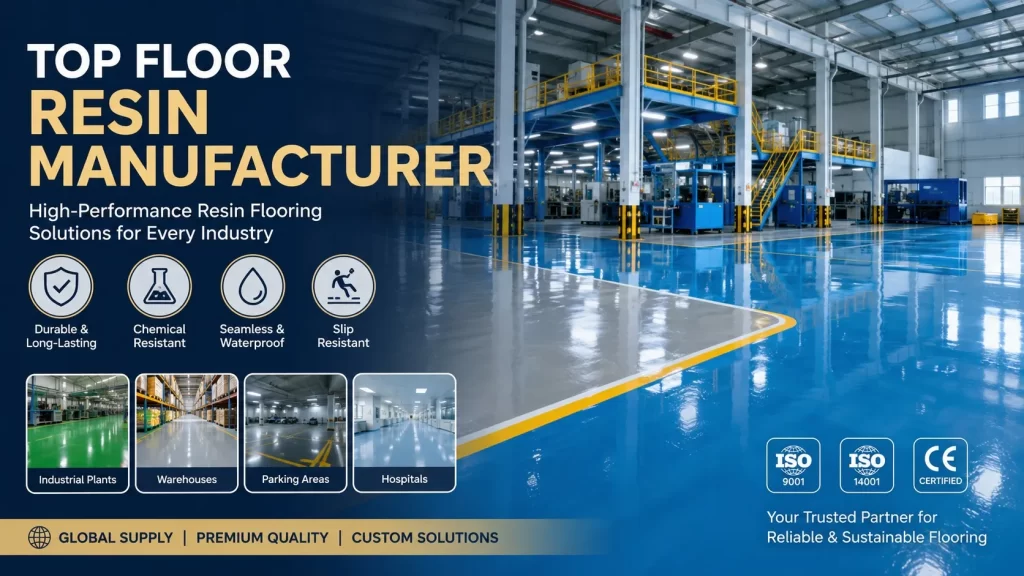
The right choice of top floor resin manufacturer can make a significant difference to the quality of the resin used in the floor, and this will impact the floor's life, chemical resistance, appearance and maintenance costs.
In this guide, you will learn about various types of resin flooring, their uses, benefits, and how to choose the best floor resin manufacturer for your project.
What Is Floor Resin?
Floor resin is a synthetic polymer that can be used to provide seamless, protective and decorative floor surfaces. Once mixed with hardeners or curing agents, the material provides a strong chemical bond and effectively bonds to concrete substrates.
Resin flooring is also hygienic and waterproof, with no joints between the different sections of the floor like the ones found in conventional materials like tiles or paint.
There are several floor resin systems, the most prevalent are:
- Epoxy Resin Flooring
- Polyurethane (PU) Flooring
- MMA (Methyl Methacrylate) Flooring
- Polyaspartic Flooring
- Acrylic Resin Flooring
Each system offers unique benefits depending on the environment.
Why Resin Flooring Is Growing Worldwide
The superior performance is leading to the use of resin flooring in industrial facilities increasing the number of traditional concrete floors.
Major benefits include:
Exceptional Durability
High-quality resin floors withstand:
- Heavy machinery
- Forklift traffic
- Constant foot traffic
- Impact loads
- Abrasion
With proper maintenance, many industrial resin floors last for more than 15 years.
Excellent Chemical Resistance
Factories handling chemicals require flooring resistant to:
- Acids
- Alkalis
- Solvents
- Oils
- Fuels
- Cleaning agents
Premium floor resin manufacturers formulate products specifically for harsh industrial environments.
Seamless Surface
Unlike ceramic tiles, resin flooring has no grout lines.
Benefits include:
- Easier cleaning
- Better hygiene
- Reduced bacteria growth
- Dust-free surfaces
- Improved appearance
This makes resin flooring ideal for food processing facilities and pharmaceutical plants.
Waterproof Protection
Properly installed resin flooring prevents water from penetrating concrete.
Applications include:
- Basements
- Commercial kitchens
- Laboratories
- Hospitals
- Bathrooms
- Parking structures
Decorative Options
Modern resin flooring offers unlimited design possibilities.
Popular finishes include:
- High Gloss
- Satin Finish
- Matte Finish
- Metallic Effects
- Quartz Broadcast Systems
- Decorative Flakes
- Solid Colors
- Anti-slip Textures
Types of Resin Flooring
1. Epoxy Resin Flooring
Epoxy flooring is the most widely used industrial resin flooring system.
Advantages include:
- High strength
- Excellent adhesion
- Affordable cost
- Chemical resistance
- Long service life
Typical applications:
- Manufacturing plants
- Warehouses
- Automotive workshops
- Distribution centers
- Electronics factories
2. Polyurethane (PU) Flooring
PU flooring offers superior flexibility compared to epoxy.
Ideal for:
- Food factories
- Cold storage
- Commercial kitchens
- Beverage plants
Advantages:
- Thermal shock resistance
- UV stability
- Flexible performance
- Comfortable underfoot
3. MMA Resin Flooring
Methyl Methacrylate flooring cures extremely fast.
Benefits:
- Installation within hours
- Low downtime
- Cold-temperature application
- Excellent durability
Ideal for facilities requiring rapid installation.
4. Polyaspartic Flooring
Polyaspartic resin combines durability with fast curing.
Common applications:
- Garages
- Retail stores
- Airports
- Parking decks
Advantages:
- UV resistant
- Fast return to service
- Excellent wear resistance
Industries That Use Resin Flooring
A professional floor resin manufacturer supplies products for numerous industries.
Manufacturing Plants
Industrial factories require flooring capable of handling:
- Heavy equipment
- Oil spills
- Constant traffic
- Chemical exposure
Warehouses
Warehouse flooring benefits include:
- Dust-free surfaces
- Forklift resistance
- Easy cleaning
- Reduced maintenance
Food Processing
Food-grade flooring requires:
- Seamless installation
- Hygienic surfaces
- Slip resistance
- Chemical resistance
Resin flooring meets strict sanitation standards.
Pharmaceutical Facilities
Cleanroom environments demand:
- Anti-bacterial surfaces
- Easy sterilization
- Chemical resistance
- Static control options
Healthcare Facilities
Hospitals prefer resin flooring because it is:
- Seamless
- Easy to disinfect
- Comfortable
- Durable
Commercial Buildings
Shopping malls, hotels, offices, and exhibition halls often select decorative resin flooring for its modern appearance and long lifespan.
What Makes a Top Floor Resin Manufacturer?
Not all resin suppliers deliver the same quality.
Here are the most important factors to consider.
Advanced Manufacturing Technology
Leading manufacturers invest in:
- Automated production
- Precision batching
- Quality control laboratories
- Continuous product innovation
This ensures consistent product performance.
High-Quality Raw Materials
Premium manufacturers source:
- High-purity epoxy resins
- Advanced curing agents
- UV stabilizers
- Performance additives
- Premium pigments
Better raw materials lead to stronger and longer-lasting floors.
Wide Product Portfolio
A reliable supplier should offer:
- Epoxy systems
- Polyurethane systems
- Primers
- Self-leveling compounds
- Topcoats
- Anti-slip coatings
- Decorative systems
- Repair mortars
One supplier for all flooring needs simplifies project management.
Technical Support
Professional manufacturers provide:
- Product recommendations
- Surface preparation guidance
- Installation instructions
- On-site support
- Troubleshooting assistance
Technical expertise often determines project success.
International Certifications
Choose manufacturers with recognized certifications such as:
- ISO 9001
- ISO 14001
- CE Compliance (where applicable)
- REACH Compliance
- RoHS Compliance
These certifications demonstrate commitment to quality and environmental responsibility.
How to Choose the Best Floor Resin Manufacturer
Before making a purchasing decision, evaluate the following:
Experience
Manufacturers with years of industry experience generally offer more reliable products.
Production Capacity
Large-scale production ensures:
- Stable supply
- Consistent quality
- Short lead times
Custom Formulations
Some projects require specialized resin systems.
Look for manufacturers offering:
- OEM production
- ODM services
- Private labeling
- Customized colors
- Tailored performance specifications
Global Export Experience
International suppliers understand:
- Shipping regulations
- Export documentation
- Technical standards
- Local compliance requirements
Customer Reviews
Positive customer feedback indicates reliable product quality and after-sales service.
Future Trends in Resin Flooring
The resin flooring industry continues to evolve with new technologies.
Emerging trends include:
- Low-VOC environmentally friendly formulations
- Water-based resin systems
- Bio-based resin materials
- Smart self-healing coatings
- Anti-microbial flooring
- Decorative metallic finishes
- Ultra-fast curing technologies
- Sustainable manufacturing processes
Research and development investment are the key to tomorrow's industrial flooring manufacturers.
Conclusion
One of the most critical choices in any industrial, commercial and institutional flooring project is the choice of resin manufacturer for the top floor. These are all delivered by high-quality resin systems, which offer excellent durability, chemical resistance, seamless protection and cost savings.
No matter which of the 4 types of epoxy, polyurethane, MMA or polyaspartic coatings you need, an experienced manufacturer will guarantee that your product is of a consistent quality, provide technical support and offer customised solutions for your application.
With industries requiring more resilient, robust, and eco-friendly flooring solutions, professional resin suppliers will continue to play an invaluable role in providing high-quality, long-lasting floorings.