





Silicone rubber bands are versatile and easy to use materials with a surprisingly broad range of uses. Silicone rubber bands are an effective and sustainable replacement for rubber bands, from helping with organizing cables and securing food containers to outdoor gear and fitness items, as well as industrial applications.
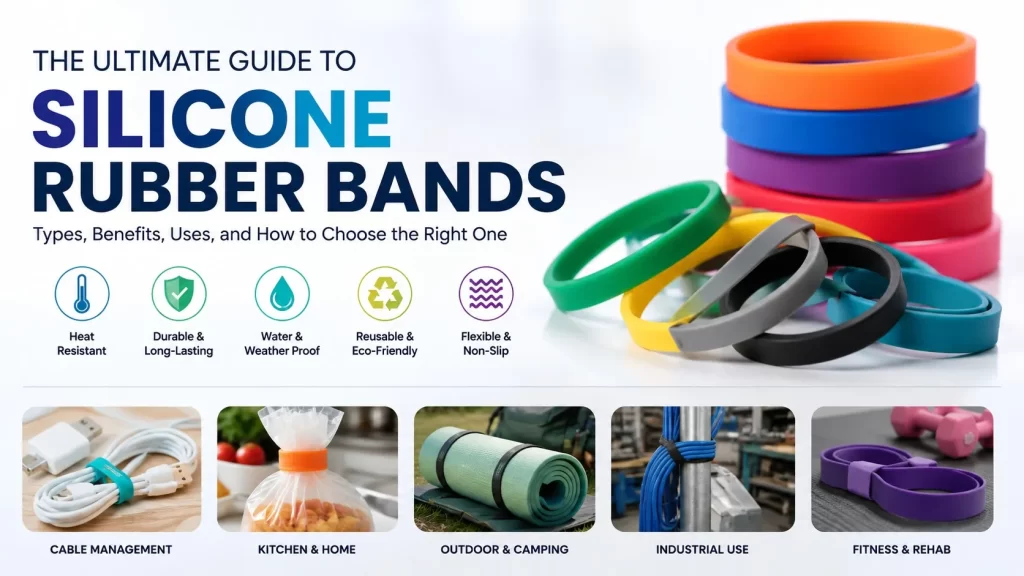
They are popular because of their flexibility, heat resistance, durability, water resistance, and cleanliness. What is silicone rubber band, however, and how to determine which one is best suited for your application?
This guide gives you the details on silicone rubber bands (properties, benefits, common types, applications, manufacturing considerations, and more).
What Are Silicone Rubber Bands?
Silicone rubber bands are made of silicone rubber, a flexible and environmentally friendly synthetic elastomer.
Silicone bands are more long-lasting and have a broader temperature range of elasticity and physical properties than traditional natural-rubber bands. The silicone rubber is constructed from a polymer of silicon and oxygen, providing silicone with its flexibility, thermal stability and resistance to moisture and UV.
Silicone rubber bands come in various sizes, thickness, colors, shapes, hardness and designs. This makes them ideal for any application from daily organization to industrial applications.
The choice of material hardness and size of the bands is determined by the application. Depending on what you're trying to hold, you may need a thin silicone band for light weight materials or a thicker or wider band for larger, heavier materials.
Key Benefits of Silicone Rubber Bands
1. Excellent Temperature Resistance
Silicone rubber has one significant benefit: it can operate over a wide temperature range. Silicone bands stay soft in cold weather, and at high temperatures, they retain their properties.
This renders them appropriate for cooking areas, outdoor gear, vehicles, workshops, and so on.
The actual temperature range is, however, dependent on the silicone formulation, curing process and product design, and therefore can be different per application; product-specific specifications should always be checked.
2. Long-Lasting Durability
Silicone rubber bands are meant to be used over and over again. They can be stretched and relaxed many times without loss of general form and elasticity.
The silicone bands can have a longer lifespan when used under the right conditions, as they do not deteriorate or crack like traditional rubber bands with age.
3. UV and Weather Resistance
Sunlight and weather resistance are especially critical for outdoor uses.
Silicone rubber is typically resistant to UV, moisture and weather conditions. Therefore silicone bands can also prove beneficial in camping, hiking, gardening, outdoor storage and other activities where rubber might wear out faster.
4. Flexible and Non-Slip
The surface is naturally flexible and slightly grippy, with silicone. This makes it easier to firmly grasp objects with silicone rubber bands without using glue.
They are also soft, which can help to avoid scratching or damaging delicate materials, making them suitable for various other uses, such as electronics, household goods, tools, or storage.
5. Reusable and Low Maintenance
Silicone rubber bands are washable, reusable and can be stored for multiple use. They can be re-used, which decreases the need for regular replacement and lowers the amount of disposable waste from materials.
For companies and consumers that want a lasting organization or securing solution it can provide lasting benefits as well.
Common Types of Silicone Rubber Bands
Silicone rubber bands are available in several designs to meet different requirements.
Standard Silicone Bands
Standard silicone bands are simple elastic loops designed for everyday organization and securing tasks. They can be used for documents, cables, bags, containers, and small equipment.
Wide Silicone Rubber Bands
Wide bands provide a larger contact area and can be better suited to larger or irregularly shaped objects. They are commonly used when a standard narrow band does not provide enough surface coverage.
Cross Silicone Bands
Cross bands use an intersecting design to create multiple points of contact. This can help secure objects that are difficult to hold with a conventional loop, including books, containers, camping equipment, and irregularly shaped products.
Custom Silicone Bands
For branding, promotional campaigns, packaging, or specialized products, manufacturers can produce custom silicone rubber bands in different colors, dimensions, shapes, logos, textures, and hardness levels.
Custom designs allow businesses to combine functionality with brand identification.
Applications of Silicone Rubber Bands
Home and Office Organization
Silicone rubber bands are useful for organizing everyday items such as:
- Cables and wires
- Documents and notebooks
- Small tools
- Bags and containers
- Kitchen accessories
- Office supplies
Their flexibility allows one band to accommodate objects of different sizes.
Kitchen and Food Storage
Food-grade silicone products can be used in appropriate kitchen applications, such as securing food bags, containers, lids, and other items.
If direct food contact is required, buyers should verify that the specific product is manufactured from suitable food-contact-grade silicone and complies with the applicable regulations in their market.
Outdoor and Camping
Silicone rubber bands are lightweight, compact, and resistant to moisture and UV exposure, making them practical for outdoor activities.
Campers and hikers can use them to organize equipment, secure small accessories, bundle items, or provide temporary holding solutions without carrying bulky cords.
Industrial Applications
In industrial environments, silicone bands can be used for cable management, component organization, temporary securing, assembly operations, and other light-duty applications.
Their resistance to temperature, moisture, and many environmental factors can make them useful in workshops, factories, automotive environments, and electronics-related applications.
Fitness and Rehabilitation
Elastic silicone products can also be used in exercise, stretching, and rehabilitation applications. Their controlled elasticity can provide resistance for certain movements and training routines.
For medical or therapeutic applications, however, the material specification and product certification should match the intended use.
How Are Silicone Rubber Bands Made?
Manufacturing typically starts with silicone rubber compounds combined with appropriate curing systems, pigments, and other additives.
The material is formed into the desired band geometry and then cured to create the required elasticity, strength, and dimensional stability. Depending on the product design and manufacturing process, molding and other forming techniques may be used.
Quality control is important throughout production. Manufacturers may inspect dimensions, appearance, elasticity, tensile performance, hardness, and material consistency to ensure the finished bands meet the required specifications.
For specialized applications, additional testing or certifications may be necessary.
How to Choose the Right Silicone Rubber Band
Before purchasing silicone rubber bands, consider these key factors:
1. Size: Choose the appropriate inner diameter, width, and thickness for the objects being secured.
2. Stretchability: Consider how far the band needs to stretch and how much holding force is required.
3. Hardness: Different silicone hardness levels provide different combinations of flexibility, grip, and durability.
4. Temperature: Check the manufacturer's recommended operating temperature range.
5. Environment: Consider exposure to UV light, moisture, chemicals, oils, or outdoor weather.
6. Material safety: For food, healthcare, or personal-contact applications, confirm the appropriate material grade and certifications.
7. Customization: For commercial or promotional applications, consider custom colors, logos, dimensions, textures, and packaging.
Silicone Rubber Bands vs. Traditional Rubber Bands
The main difference is material performance.
Traditional rubber bands are inexpensive and suitable for many basic applications, but they can deteriorate when exposed to sunlight, heat, ozone, or prolonged aging.
Silicone rubber bands generally provide better resistance to temperature changes, UV exposure, moisture, and repeated use. They are therefore a strong choice when durability and environmental resistance are more important than the lowest initial cost.
The best option ultimately depends on the application, required performance, budget, and expected service life.
Frequently Asked Questions
Are silicone rubber bands reusable?
Yes. Silicone rubber bands are designed for repeated use and can generally retain their elasticity when used within their recommended operating conditions.
Are silicone rubber bands waterproof?
Silicone itself has excellent resistance to moisture and water, making silicone bands suitable for many wet and outdoor environments. However, the overall product should still be evaluated for its specific application.
Can silicone rubber bands be used outdoors?
Yes. Their resistance to UV exposure, moisture, and temperature fluctuations makes them suitable for many outdoor applications.
Are silicone rubber bands better than regular rubber bands?
In cases where heat, sun, water or frequent use is a factor, silicone rubber bands can provide important benefits. Rubber bands might still be a more cost effective solution for straightforward short-range bundling.
Can silicone rubber bands be customized?
Yes. Based on the capacity of the manufacturer, custom silicone rubber bands are available in various sizes, colors, shapes, levels of hardness, surface finishes and branding designs available.
Conclusion
Silicone rubber bands are multi-purpose, long-lasting and washable materials that can be used in a variety of projects, including home organization, kitchens, offices, outdoor projects, industrial projects, and specialty projects.
They are elastic, heat resistant, UV resistant, moisture resistant, and long-lasting, and offer a potential alternative to traditional rubber bands for challenging applications.
Consider the following factors when selecting silicone rubber bands: Size, thickness, elasticity, hardness, temperature range, environmental exposure, material grade, and customization needs. The right specification can have a positive impact on performance, reliability and product life.
If a company needs dimensions, colors, designs, and material specifications to be customized, it may be easier to work with an experienced silicone rubber band manufacturer to create these special features.