





One of the key factors in resin casting is the right epoxy resin mold material. The ideal mold will give you smooth surfaces, sharp details, clean edges and easy demolding. However, if the wrong material is used it can cause resin to stick, warp the product or damage the mould at removal.
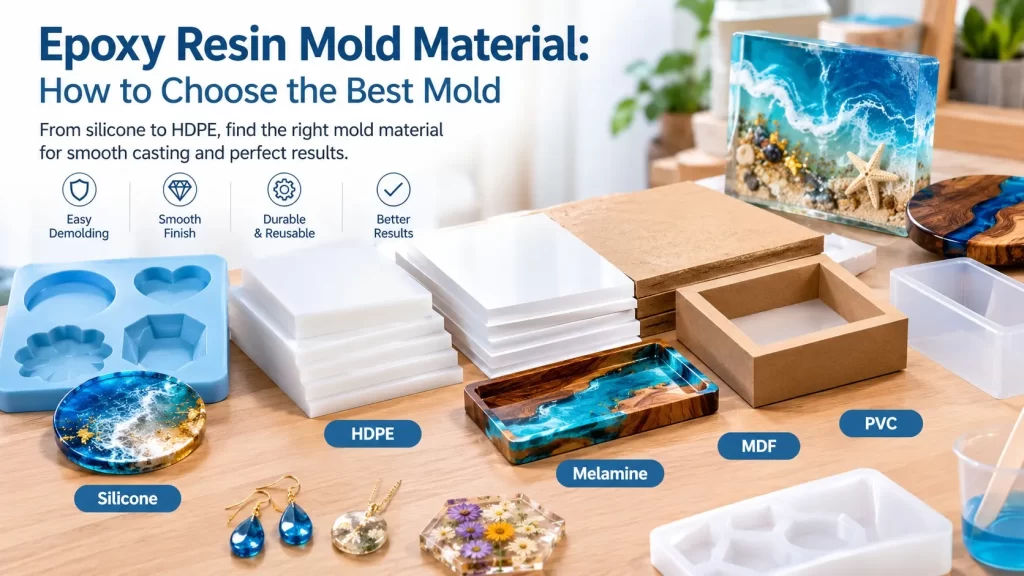
Luckily, there are a number of materials that are able to be utilized for creating epoxy resin moulds such as silicone, HDPE or polyethylene, melamine, MDF or PVC or smooth surface. There are differences between each and their applications, limitations, benefits and costs.
This guide will cover the most popular materials used in epoxy resin molds, the differences between them, and the material you'll want to use in your next resin project.
What Is Epoxy Resin Mold Material?
The surface or material upon which the liquid epoxy resin is poured and until cured is set in place is called the epoxy resin mold material. The form, size, surface and sometimes the surface finish are dictated by the mold.
Since epoxy resin is a liquid that eventually turns into a hard solid, the mold must be able to withstand the epoxy resin and capable of holding its shape during the curing process.
The best mold material should be able to give:
- Easy resin release
- Good dimensional stability
- Smooth surface finish
- Sufficient durability
- Compatibility with epoxy resin
- Appropriate flexibility or rigidity
- Easy cleaning and maintenance
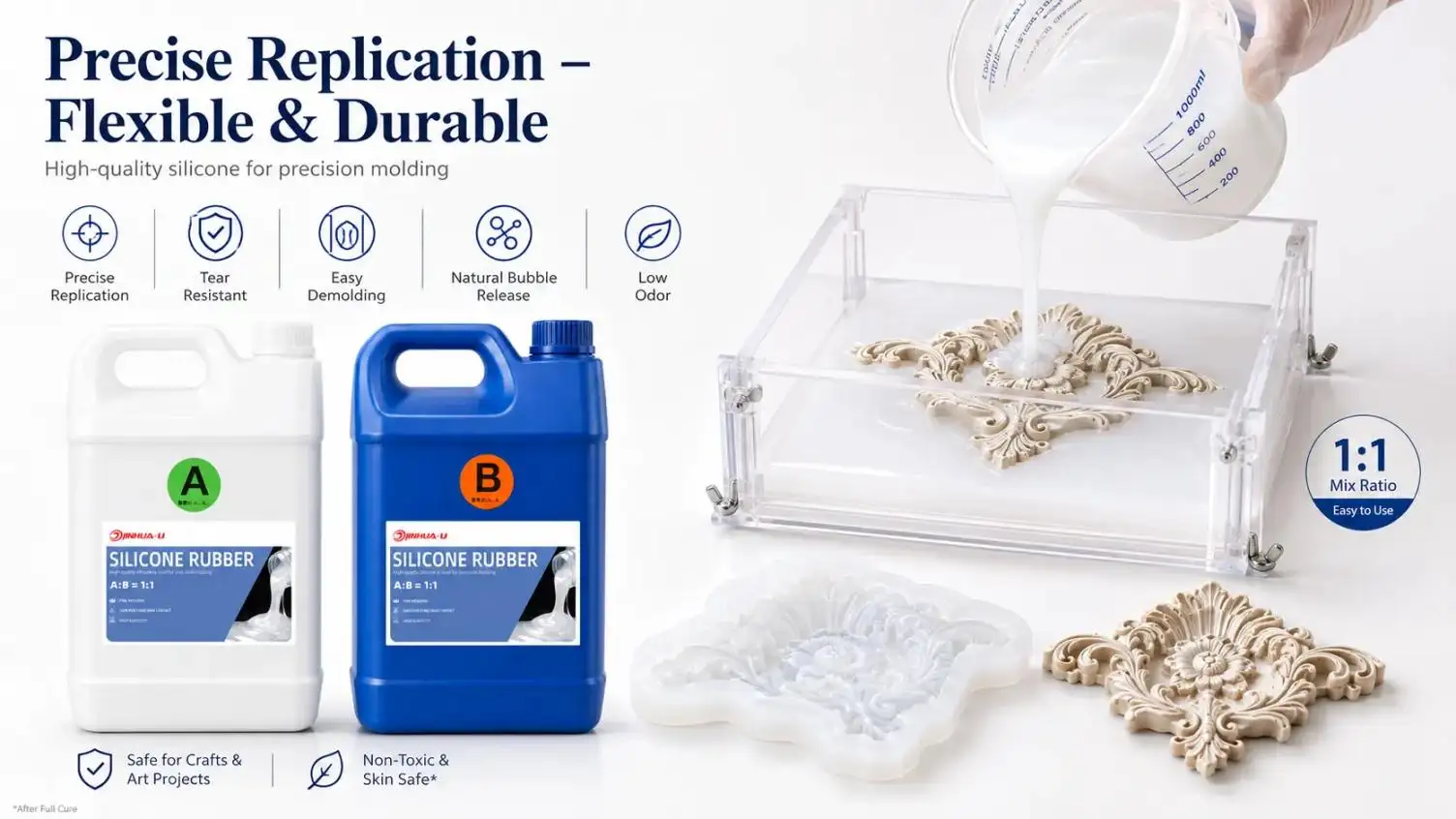
In many craft and decorative applications silicone is the material used for the epoxy resin molds due to its flexibility, durability and excellent release properties.
1. Silicone: The Best Overall Mold Material for Epoxy Resin
One of the most popular types of epoxy resin molding is silicone molds. They are very flexible and are especially suitable for projects including curves, undercuts, intricate details and unusual shapes.
Typically, when cured epoxy is ready to take out, a silicone mould can be flexed to take away the casting without undue strain. This minimizes the chances of ruining the final resin art and the mold as well.
Silicone molds are frequently used in:
- Resin jewelry
- Coasters
- Keychains
- Figurines
- Decorative objects
- Resin clocks
- Small trays
- Art and craft projects
Surface quality is another important benefit. A smooth, shiny silicone mold, can help result in a smooth and shiny resin surface, which means less sanding and polishing after the resin is cast.
Other silicone molds are available in an array of shapes and sizes, and they are easy to use for resin art beginners and experts.
For projects that require detailed designs and repeated use, high-quality silicone is generally one of the best epoxy resin mold materials available.
2. HDPE and Polyethylene Molds
Another useful material for epoxy resin moulds is High-density polyethylene or HDPE.
HDPE is a rigid material, unlike silicone. This is particularly well suited for larger projects in which the mold must be structurally supported.
HDPE sheets can be cut and molded into custom molds for:
- Resin tables
- River tables
- Large trays
- Rectangular blocks
- Large casting projects
The low adhesion of cured epoxy to polyethylene is one of the major advantages of the material. When done correctly, cured resin can come off HDPE surfaces without a huge amount of release agents.
However, generally it takes more preparations to build an HDPE mold than it does to use a ready made silicone mold. Panels might require cutting, fastening and aligning and sealing before pouring.
HDPE may be a workable option for large and flat applications.
3. Melamine Board for DIY Resin Molds
Melamine-coated board is one of the most common materials used for self-made epoxy resin molds, particularly for making a flat casting form.
Melamine is smooth and plastic-like and is easier to release the resin than from untreated wood. It is also inexpensive, available and relatively easy to cut.
This will be useful for projects like:
- Countertops
- River tables
- Resin slabs
- Large rectangular castings
- Custom work surfaces
When there is a need for a large mold, but not the budget for an expensive custom silicone mold, melamine is a good choice because it is highly attractive.
With repeated use, however, the coated surface may eventually wear out. Sealing and handling carefully can help prolong the lifespan of the mold.
4. MDF: An Affordable Custom Mold Option
Epoxy resin molds can also be made using medium-density fiberboard (MDF). Affordable, simple to cut and great for making custom shapes.
The down side is that untreated MDF is porous. The material can swell or be difficult to be molded out of due to penetration by epoxy resin or other liquids.
Therefore MDF needs to be treated before use. Depending on the project, a suitable tape or coating can also be applied to the surface, to make it smoother and less sticky.
The ideal use of MDF is where the factor of cost and customization outweighs long term mold durability.
5. Other Epoxy Resin Mold Materials
Depending on the project, other materials can also be used as temporary or custom molds.
Possible options include:
- PVC boards
- Smooth plywood
- Certain plastic containers
- Packing tape
- Coated cardboard
- Specialized mold-making materials
These alternatives can be useful for prototypes, experimental projects, or one-time castings.
However, not every plastic or household material is automatically compatible with epoxy resin. Always test an unfamiliar material before using it for an important project.
How to Choose the Right Epoxy Resin Mold Material
The best mold material depends on the size, shape, complexity, and production requirements of your project.
For Small and Detailed Projects
Choose silicone when making jewelry, figurines, decorative pieces, coasters, and other detailed objects. Its flexibility makes demolding easier and helps preserve fine details.
For Large Projects
Consider HDPE, polyethylene, or melamine when creating large flat molds for countertops, slabs, or river tables. These materials provide the rigidity needed to maintain straight walls.
For Low-Cost DIY Projects
MDF, plywood, PVC, and other inexpensive materials can be useful for experimental or custom molds. However, they generally require more preparation.
For Repeated Casting
If you plan to make many identical pieces, a durable silicone mold is often a practical investment. Although the initial cost can be higher, reusable molds can save time and reduce preparation work over multiple casting cycles.
Tips for Better Epoxy Resin Casting
Even the best epoxy resin mold material cannot guarantee perfect results without proper preparation.
1. Check Material Compatibility
Always confirm that your mold material is compatible with the specific epoxy resin you are using. Resin formulations vary, and temperature, curing time, and additives can affect mold performance.
2. Use Mold Release When Appropriate
A suitable mold release agent can make demolding easier and provide additional protection for the mold. However, always check whether the release product is compatible with both your resin and mold material.
3. Mix Epoxy Slowly
Rapid mixing can introduce excessive air into epoxy resin. Stir slowly and thoroughly according to the manufacturer's instructions to minimize bubbles.
4. Pour Carefully
Pouring resin in a controlled, steady stream can help reduce trapped air. For complex molds, careful pouring is especially important around narrow sections and detailed areas.
5. Clean Molds Properly
After demolding, remove leftover resin and dust before the next casting. Silicone molds should generally be cleaned gently rather than aggressively scrubbed, since scratches or surface damage can affect future castings.
6. Store Molds Correctly
Keep reusable molds away from excessive heat and direct sunlight. Proper storage can help prevent deformation and extend mold life.
Epoxy Resin Mold Material Comparison
| Mold Material | Best Application | Main Advantage | Main Limitation |
|---|---|---|---|
| Silicone | Jewelry, crafts, detailed pieces | Flexible and easy to demold | Higher initial cost |
| HDPE | Large molds and tables | Rigid and low adhesion | Requires construction |
| Polyethylene | Large custom molds | Durable and reusable | Less flexible |
| Melamine | Tables and flat castings | Affordable and smooth | Coating can wear |
| MDF | DIY custom molds | Low cost and easy to cut | Must be sealed |
| PVC | Custom rigid molds | Easy to fabricate | Not ideal for every resin |
| Tape-lined surfaces | Temporary molds | Simple and inexpensive | Limited durability |
Final Thoughts
The right epoxy resin mold material can help to greatly enhance the quality, efficiency and consistency of resin casting. If the project is small and detailed, silicone is still a great material to use for its versatility, reusability, and ability to produce intricate details.
Larger projects might require a more rigid material like HDPE, polyethylene or melamine to offer the structural support and ease of creating large custom molds. If cost is an issue, as well as customisation, other do-it-yourself materials such as MDF can be helpful.
When selecting a mould, the size, shape, surface finish, production quantity, cost and mould life are all factors that need to be taken into consideration. Most importantly: Always check the compatibility of material with your specific epoxy resin.
Using the appropriate epoxy resin mold material, preparing the mold properly, pouring the epoxy under controlled conditions, and providing good mold maintenance can produce cleaner casts, less mold breaking and more professional looking resin projects.