





Silicone rubber is currently one of the most significant materials for industrial use, especially because of its long service life, electrical insulation properties, temperature resistance and flexibility. Manufacturers across the globe use high-quality silicone rubber parts to enhance product performance in myriad applications, including automotive, medical devices, electronics, construction, and food processing.
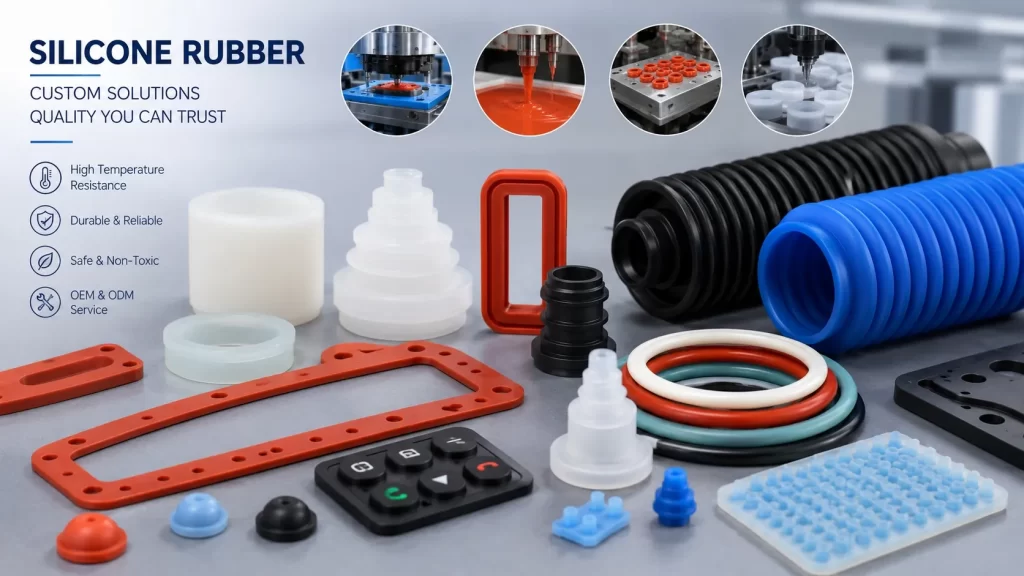
However, it takes more than just price comparisons to determine the best silicone rubber manufacturer. Consistent quality, engineering skills, customization, international certifications, and timely delivery are all important attributes of the right supplier.
In this guide, you'll learn all of the factors that OEM brands, procurement managers, and industrial buyers need to consider when selecting their silicone rubber manufacturing partner.
What Is Silicone Rubber?
Silicone rubber is a synthetic elastomer consisting mainly of silicon, oxygen, carbon and hydrogen. Silicone possesses excellent physical properties over a very broad temperature range as opposed to traditional organic rubber.
Key characteristics include:
- Outstanding heat resistance
- Excellent low-temperature flexibility
- UV and ozone resistance
- Weather resistance
- Chemical stability
- Electrical insulation
- Non-toxic and odorless
- Long service life
Because of these advantages, silicone rubber is widely used in demanding industrial environments.
Industries That Depend on Silicone Rubber
A professional silicone rubber manufacturer typically supplies products for multiple industries.
Automotive
Silicone rubber is commonly used for:
- Engine seals
- Gaskets
- O-rings
- Ignition cable insulation
- Turbocharger hoses
- Weather seals
Its heat resistance makes it ideal for engine compartments.
Medical Equipment
Medical-grade silicone is trusted because it offers:
- Biocompatibility
- Sterilization resistance
- Soft flexibility
- Long-term durability
Applications include:
- Medical tubing
- Respiratory masks
- Catheters
- Prosthetics
- Surgical components
Electronics
Electronics manufacturers use silicone rubber because it provides excellent electrical insulation.
Common products include:
- Keyboard keypads
- Protective covers
- Connector seals
- Cable insulation
- Waterproof gaskets
Food Processing
Food-grade silicone meets strict hygiene requirements.
Typical products include:
- Baking molds
- Seals
- Gaskets
- Beverage tubing
- Food machine components
Industrial Equipment
Industrial machinery uses silicone rubber for:
- High-temperature seals
- Shock absorbers
- Anti-vibration parts
- Protective covers
- Flexible connectors
Why Choosing the Right Silicone Rubber Manufacturer Matters
The performance of silicone components directly affects product reliability.
A poor-quality supplier may cause:
- Material cracking
- Dimensional inconsistencies
- Premature aging
- Seal leakage
- Product recalls
- Increased maintenance costs
Working with an experienced manufacturer significantly reduces these risks while improving production efficiency.
Qualities of the Best Silicone Rubber Manufacturer
1. Advanced Manufacturing Capability
Leading manufacturers invest in modern production equipment, including:
- Compression molding
- Liquid Silicone Rubber (LSR) injection molding
- Extrusion production lines
- Automated trimming
- Precision CNC mold manufacturing
Advanced equipment ensures consistent product quality.
2. Material Expertise
Different industries require different silicone formulations.
Professional manufacturers offer:
- High-temperature silicone
- Medical-grade silicone
- Food-grade silicone
- Flame-retardant silicone
- Conductive silicone
- Anti-static silicone
- High-strength silicone
- Transparent silicone
The ability to customize formulations is a major competitive advantage.
3. OEM & ODM Services
Many international buyers require custom solutions instead of standard products.
The best manufacturers provide:
- Custom design support
- Prototype development
- Mold design
- Material selection
- Logo customization
- Private labeling
- Packaging customization
OEM capabilities allow businesses to create unique products while maintaining brand identity.
4. International Certifications
Reliable silicone rubber manufacturers comply with global quality standards.
Important certifications include:
- ISO 9001
- ISO 13485
- FDA compliance
- LFGB certification
- RoHS
- REACH
- SGS testing
These certifications demonstrate consistent manufacturing quality and regulatory compliance.
5. Strict Quality Control
Quality assurance should cover every production stage.
Professional inspection includes:
- Raw material verification
- Dimensional inspection
- Hardness testing
- Tensile strength testing
- Compression set testing
- Tear resistance testing
- Aging tests
- Final product inspection
Comprehensive quality control reduces defects and improves customer satisfaction.
Manufacturing Processes
High-quality silicone rubber products typically undergo several manufacturing stages.
Material Mixing
Engineers blend silicone polymers with additives, pigments, and curing agents according to customer specifications.
Mold Design
Precision molds are designed using CAD software and CNC machining.
Molding
Depending on the application, manufacturers use:
- Compression molding
- Injection molding
- Liquid silicone molding
- Transfer molding
Secondary Processing
Additional processes include:
- Trimming
- Printing
- Surface treatment
- Bonding
- Assembly
Inspection
Finished products undergo rigorous testing before shipment.
Benefits of Working with an Experienced Manufacturer
Choosing an experienced supplier offers numerous advantages.
Better Product Consistency
Consistent dimensions reduce assembly problems and production downtime.
Faster Development
Experienced engineering teams can shorten product development cycles.
Cost Savings
Optimized production reduces waste and lowers manufacturing costs.
Technical Support
Professional suppliers assist with:
- Material selection
- Design optimization
- Prototype improvement
- Production troubleshooting
Stable Supply Chain
Large manufacturers maintain stable raw material inventories and efficient logistics.
Questions to Ask Before Choosing a Silicone Rubber Manufacturer
Before placing an order, ask the following questions:
- How many years have you manufactured silicone rubber products?
- Do you offer OEM and ODM services?
- Which industries do you specialize in?
- What certifications do you hold?
- Can you provide engineering support?
- What testing equipment do you use?
- What is your production capacity?
- Can you produce custom colors and hardness?
- What is your average lead time?
- Do you provide samples before mass production?
These questions help evaluate the supplier's capabilities.
Trends in the Silicone Rubber Industry
The silicone rubber market is continually changing, with industries pushing for more performance materials.
Current trends include:
Sustainable Manufacturing
Manufacturers are increasingly minimising waste, enhancing recycling and optimising energy efficiency.
Medical Expansion
As the demand for healthcare continues to rise, so will the production of medical silicone parts.
Electric Vehicles
Silicone materials with higher temperature resistance and good thermal insulation properties are needed for EV manufacturers.
Smart Manufacturing
The use of automation, robotics, and AI in quality inspection enhances manufacturing accuracy and efficiency.
High-Performance Materials
Special silicone formulations for extreme industrial conditions are increasingly being sought by customers.
Why Global Buyers Prefer Professional Silicone Rubber Manufacturers
International buyers value suppliers that provide:
- Competitive pricing
- Stable quality
- Engineering expertise
- Global export experience
- Fast response times
- Flexible production
- Reliable delivery schedules
- Long-term technical support
The capabilities support in reducing sourcing risks and enhancing product quality.
Conclusion
When looking for the best silicone rubber manufacturer, there's a lot more to consider than product cost. Long term business success is built on quality systems, engineering know-how, customisation, certifications, production technology and worldwide supply experience.
Having a reliable manufacturing partner can support OEM brands in enhancing product development, optimizing component performance, cutting production expenses, and fortifying supply chain stability. From medical silicone to automotive seals, industrial gaskets, or custom solutions, a trusted silicone rubber manufacturer guarantees the quality and reliability you need.
With trusted silicone manufacturers, companies can leverage innovation, reliability, and high-performance silicone products to secure a competitive edge in the global market.