





Electronic devices are getting smaller, smarter and more powerful than ever. Whether it's an automotive control unit, an LED driver, an industrial sensor or a consumer electronic component, sensitive parts depend on the reliable protection from moisture, dust, vibration, chemicals and thermal stress. Electronic potting epoxy resin is critical in this place.
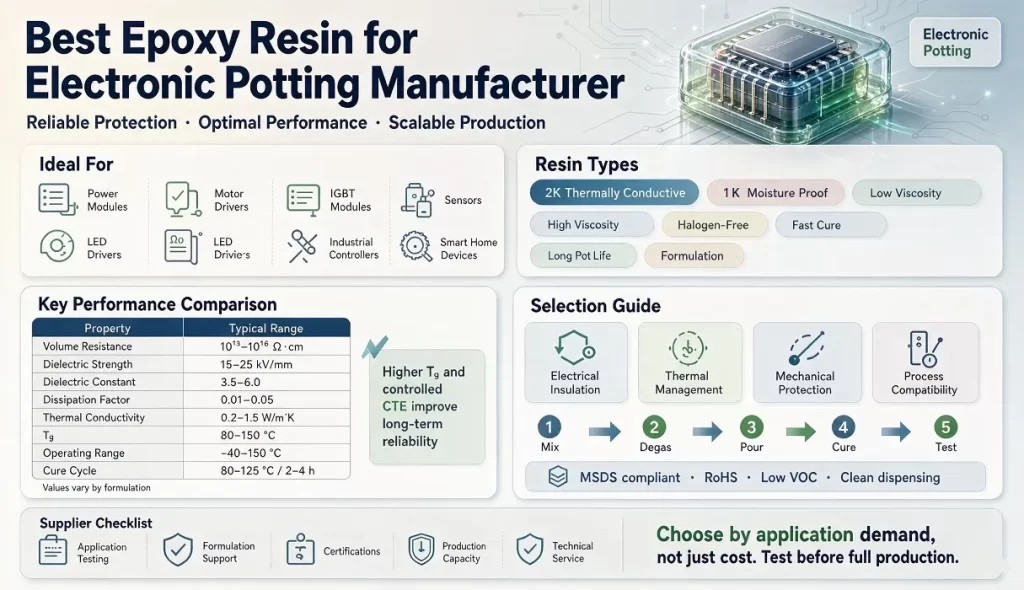
Of course, the selection of the best epoxy resin for electronic potting manufacturer is critical, just as choosing the right resin is important. In addition to offering high-quality materials, a professional manufacturer can deliver consistent quality, technical support, and tailored solutions for various industries.
This is a guide to electronic potting epoxy resin, its benefits, uses and picking the best manufacturing partner.
What Is Electronic Potting Epoxy Resin?
Electronic potting epoxy resin is a 2-part thermosetting polymer that has been designed specifically to protect and encapsulate electronic assemblies. The resin is mixed with a hardener to form a hard, solid shell around fragile electronics.
Cured epoxy delivers superb protection from environmental damage and enhances the mechanical strength of electronic assemblies.
The most common electronic potting uses are:
- Printed Circuit Boards (PCBs)
- Power supplies
- LED lighting drivers
- Transformers
- Sensors
- Automotive ECUs
- Battery Management Systems (BMS)
- Communication equipment
- Medical electronics
- Industrial control modules
Why Epoxy Resin Is Preferred for Electronic Potting
While polyurethane and silicone are both options for potting, epoxy resin is the preferred choice for many industrial applications due to its balance of properties.
Excellent Electrical Insulation
Electronic-grade epoxy resin has a high dielectric strength which prevents electrical leakage and short circuiting. This is ideal for high voltage and high precision electronics.
Superior Moisture Resistance
Electronics' largest enemy is water. Epoxy forms a tight layer of protection that repels moisture and helps to increase the life of the product, thus preventing corrosion.
Outstanding Mechanical Strength
After curing, the epoxy resin produces a hard protective covering which takes up impact, vibration and shock during shipping or use.
Chemical Resistance
Electronics can be subjected to oils, solvents, acids and cleaning chemicals in industrial settings. Epoxy resin is a reliable compound that will not be affected by many noxious chemicals.
Long Service Life
Epoxy Resins, when used for high quality applications, will retain their electrical and mechanical characteristics for years, even in challenging environments.
Key Features of High-Quality Electronic Potting Epoxy Resin
If you are buying from the experienced manufacturer, then check for these performance features.
Low Viscosity
Low viscosity epoxy can flow around complex electronic assemblies and around small gaps without holding air in the product.
Benefits include:
- Better component coverage
- Improved heat transfer
- Reduced void formation
- Easier automated dispensing
Excellent Adhesion
Electronic potting resin should bond well to materials such as:
- Aluminum
- Copper
- Steel
- Ceramic
- Glass
- ABS
- Polycarbonate
- FR-4 PCB materials
Strong adhesion prevents moisture penetration and mechanical failure.
Low Shrinkage
Premium epoxy formulations minimize shrinkage during curing, reducing stress on delicate components and solder joints.
Thermal Stability
Modern electronics generate considerable heat. High-performance epoxy resin maintains its structural integrity across wide operating temperatures.
Typical operating range:
- -40°C to +150°C
- Some specialty grades exceed 180°C.
Flame Retardancy
Many electronic applications require UL94 V-0 flame-retardant epoxy systems to meet international safety standards.
Thermal Conductivity
Power electronics often require thermally conductive epoxy filled with ceramic materials.
Benefits include:
- Faster heat dissipation
- Lower operating temperatures
- Improved reliability
- Longer component life
Applications of Electronic Potting Epoxy Resin
Automotive Electronics
Modern vehicles contain dozens of electronic control units that must withstand vibration, humidity, and temperature fluctuations.
Common applications include:
- Engine control modules
- Battery packs
- Power converters
- ADAS sensors
LED Lighting
LED drivers generate heat while operating continuously.
Epoxy potting protects against:
- Moisture
- Dust
- Outdoor weather
- Thermal cycling
Industrial Automation
Industrial equipment often operates in harsh environments.
Potting epoxy protects:
- PLC modules
- Sensors
- Industrial controllers
- Communication devices
Renewable Energy
Solar and wind power systems rely on electronics exposed to outdoor conditions.
Applications include:
- Solar junction boxes
- Inverters
- Battery systems
- Power controllers
Consumer Electronics
Consumer products benefit from epoxy protection against accidental damage and environmental exposure.
Examples include:
- Smart home devices
- Chargers
- Audio equipment
- Wearable electronics
How to Choose the Best Epoxy Resin Manufacturer
Not all epoxy resin suppliers offer the same level of expertise. Consider the following factors when selecting a manufacturer.
Extensive Manufacturing Experience
Experienced manufacturers understand different industry requirements and continuously improve formulations based on customer feedback.
Years of production experience often translate into:
- Better quality control
- Stable raw material sourcing
- Faster technical support
- Reliable product consistency
Strong Research and Development
Leading manufacturers invest heavily in R&D to develop:
- Faster curing systems
- Low-temperature curing resins
- Flexible epoxy formulations
- High thermal conductivity products
- UV-resistant systems
- Flame-retardant materials
Quality Certifications
Reliable manufacturers typically maintain internationally recognized certifications such as:
- ISO 9001
- ISO 14001
- RoHS compliance
- REACH compliance
- UL certification (for applicable products)
These certifications demonstrate a commitment to quality, safety, and environmental responsibility.
OEM and Custom Formulation
Every electronic product has unique performance requirements.
A professional manufacturer should provide:
- Custom viscosity
- Adjustable curing speed
- Customized color
- Thermal conductivity options
- Flexible or rigid formulations
- Flame-retardant grades
OEM and ODM services help manufacturers optimize production efficiency and product performance.
Stable Production Capacity
Large-scale manufacturing ensures:
- Consistent product quality
- Fast lead times
- Reliable inventory
- On-time global delivery
This is especially important for electronics manufacturers with continuous production schedules.
Benefits of Working Directly with a Manufacturer
Purchasing directly from an epoxy resin manufacturer offers several advantages over buying through distributors.
Competitive Pricing
Factory-direct purchasing reduces distribution costs and improves overall procurement efficiency.
Better Technical Support
Manufacturers provide expert assistance with:
- Resin selection
- Mixing ratios
- Potting process optimization
- Dispensing equipment compatibility
- Curing recommendations
Customized Solutions
Manufacturers can modify formulations based on customer requirements rather than offering only standard products.
Reliable Supply Chain
Direct cooperation minimizes supply interruptions and ensures consistent product availability.
Future Trends in Electronic Potting Epoxy Resin
The electronics industry is still evolving at a brisk pace, allowing innovations in epoxy that are driven by it.
Emerging trends include:
- Faster room-temperature curing systems
- Higher thermal conductivity materials
- Lower VOC formulations
- Environmentally friendly raw materials
- Lightweight encapsulation materials
- Improved UV resistance
- Enhanced flame-retardant performance
- Smart manufacturing compatibility
Investments in these technologies will continue to help to fuel the next generation of electronic devices.
Conclusion
Choosing the highest quality epoxy resin for electronic potting manufacturer is crucial to creating superior, quality electronic products. A reliable manufacturer can supply more than resin, they can provide technical expertise, quality consistency, customisation options and reliable supply.
From making automotive electronics, industrial equipment, LED lighting fixtures, renewable energy systems, to consumer devices, working together with an epoxy resin manufacturer can help improve product durability, minimize failures, and enhance long-term performance.
With the increasingly high performance of electronic systems, it is one of the best investments to make a high quality electronic potting epoxy resin from a professional manufacturer to assure product reliability and customer satisfaction.