




Moisture, dust, vibration, chemicals, and temperature can be a serious problem for electronic components in extreme environments where they are being used with an increasing frequency. Whether it's automotive electronics, LED lighting, power supplies, sensors, batteries or industrial control systems, manufacturers want to be able to safeguard sensitive circuits.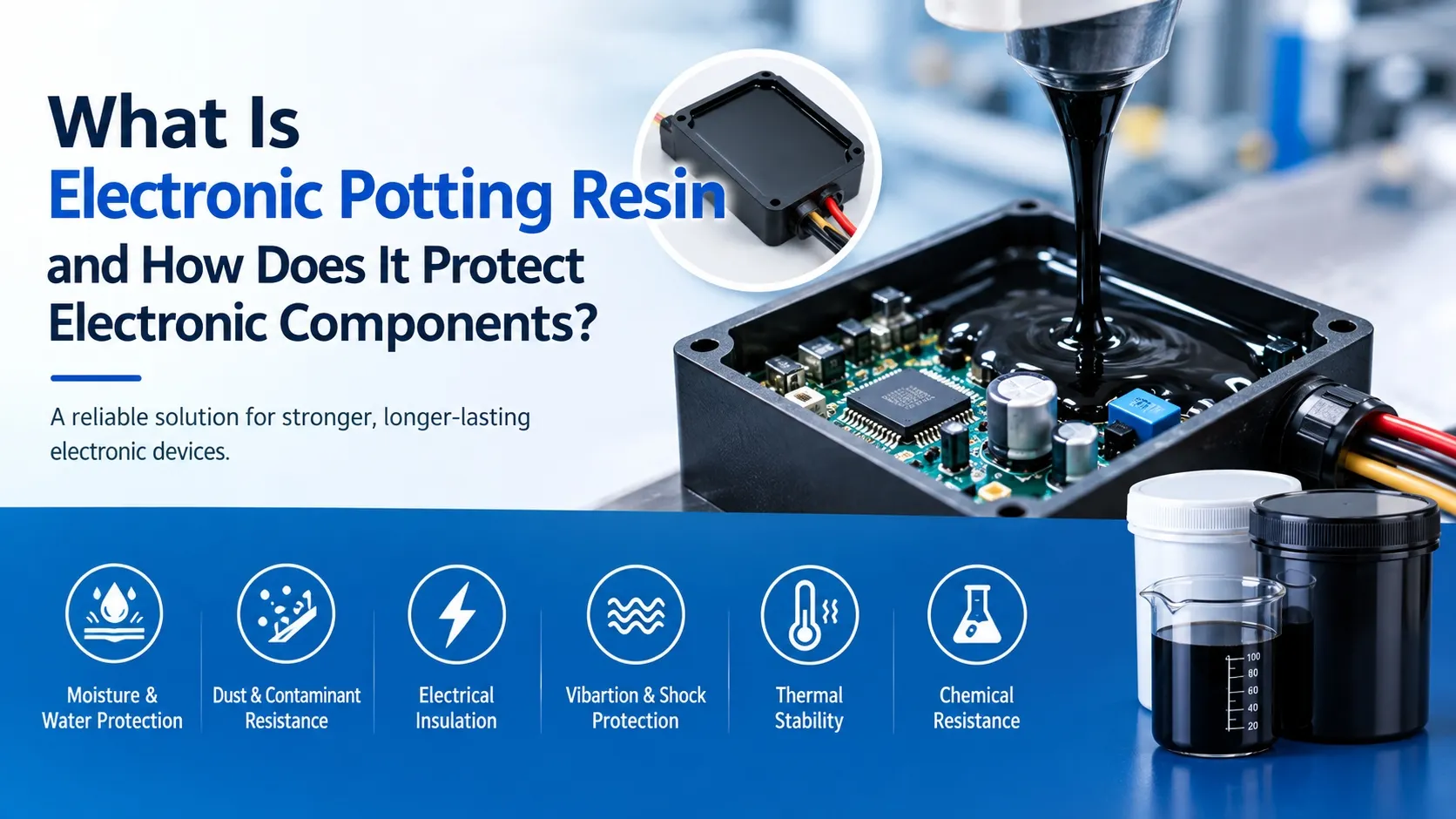
One of the best is electronic potting resin. Potting materials provide a solid defence against environmental and mechanical stresses by fully or partially enclosing electronic components in a protective resin.
However, what exactly is electronic potting resin, how does it work and which is the best potting resin to use? This handy guide covers the basics and main advantages of electronic potting compounds.
What Is Electronic Potting Resin?
Electronic potting resin is a type of liquid or semi-liquid insulating material, which is poured, injected, or applied to the surface of electronic components, circuit boards, wires, and electrical assemblies to encapsulate and protect them.
Electronic components are placed in the resin or resinized in a housing or mold. It cures to create a hard or flexible protective coating on assembly.
Typical electronic potting resin types are:
- Epoxy potting resin
- Silicone potting compound
- Polyurethane (PU) potting resin
- Acrylic-based potting materials
The characteristics of the materials vary from one to another, such as hardness, flexibility, thermal resistance, chemical resistance, electrical insulation, adhesion, etc.
The most suitable depends on the application, operating environment, required life and manufacture.
How Does Electronic Potting Protect Components?
Electronic potting resin provides protection through several mechanisms. Its primary function is to create a physical and electrical barrier between sensitive components and the surrounding environment.
1. Moisture and Water Protection
Water and humidity can cause corrosion, short circuits, and electrical failures.
Once cured, a properly selected potting compound can significantly reduce the penetration of moisture into an electronic assembly. This is particularly important for:
- Outdoor electronics
- Automotive control modules
- LED drivers
- Sensors
- Power supplies
- Marine electronics
- Industrial equipment
For applications exposed to high humidity or water, manufacturers should evaluate the resin's moisture resistance and the complete enclosure design rather than relying on potting material alone.
2. Protection Against Dust and Contaminants
Dust, dirt, salt, and other contaminants can accumulate on electronic components and potentially affect electrical performance.
Potting resin surrounds the components and fills gaps within the assembly, helping prevent contaminants from reaching sensitive circuits.
This makes electronic potting especially useful for equipment operating in factories, construction environments, transportation systems, and outdoor installations.
3. Electrical Insulation
Many electronic potting compounds provide excellent electrical insulation.
The cured resin can isolate conductive components from one another and from the external environment. This helps reduce the risk of short circuits and unwanted electrical contact.
For high-voltage applications, manufacturers should consider properties such as dielectric strength, insulation resistance, dielectric constant, and partial-discharge performance when selecting a potting material.
4. Vibration and Mechanical Protection
Electronic components can be damaged by continuous vibration, shock, or mechanical movement.
Potting resin supports components and wires by embedding them in a protective matrix. This can reduce movement and mechanical stress during operation.
This benefit is particularly valuable in:
- Automotive electronics
- Electric vehicles
- Industrial machinery
- Aerospace equipment
- Power electronics
- Portable electronic devices
Flexible silicone and polyurethane compounds can be especially useful when components require some degree of stress relief.
5. Thermal Protection and Heat Management
Electronic devices generate heat during operation. Excessive heat can shorten component life and reduce reliability.
Some electronic potting resins are formulated with enhanced thermal conductivity to help transfer heat away from heat-generating components.
Thermally conductive potting compounds are commonly considered for applications involving power modules, LED systems, batteries, transformers, and other heat-producing electronic assemblies.
However, potting resin does not automatically solve thermal problems. The overall thermal design—including the housing, heat sink, interface materials, and resin—is critical.
6. Chemical Resistance
Industrial electronics may be exposed to oils, solvents, cleaning agents, fuels, and other chemicals.
A chemically resistant potting compound can provide an additional protective barrier and help prevent aggressive substances from reaching electronic components.
Chemical compatibility should always be tested under the actual operating conditions because resistance varies significantly between epoxy, silicone, polyurethane, and other formulations.
What Are the Main Types of Electronic Potting Resin?
Different resin systems are designed for different performance requirements.
Epoxy Potting Resin
Epoxy is widely used because it offers strong adhesion, excellent mechanical protection, chemical resistance, and good electrical insulation.
It is often selected for applications requiring a hard, durable encapsulation.
Typical applications include power supplies, transformers, sensors, industrial electronics, and automotive components.
The main limitation is that cured epoxy is relatively rigid. Significant differences in thermal expansion between the resin and electronic components can create mechanical stress during repeated temperature cycling.
Silicone Potting Compound
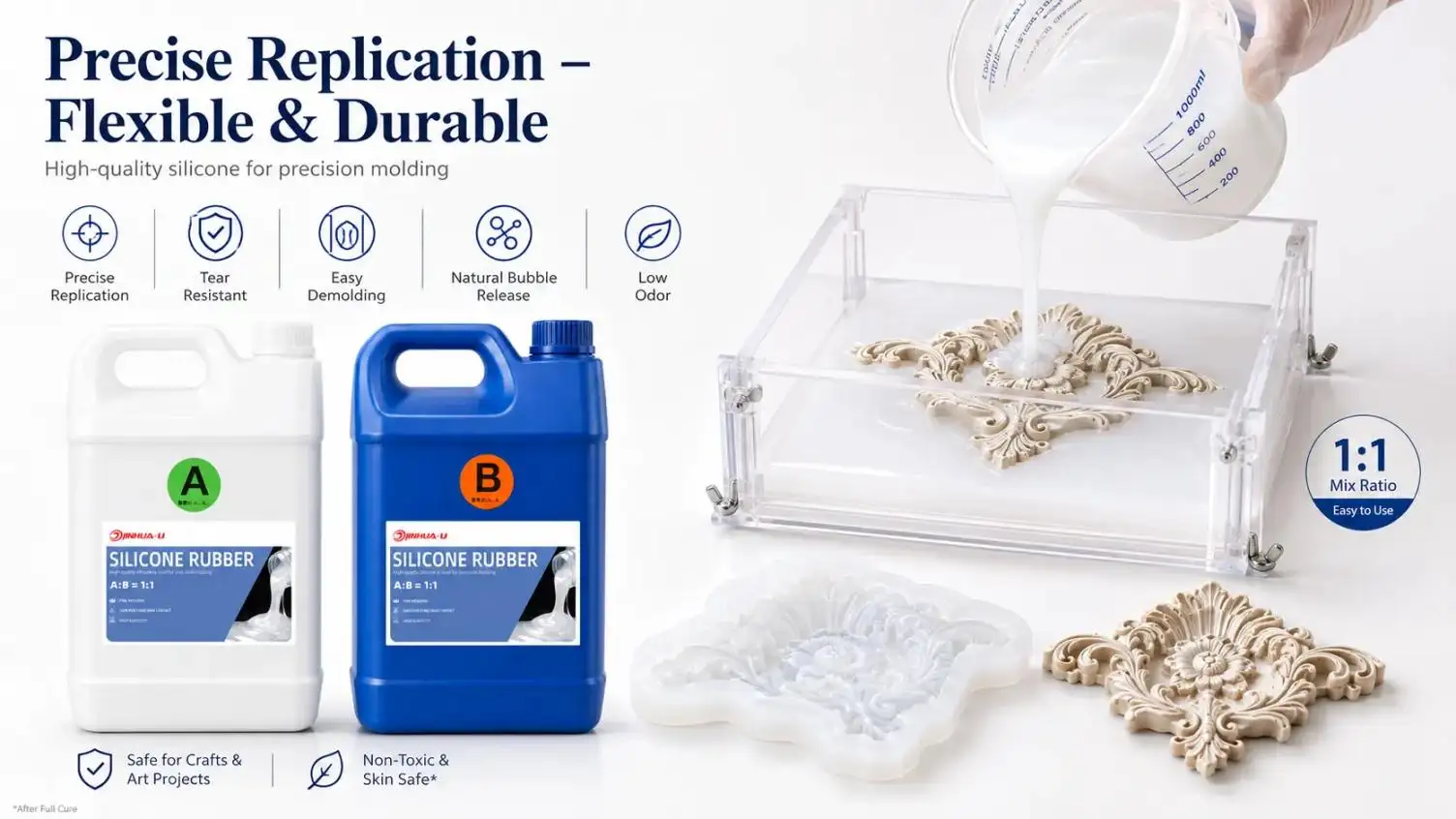
Silicone potting materials are known for their flexibility, weather resistance, and wide operating-temperature range.
They can accommodate movement caused by thermal expansion and contraction better than many rigid resins.
Silicone is commonly considered for outdoor electronics, LED lighting, automotive electronics, sensors, and applications requiring long-term environmental resistance.
Polyurethane Potting Resin
Polyurethane, often called PU potting resin, provides a balance between flexibility, mechanical protection, moisture resistance, and chemical resistance.
It can be useful when an application requires protection without the extreme rigidity of traditional epoxy systems.
Electronic Potting Resin vs. Conformal Coating
Potting and conformal coating are both used to protect electronics, but they provide different levels of encapsulation.
Conformal coating creates a relatively thin protective layer over the surface of a circuit board. It provides protection while keeping components accessible for inspection or repair.
Potting generally surrounds components with a much thicker layer of material, providing stronger environmental and mechanical protection.
Therefore, potting is often preferred when maximum protection is more important than easy repairability.
How Is Electronic Potting Resin Applied?
A typical potting process includes several important steps:
Step 1: Prepare the Electronic Assembly
Components and circuit boards should be clean, dry, and properly assembled. Contamination can negatively affect adhesion and curing.
Step 2: Select the Correct Resin
The resin should be selected according to operating temperature, flexibility, thermal requirements, electrical properties, chemical exposure, and production requirements.
Step 3: Mix the Components
Two-part potting systems commonly consist of a resin and curing agent. They must be mixed according to the manufacturer's specified ratio.
Step 4: Degas the Material
Air bubbles can reduce insulation performance and create weak points. Vacuum degassing may be used for applications with strict reliability requirements.
Step 5: Fill or Dispense the Resin
The mixed resin is introduced into the electronic housing using manual dispensing, automatic dispensing equipment, or other production methods.
Step 6: Cure the Resin
The resin is allowed to cure at room temperature or under controlled heating, depending on the formulation.
Proper curing is essential for achieving the expected mechanical, electrical, and environmental performance.
How Do You Choose the Right Electronic Potting Resin?
There is no universal potting resin for every electronic application.
Manufacturers should evaluate several factors:
Operating temperature: Choose a resin capable of handling the application's minimum and maximum temperatures.
Flexibility: Rigid epoxy may be suitable for structural protection, while silicone or polyurethane may be better when thermal movement is significant.
Thermal conductivity: Heat-generating components may require a thermally conductive formulation.
Electrical performance: Consider dielectric strength, insulation resistance, and other electrical requirements.
Environmental exposure: Evaluate moisture, water, chemicals, UV exposure, salt spray, and dust.
Curing requirements: Production volume and equipment availability can influence whether room-temperature or heat curing is preferable.
Repairability: Potting can make component-level repair difficult or impossible, so long-term reliability should be considered before encapsulation.
Conclusion
Electronic potting resin is a protective product that can be used to protect electronic components and enhance their resistance to moisture, dust, vibration, chemical corrosion, temperature, and electric hazards.
There are several different types of potting compounds: epoxy, silicone, and polyurethane, which have their own characteristics. Epoxy has the characteristics of hardness and good mechanical protection; silicone has good flexibility and environmental resistance; and polyurethane has good flexibility and durability.
There are more factors to consider when selecting an electronic potting compound other than its strength. Manufacturers should take into account the whole operating environment, thermal expansion, electrical requirements, curing process, exposure to chemicals, and service life.
A well-designed potting system can be of great benefit for critical electronic applications, in order to increase the reliability of the electronic components and the service life of the final products.