




Resin is used in a wide range of products such as art and jewellery, countertops, industrial coatings, automotive auto parts and marine applications. “Resin” is not a single material however. The various types of resin vary in property, curing, viscosity, strength, and application.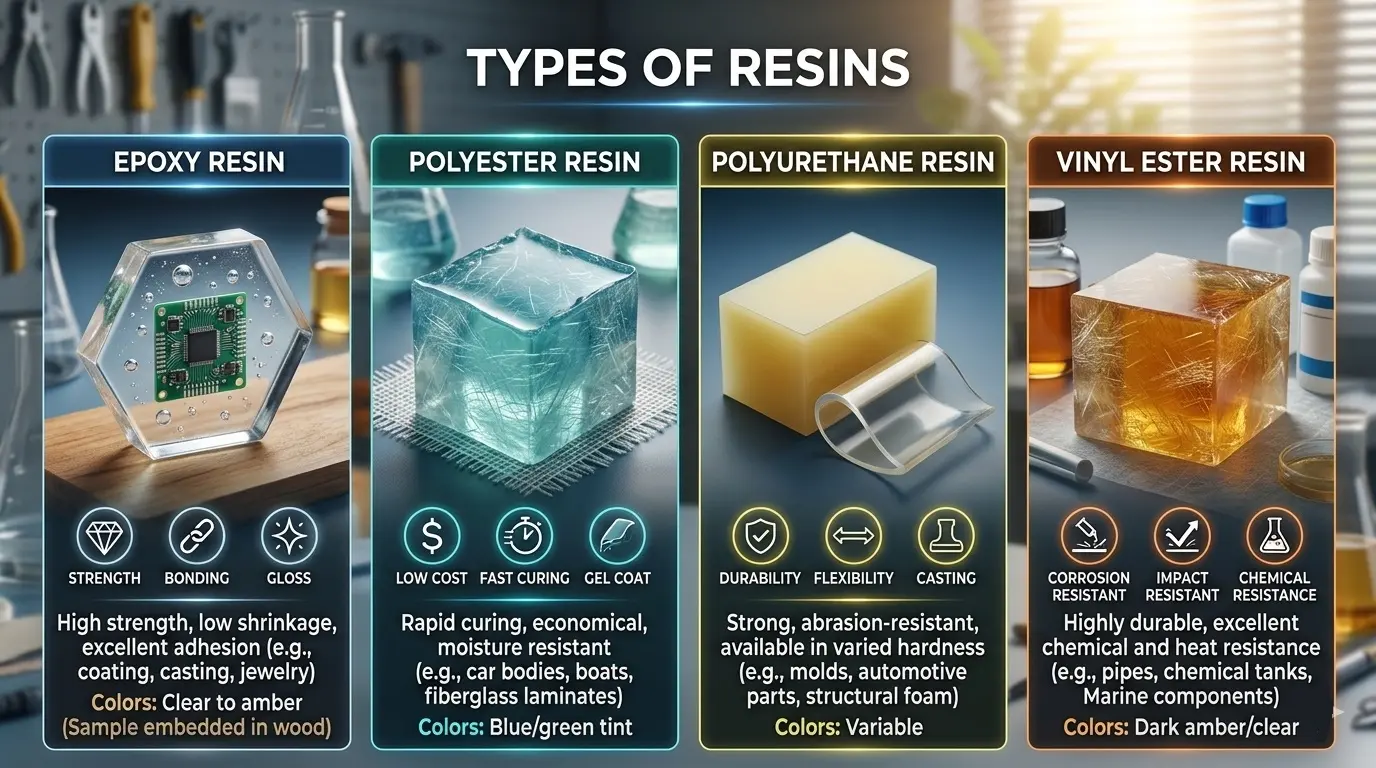
The selection of the right resin is crucial to ensure the desired finish, durability, flexibility and performance. Epoxy resin for art work can be good for art work, but not for a deep casting project for instance. Likewise, there are industrial uses, such as with the use of polyurethane and polyester resins, that demand special mechanical or chemical properties.
This guide will explain the various types of resin, their properties, common applications, and selection process.
What Is Resin?
Resin is a material that is polymer based and is capable of being made into a solid by curing. Resin can cure with chemical reactions, UV light, heat or the addition of a catalyst or hardener, depending on the resin's formulation.
When it comes to resin, there are two main categories—natural resin and synthetic resin.
Natural resins are the organic substances that are generated by plants and trees. These can be of pine resin or dammar, copal and other tree-based products. Traditionally their use has been in varnishes, adhesives, fragrances and decorative products.
Synthetic resins are polymers that can be produced to meet certain performance needs. Typical examples are epoxy, polyurethane, polyester, acrylic and vinyl ester resins.
Synthetic resins are especially vital today in the manufacture, construction, crafts, electronics, automobiles, and composite materials.
1. Epoxy Resin
The most common synthetic resins are epoxy resin. Most epoxy systems are made up of two parts: resin and hardener. If the parts are blended at the correct proportions, a chemical reaction occurs and the liquid slowly hardens and becomes hard and durable.
Epoxy resin, when cured, can offer moisture resistance, chemical resistance, smooth surface and excellent adhesion. But, there are many different formulations of epoxy that are used for different purposes.
Art and Craft Epoxy Resin
Art resin is formulated for creative projects where clarity, appearance, and ease of application are important. It generally has a controlled viscosity that makes it suitable for coating artwork and creating decorative pieces.
Common applications include:
- Resin paintings
- Coasters and trays
- Jewelry
- Tumblers
- Geode and ocean art
- Decorative molds
- Flow art
- Small woodworking projects
High-quality art epoxy may also contain additives designed to improve UV resistance and long-term clarity.
Coating Epoxy Resin
Coating or industrial epoxy resin is designed to create a protective and durable surface layer. It can be applied to materials such as wood, concrete, metal, and fiberglass.
Typical applications include:
- Countertops
- Tabletops
- Bar tops
- River tables
- Floors
- Serving surfaces
- Protective industrial coatings
Compared with many art-oriented formulas, coating epoxies are generally formulated to withstand greater wear, impact, moisture, chemicals, and temperature exposure.
Casting Epoxy Resin
Casting resin is designed for deeper pours and applications where resin needs to occupy a mold or surround an embedded object. It typically has a lower viscosity than coating resin, allowing it to flow into detailed spaces and helping trapped bubbles move toward the surface.
Common applications include:
- Deep molds
- River tables
- Figurines
- Sculptures
- Embedded flowers
- Decorative objects
- Models and prototypes
- Resin jewelry
Because deep-pour projects generate more heat during curing, always follow the manufacturer's maximum recommended pour depth and curing instructions.
2. Polyurethane Resin
Polyurethane resin is another important synthetic resin used extensively in industrial and manufacturing environments. Depending on the formulation, polyurethane can produce materials ranging from relatively flexible elastomers to hard, durable plastics.
Its key advantages can include impact resistance, abrasion resistance, adhesion, weather resistance, and chemical resistance.
Polyurethane resin is commonly used for:
- Industrial coatings
- Adhesives
- Sealants
- Casting applications
- Automotive components
- Construction materials
- Insulation
- Elastomeric products
Because some polyurethane systems involve reactive chemicals such as isocyanates, appropriate ventilation and personal protective equipment are essential. Always consult the product's safety data sheet before use.
3. UV Resin
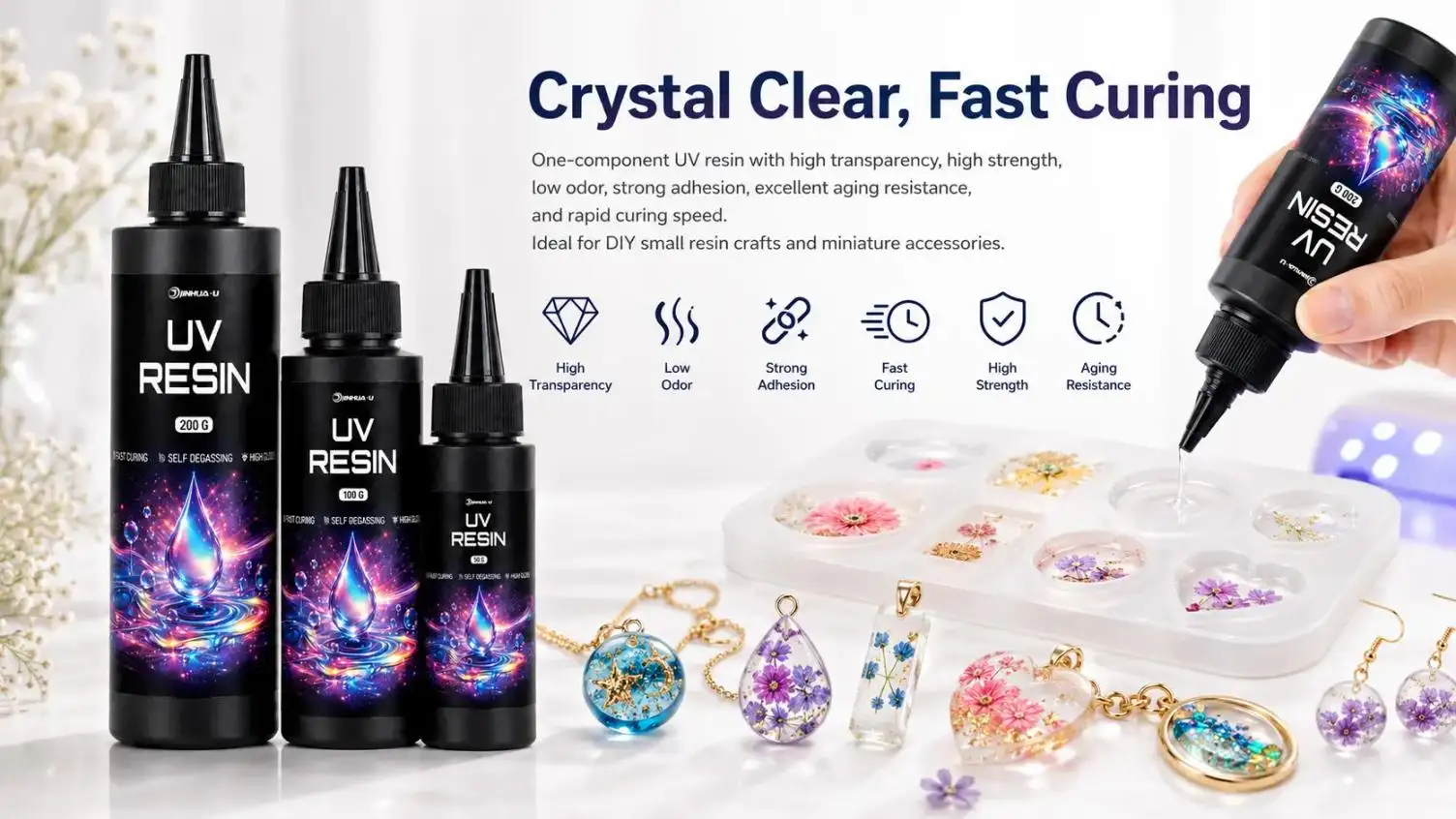
UV resin is a single-component resin that cures when exposed to an appropriate ultraviolet light source. Unlike two-part epoxy, it does not normally require mixing resin and hardener before application.
Its biggest advantage is speed. Once exposed to sufficient UV light, suitable thin layers can cure very quickly.
UV resin is commonly used for:
- Small jewelry projects
- Charms
- Miniature crafts
- Decorative details
- Small repairs
- Clear topcoats
- Small molded components
UV resin is particularly convenient when precise control and fast curing are important. However, it is generally better suited to relatively thin applications and smaller projects than large-volume casting.
4. Polyester Resin
Polyester resin is widely used in composite manufacturing because it can provide rigidity, strength, and water resistance. It is often combined with reinforcing materials such as fiberglass to produce strong composite structures.
Typical applications include:
- Boat construction and repair
- Automotive components
- Swimming pools
- Industrial laminates
- Molds
- Pipes and tanks
- Composite structures
Polyester resin typically uses a catalyst to initiate curing. The curing behavior depends on the formulation and catalyst level, so accurate measurement and careful handling are important.
Polyester resin can also have a strong odor and produce hazardous vapors during use. Proper ventilation, protective gloves, eye protection, and respiratory protection should be used according to the product's safety requirements.
Resin Types at a Glance
| Resin Type | Main Advantage | Common Applications |
|---|---|---|
| Art Epoxy | Clear, controllable, decorative | Art, jewelry, coasters, crafts |
| Coating Epoxy | Durable surface protection | Countertops, floors, tables |
| Casting Epoxy | Designed for deeper pours | River tables, molds, encapsulation |
| Polyurethane | Tough and versatile | Automotive, coatings, casting |
| UV Resin | Very fast curing | Jewelry, small crafts, repairs |
| Polyester | Rigid and economical for composites | Boats, fiberglass, industrial parts |
How to Choose the Right Resin
The best resin depends on the project's specific requirements rather than simply choosing the most popular product.
For Art and Crafts
Choose an art-formulated epoxy resin when you need a clear, glossy finish for paintings, decorative pieces, jewelry, coasters, or similar projects.
For Deep Casting
Choose a casting epoxy when the project requires a thick pour or involves embedding objects inside a substantial volume of resin. Check the manufacturer's recommended pour depth before starting.
For Countertops and Tables
A coating or industrial-grade epoxy is usually more appropriate for high-use surfaces because these formulations are designed with durability and surface protection in mind.
For Fast Small Projects
UV resin can be convenient when you need quick curing and are working with small, thin applications.
For Composite Manufacturing
Polyester resin is commonly selected for fiberglass and other composite applications where rigidity, water resistance, and cost efficiency are important.
For Industrial Performance
Polyurethane may be the better choice when impact resistance, flexibility, abrasion resistance, or chemical resistance is a major requirement.
Important Factors to Consider
Before purchasing resin, evaluate several factors:
Viscosity: Low-viscosity resin flows easily into molds, while thicker resin provides greater control for surface applications.
Cure time: Consider both your working time and the time required before the finished piece can be handled or used.
Pour depth: Not every epoxy resin is designed for thick applications. Using a standard coating epoxy for a deep pour can cause excessive heat and curing problems.
Clarity and UV resistance: For transparent decorative projects, look for a formulation designed to maintain clarity over time.
Durability: Industrial surfaces may require greater resistance to abrasion, chemicals, impact, and heat than decorative artwork.
Safety: Always review the manufacturer's technical documentation and safety data sheet. Different resin systems have different handling requirements.
Frequently Asked Questions About Resin
What is the most common type of resin?
Epoxy resin is one of the most widely used synthetic resins because it can be formulated for art, coatings, adhesives, casting, composites, and many other applications.
What resin is best for resin art?
Art-formulated epoxy resin is generally a strong choice for resin artwork because it is designed for controlled application, clarity, and decorative finishes.
What resin is best for deep molds?
A casting epoxy specifically designed for deep pours is typically more suitable than standard coating epoxy. Always follow the recommended maximum pour depth.
Is UV resin the same as epoxy resin?
No. UV resin is generally a single-component system that cures under ultraviolet light, while conventional two-part epoxy cures after resin and hardener are mixed.
Can one resin be used for every project?
No. Resin formulations are engineered for different purposes. Selecting a product based on viscosity, curing method, depth, durability, flexibility, and intended application can significantly improve the final result.
Final Thoughts
With the knowledge of the various types of resin, it is easier to choose which one would you like to use for a specific application. Epoxy resin can be used in a wide variety of applications such as art, coatings or deep casting. In industry, polyurethane resin is considered to be durable and versatile. UV resin is still valuable for the small-scale, quick project, and polyester resin is still vital for fiberglass and composite production.
The correct resin formulation to the job's actual needs is important. Before buying, think about the end use, thickness, curing time, mechanical strength, exposure to the environment, and safety standards needed.
When applied in the right resin and manner, resin can lend strength, protection, durability and beauty to an amazingly broad variety of creative and industrial projects.