




Epoxy resin has gained more and more popularity in interior decoration, art, the decorative interior of commercial spaces and in creative refurbishment projects. There are so many people who think epoxy resin is just used for tabletops, countertops, floors, and even artwork, but can epoxy resin be used on walls?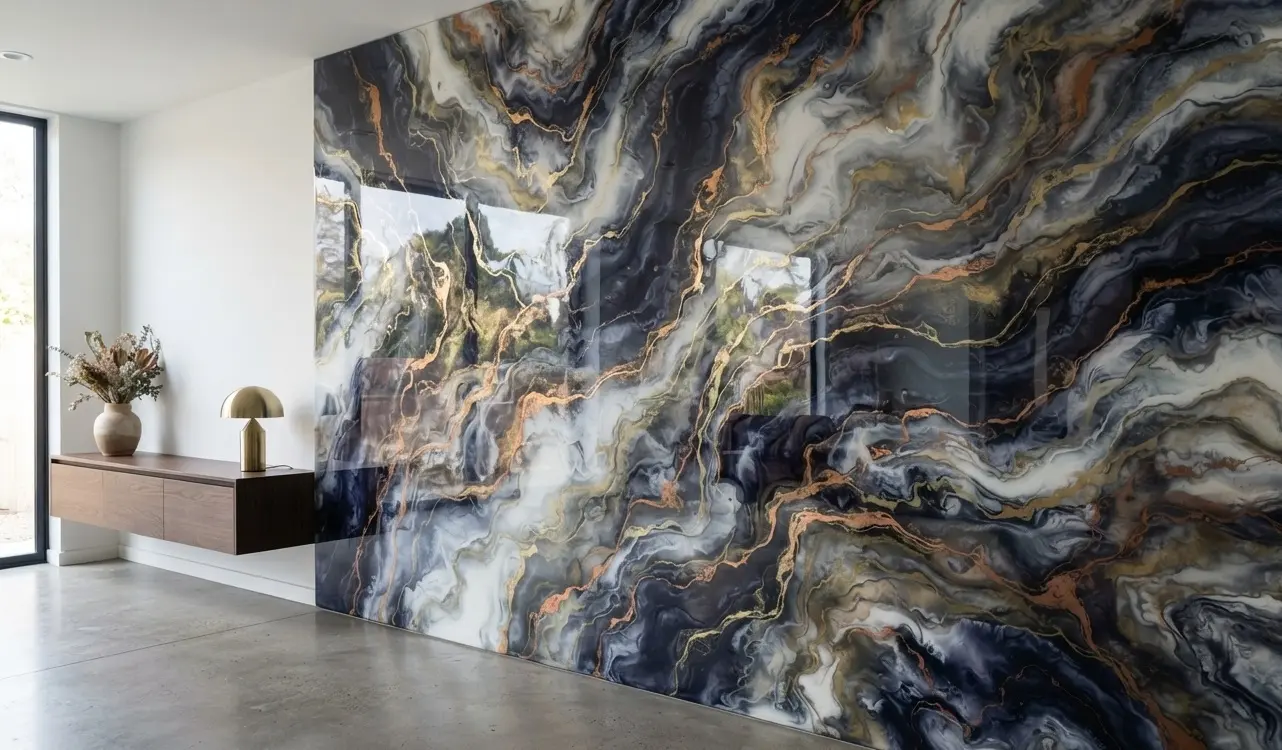
Yes, the short answer. Epoxy resin wall coating can be used for walls, and can be made into a shiny, decorative, durable and very customizable surface. Yet resin reacts differently when applied to a vertical surface, compared to a horizontal tabletop or floor. There are a number of factors which all contribute to the success of the application, such as gravity, surface preparation, application thickness, curing time and product selection.
Everything you need to know about epoxy resin on walls, preparation, application methods, benefits, challenges, and best types of projects for resin wall coatings.
Can Epoxy Resin Be Applied to Walls?
Yes, epoxy resin can be used on many wall surfaces, including properly prepared:
- Drywall
- Concrete walls
- Plaster
- Wood panels
- Masonry
- Decorative boards
- Certain painted surfaces
Epoxy resin is a hard and smooth surface after curing. It can yield a high-gloss effect, a clear protective coating, or even a colorful artistic wall feature, depending on the formulation and design technique used.
When using the epoxy resin for a vertical wall, however, it will take more planning than to apply the resin to a flat horizontal surface.
The majority of epoxy resins are liquids on mixing. Since walls are vertical, it is only logical that the resin will flow downwards before it starts setting. Excessive resin application can lead to drips, patchiness, thicknesses, and runs.
Por lo tanto, it is crucial to select the right resin and application method.
Why Use Epoxy Resin on Walls?
Epoxy resin offers several advantages for decorative and functional wall projects.
1. Creates a Unique Decorative Finish
One of the biggest reasons people use epoxy resin on walls is design flexibility. Resin can be combined with pigments, metallic powders, colorantes, glitter, decorative materials, and artistic effects.
Popular epoxy wall designs include:
- Marble effects
- Metallic finishes
- Ocean-inspired designs
- Abstract art
- Geode patterns
- Stone-look surfaces
- High-gloss feature walls
- Clear protective coatings
Each project can have a unique appearance, making epoxy especially attractive for luxury interiors and custom commercial spaces.
2. Provides a Glossy Surface
Clear epoxy resin can create a deep, glass-like appearance. This glossy finish can make colors appear richer and add visual depth to decorative wall designs.
For feature walls in hotels, restaurants, offices, retail stores, and modern homes, epoxy can create a premium and eye-catching appearance.
3. Offers Good Durability
Once fully cured, epoxy resin forms a hard and durable surface. It can help protect the underlying material from everyday wear and minor impacts.
A properly selected epoxy coating may also provide resistance to moisture and stains, depending on the specific formulation and environmental conditions.
4. Supports Custom Interior Design
Unlike traditional wall paint, epoxy resin allows designers and property owners to create highly customized finishes.
Bandera, patterns, textures, and decorative effects can be adjusted to match a specific interior design concept.
This makes resin walls suitable for:
- Residential interiors
- Hotels
- Restaurants
- Retail stores
- Beauty salons
- Offices
- Art studios
- Showrooms
The Biggest Challenge: Epoxy Resin Runs Down Vertical Walls
The main difficulty when applying epoxy resin to walls is gravity.
Most standard epoxy systems are designed primarily for horizontal surfaces. When applied to a vertical surface, liquid resin may slowly move downward before curing.
This can cause several problems:
- Resin drips
- Uneven thickness
- Visible streaks
- Pooling near the bottom
- Wasted material
- Inconsistent surface appearance
The viscosity and working time of the resin can significantly affect how it behaves.
A very thin, low-viscosity epoxy may flow quickly down the wall. A thicker coating or specially formulated vertical epoxy may be easier to control.
For large projects, it is important to test the material on a small sample area before coating the entire wall.
How to Prepare a Wall for Epoxy Resin
Surface preparation is one of the most important steps in any epoxy resin project.
The wall should be clean, stable, dry, and properly prepared before resin application.
Step 1: Clean the Surface
Remove dust, dirt, grease, oil, and loose materials from the wall.
Contamination can reduce adhesion and cause defects in the finished coating.
Step 2: Repair Cracks and Damage
Fill cracks, holes, and damaged areas before applying epoxy.
A smooth and stable substrate will help create a more professional final appearance.
Step 3: Sand the Surface if Necessary
Depending on the wall material and existing finish, light sanding may improve surface adhesion.
Glossy painted surfaces may need to be properly prepared before applying epoxy.
Step 4: Make Sure the Wall Is Completely Dry
Moisture can cause serious problems in coating applications.
The substrate should be dry and suitable for the selected epoxy system before work begins.
Step 5: Protect Surrounding Areas
Cover floors, furniture, outlets, trim, and nearby surfaces.
Because resin can drip during application, careful masking and protection are especially important for vertical projects.
How to Apply Epoxy Resin to a Wall
The exact application method depends on the resin formulation and desired design.
Here is a general process.
Mix the Epoxy Correctly
Follow the manufacturer's recommended mixing ratio exactly.
Incorrect ratios can lead to problems such as:
- Soft or sticky resin
- Incomplete curing
- Reduced durability
- Uneven appearance
Mix thoroughly according to the product instructions.
Apply in Controlled Layers
Instead of applying a very thick layer immediately, thinner and more controlled applications may be easier to manage.
This can reduce excessive dripping and help maintain a more even coating.
Use Appropriate Application Tools
Depending on the project, installers may use:
- Rollers
- Brushes
- Squeegees
- Spreaders
- Specialty coating tools
The best tool depends on the wall material, resin viscosity, and desired finish.
Monitor Drips During the Working Time
Because resin can continue moving before it begins curing, the wall should be monitored during the early stages of the project.
Drips and runs may need to be carefully managed before the resin becomes too thick.
Allow Proper Curing Time
Avoid touching or disturbing the surface before the resin has fully cured.
Temperature, humidity, resin type, and coating thickness can all affect curing performance.
Always follow the product manufacturer's curing recommendations.
What Type of Epoxy Resin Is Best for Walls?
Not every epoxy resin is ideal for vertical applications.
When choosing a resin for wall projects, consider the following factors.
Viscosity
A thicker resin may be easier to control on vertical surfaces than a very thin, fast-flowing formulation.
Working Time
The working time determines how long the resin remains workable after mixing.
Large wall projects require enough time for application, but a resin that remains extremely fluid for too long may increase the risk of runs.
Adhesion
The epoxy should be compatible with the wall substrate and any primer or coating used underneath.
UV Resistance
For walls exposed to strong sunlight, UV resistance may be important.
Some epoxy systems can yellow over time when exposed to ultraviolet light. For bright rooms or areas with direct sunlight, consider using a system designed with improved UV stability.
Intended Application
Always choose a resin formulated for the intended purpose.
A resin designed for artwork may perform differently from an industrial wall coating or architectural decorative epoxy.
Creative Ideas for Epoxy Resin Walls
Epoxy resin offers nearly unlimited decorative possibilities.
Marble Effect Walls
White, gray, black, and metallic pigments can be combined to create a marble-inspired appearance.
This style is popular in luxury homes, bathrooms, hotel interiors, and commercial spaces.
Metallic Epoxy Feature Walls
Metallic pigments can create dramatic movement and depth.
Gold, silver, bronze, copper, and pearl effects are commonly used for premium interior designs.
Ocean-Inspired Resin Walls
Blue, turquoise, white, and transparent resin can be used to create wave and ocean-inspired artwork.
This style is popular for resorts, coastal properties, and artistic interiors.
Abstract Resin Art Walls
Artists and designers can combine multiple colors to create completely original wall designs.
No two resin art walls need to look exactly the same.
Clear Protective Resin Coatings
Clear epoxy can also be used as a protective layer over certain decorative surfaces or artwork, provided the materials are compatible.
Are Epoxy Resin Walls Suitable for Bathrooms?
Epoxy resin may be used in certain bathroom wall applications because cured epoxy can create a seamless and easy-to-clean surface.
However, bathrooms involve moisture, temperature changes, and ventilation challenges.
The complete coating system should be selected specifically for the environment.
Proper surface preparation and moisture management are essential.
For areas exposed to continuous water or demanding wet conditions, consult the epoxy manufacturer to confirm that the product is suitable for that specific application.
Common Mistakes to Avoid
When applying epoxy resin to walls, avoid these common mistakes:
Applying Too Much Resin
Heavy applications increase the risk of dripping and uneven thickness.
Skipping Surface Preparation
Poor adhesion often begins with poor cleaning or preparation.
Using the Wrong Resin
A resin designed only for horizontal art projects may not perform well on vertical walls.
Ignoring Temperature Conditions
Temperature can affect viscosity, working time, and curing performance.
Starting a Large Project Without Testing
Always test the resin and technique on a small sample area first.
Is Epoxy Resin on Walls Worth It?
With the right project, epoxy resin can provide a beautiful, long-lasting wall finish that is hard to achieve with paint.
The most significant benefits are its depth (visual), customization options, shiny look, and the ability of producing high-end decorative effects.
But, when it comes to epoxy wall applications, there is a certain amount of planning that needs to be done. One of the biggest challenges is control of the movement of resin on a vertical surface, as resin is a natural liquid before being cured.
The ideal results are achieved by choosing a compatible epoxy formulation, wall preparation, controlled layers and testing is done before starting a large installation.
Final Thoughts
Yes, epoxy resin can be applied to a wall and can make an eye-catching, long-lasting, and highly customized decoration.
Whether you're looking for a luxurious marble finish or a metal tone, something artistic like a feature wall, or a protective clear finish, epoxy resin offers a range of possibilities that are ideal for modern interior design.
The secret to this is to know the behavior of resin on a vertical surface. The final result is affected by these factors: Gravity, viscosity, thickness of application, working time and surface preparation.
When beginning a new resin wall project, ensure you test the materials you are using, carefully prepare the surface, and select an epoxy system suitable for vertical or decorative coating applications.
When made with the appropriate materials and technique, a simple wall can turn into a unique architectural element that can offer depth, style, and lasting aesthetic effect to nearly any area.