



Actualizado 1 month ago
El mejor epoxi para fibra de vidrio: Una guía completa para la vinculación & Reparar

HQT
Choosing the best epoxy for fiberglass is essential when you need strong bonding, reliable repairs, durable coatings, or high-quality composite laminates. Fiberglass is widely used in boats, automotive parts, RVs, industrial equipment, construction components, sporting goods, and many other applications. Although fiberglass is known for its strength and lightweight properties, damaged or unfinished fiberglass often requires the right epoxy system to achieve long-lasting performance.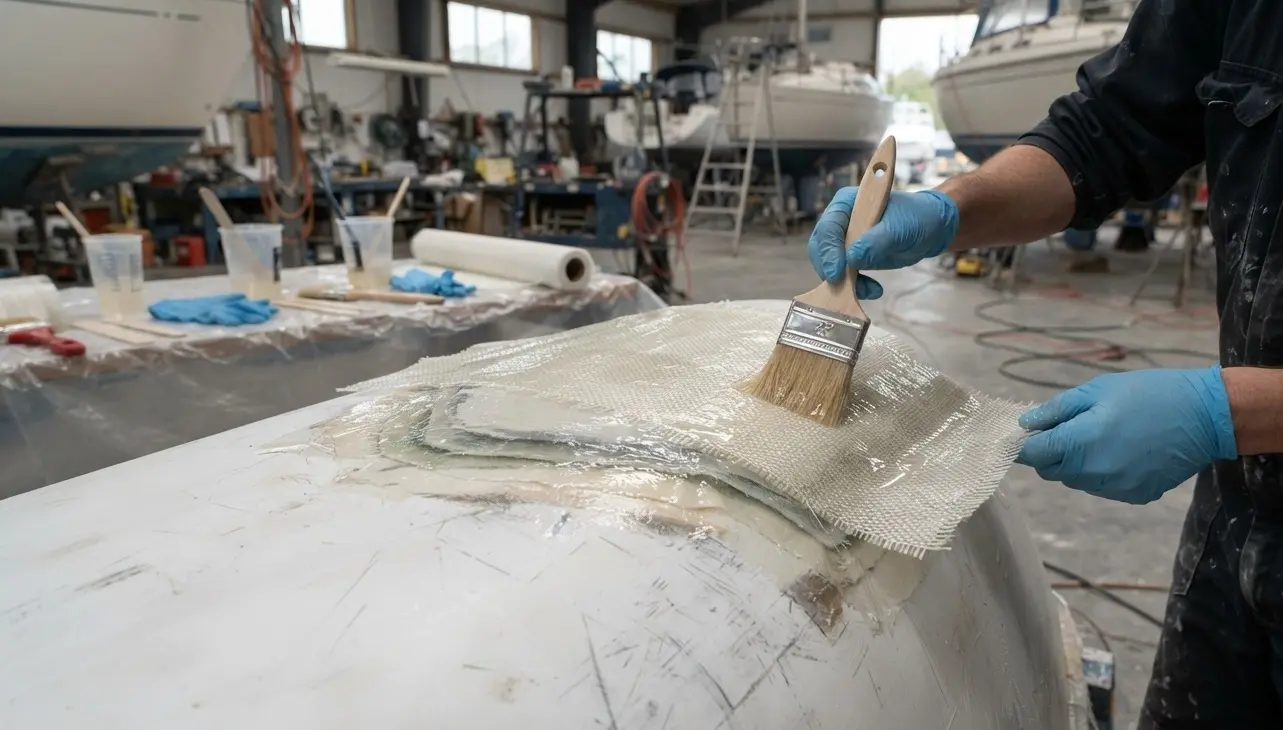
The best epoxy for fiberglass depends on your specific application. A low-viscosity epoxy may be ideal for laminating fiberglass cloth, while a thickened structural adhesive may be better for repairing cracks, filling gaps, or bonding components together. Factors such as working time, curing speed, moisture resistance, viscosity, and surface preparation can all influence the final result.
This guide explains how to choose the right epoxy resin for fiberglass and how manufacturers, repair professionals, and DIY users can achieve stronger and more durable results.
Why Use Epoxy for Fiberglass?
Epoxy resin is one of the most popular materials for fiberglass bonding and repair because of its excellent adhesion and mechanical strength. When properly mixed and cured, epoxy can create a strong connection between fiberglass and other materials, including wood, metal, carbon fiber, and certain plastics.
Compared with some traditional polyester resins, epoxy often provides stronger adhesion and better performance in demanding applications. This makes it particularly useful for structural repairs, marine environments, composite manufacturing, y aplicaciones industriales.
Epoxy can be used for several purposes:
- Bonding fiberglass components
- Repairing cracks and damaged areas
- Laminating fiberglass cloth
- Coating fiberglass surfaces
- Filling gaps and voids
- Reinforcing structural components
- Sealing surfaces against moisture
Because different applications require different material properties, selecting the right epoxy formulation is extremely important.
Best Types of Epoxy for Fiberglass Projects
1. Low-Viscosity Epoxy for Fiberglass Lamination
Low-viscosity epoxy is usually the best choice for laminating fiberglass cloth. The resin can penetrate and wet out the fibers effectively, helping create a strong composite structure.
Good wet-out is essential because dry areas inside fiberglass cloth can weaken the finished laminate. At the same time, excessive resin can add unnecessary weight and increase material costs.
A high-quality laminating epoxy should provide:
- Good fiberglass wet-out
- Strong adhesion
- Controlled viscosity
- Reliable curing performance
- Good mechanical strength
This type of epoxy is commonly used in boat construction, composite panels, automotive components, and carbon fiber manufacturing.
2. Slow-Cure Epoxy for Large Fiberglass Projects
Slow-cure epoxy is often preferred for large or complicated fiberglass projects. A longer working time allows users to position fiberglass cloth, remove air bubbles, apply multiple layers, and make adjustments before the resin begins to harden.
Slow-curing systems can be especially useful for:
- Large boat repairs
- Fiberglass hull lamination
- Composite panels
- Large molds
- Multi-layer reinforcement
Temperature can significantly affect working time. Higher temperatures generally accelerate the curing process, while cooler conditions can extend curing time. Por esta razón, manufacturers and professional users should always consider workshop conditions when selecting an epoxy system.
3. Fast-Cure Epoxy for Small Repairs
Fast-curing epoxy is a practical solution when speed is important. It is commonly used for smaller fiberglass repairs, quick bonding applications, and production environments where faster turnaround is required.
Sin embargo, fast-curing epoxy provides less working time. Users need to prepare all materials and surfaces before mixing the resin and hardener.
Fast epoxy can be suitable for:
- Small cracks
- Broken fiberglass parts
- Quick repairs
- Small bonding areas
- Time-sensitive maintenance
For complex repairs, a slower epoxy may provide better control.
4. Thickened Epoxy for Structural Repairs
Standard liquid epoxy is excellent for laminating and coating, but it may flow too easily when repairing vertical surfaces or filling large gaps. Thickened epoxy adhesives are designed to stay in place and provide stronger control during application.
Thickened epoxy is useful for:
- Vertical fiberglass repairs
- Overhead applications
- Gap filling
- Structural bonding
- Fillets and joints
Many structural epoxy adhesives can also be sanded, drilled, painted, or machined after curing, making them suitable for professional repair and manufacturing applications.
How to Choose the Best Epoxy for Fiberglass
Consider the Application
The first question should be: What will the epoxy be used for?
For laminating fiberglass cloth, choose a low-viscosity laminating epoxy. For structural bonding, select a high-strength adhesive. For cracks and gaps, consider a thickened epoxy or an epoxy system that can be combined with fillers.
Choosing the wrong viscosity can make application more difficult and reduce the quality of the finished project.
Check the Pot Life
Pot life refers to the amount of time you have to work with mixed epoxy before it begins to cure.
A longer pot life is generally better for large projects and complex applications. A shorter pot life can improve productivity for small repairs.
When selecting epoxy, consider:
- Project size
- Temperatura ambiente
- Application method
- Number of fiberglass layers
- Required working time
Professional manufacturers often use different hardeners to adjust working time according to production requirements.
Evaluate Moisture Resistance
Moisture resistance is especially important for fiberglass used in marine and outdoor environments. Boats, docks, RVs, and outdoor equipment may experience frequent exposure to water and humidity.
A properly cured epoxy system can help create a durable barrier and reduce the risk of moisture-related damage. Sin embargo, surface preparation and correct mixing are equally important for achieving reliable results.
Look at Viscosity
Viscosity determines how easily epoxy flows.
Low-viscosity epoxy is generally better for penetrating fiberglass cloth. Medium-viscosity systems can provide balanced performance for bonding and coating. Thickened epoxy is better for filling gaps and working on vertical surfaces.
The ideal viscosity depends on the project.
Consider UV Protection
Standard epoxy can be sensitive to long-term ultraviolet exposure. If the fiberglass surface will remain outdoors in direct sunlight, additional UV protection may be necessary.
A protective paint, marine coating, or UV-resistant topcoat can help improve long-term appearance and durability.
This is particularly important for:
- Boats
- Outdoor equipment
- Automotive components
- Exterior fiberglass panels
How to Prepare Fiberglass Before Applying Epoxy
Surface preparation is one of the most important steps in fiberglass bonding and repair.
Before applying epoxy, the surface should generally be clean, dry, and properly prepared.
A typical preparation process includes:
1. Clean the Surface
Remove dirt, grease, wax, Petróleo, and other contaminants. Surface contamination can significantly reduce epoxy adhesion.
2. Sand the Fiberglass
Light sanding can create a suitable surface profile for mechanical bonding. Remove loose material and damaged fibers before beginning the repair.
3. Remove Dust
After sanding, carefully remove dust and debris. A clean surface helps ensure stronger contact between the epoxy and fiberglass.
4. Repair Damaged Areas
For deep cracks or structural damage, additional fiberglass reinforcement may be required. Multiple layers of fiberglass cloth can be laminated with epoxy to rebuild strength.
Common Applications of Epoxy on Fiberglass
Epoxy is used across many industries because fiberglass composites are lightweight, fuerte, and versatile.
Common applications include:
- Fiberglass boat repair
- Marine construction
- Automotive body repair
- RV maintenance
- Industrial composite manufacturing
- Fiberglass tanks and equipment
- Sporting equipment
- Wind energy components
- Custom composite parts
For manufacturers, selecting the right epoxy system can improve production efficiency, reduce material waste, and enhance product durability.
Epoxy for Fiberglass: Common Mistakes to Avoid
Even the best epoxy for fiberglass can produce poor results if it is used incorrectly.
Common mistakes include:
- Incorrect resin-to-hardener ratios
- Poor surface preparation
- Applying epoxy in unsuitable temperatures
- Mixing insufficiently
- Using the wrong epoxy viscosity
- Applying too much resin
- Ignoring recommended curing times
Following the manufacturer's instructions is essential. Accurate mixing ratios and proper curing conditions help ensure the epoxy reaches its intended strength and performance.
Reflexiones finales
The best epoxy for fiberglass depends on whether you are bonding, repairing, capa, or laminating. Low-viscosity epoxy is ideal for fiberglass cloth and composite construction, while thickened epoxy provides better control for structural repairs and gap filling. Slow-curing systems are useful for large projects, while fast-curing products can improve efficiency for smaller repairs.
For the best results, consider viscosity, pot life, curing speed, moisture resistance, surface compatibility, and UV exposure. Proper surface preparation and accurate mixing are equally important.
Whether you are repairing a fiberglass boat, manufacturing composite components, or completing an industrial fiberglass project, choosing the right epoxy system can help create stronger bonds, better durability, and long-lasting performance.